The ancient city of Jerash, also known as the “city of a thousand columns”, is one of the best preserved Roman ruins in the world and is only 1 hour from Amman. We spent half the day touring this ancient city and is one of the highlights of my trip. If you think the ruins in Rome are amazing then you need to visit Jerash. Here you can witness layers of history, from the Hellenistic, Byzantine and Roman periods.
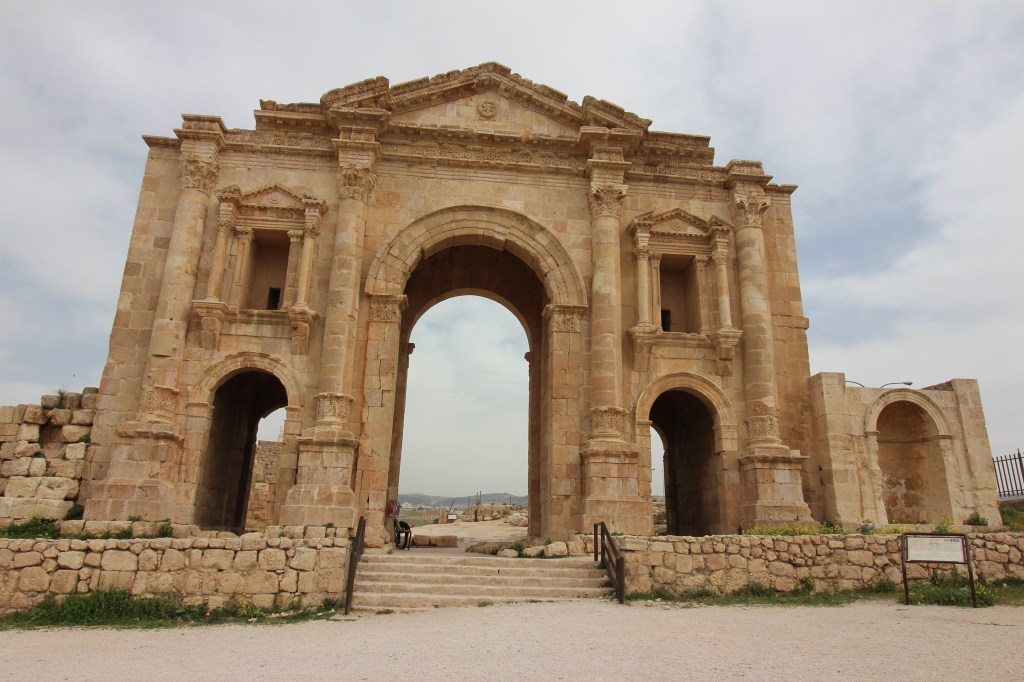
After we entered through Hadrian’s Arch, which showcases ruins from the Roman era, perched atop remnants of the Hellenistic period which displays Ancient Greek inscriptions that are carved into the stone. We passed a large hippodrome where tourists can experience a chariot race demonstration. Continuing along this road we learnt that markets used to line this street for the spectators at the hippodrome to purchase food and drinks.
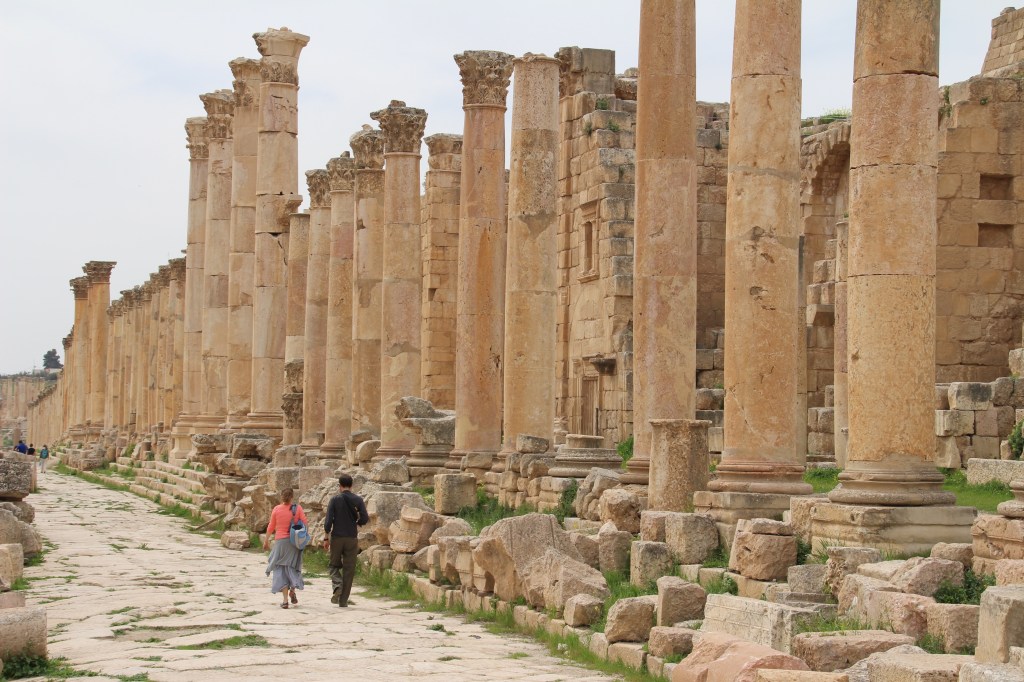
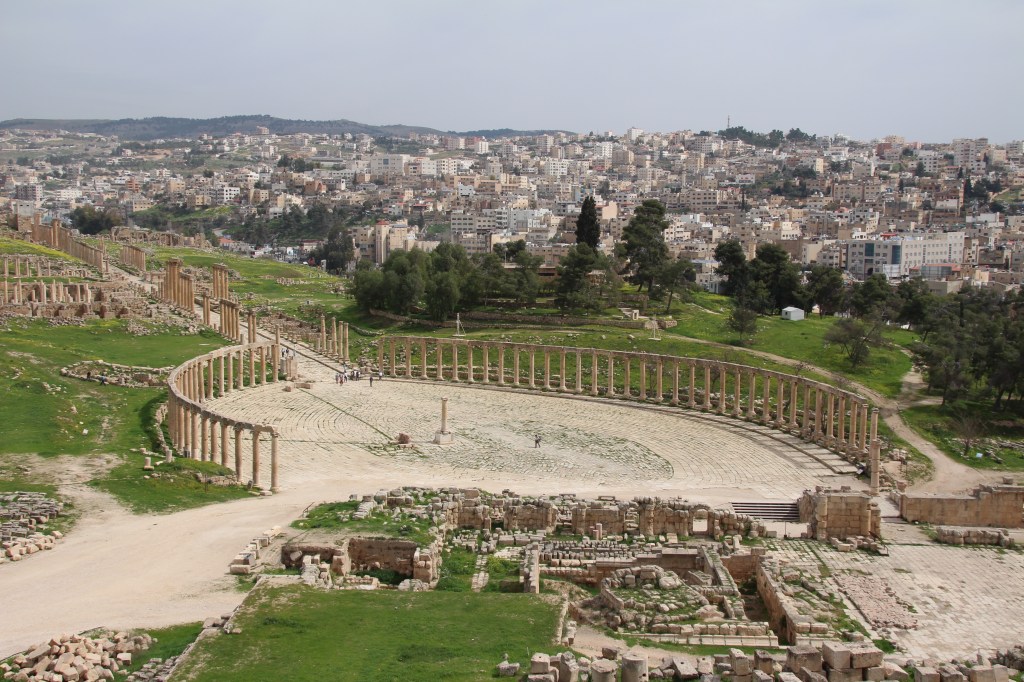
Passing through another smaller gate, we entered the Forum, also known as the Oval Plaza, which is surrounded by 56 Corinthian columns that are still completely intact. This is also the start of Cardo Maximus which runs 805 metres, North to South. When arriving in a Roman city a person would always find the Forum first or Cardo Maximus which is the main street. From here, they would be able to find their way around the city. When we were walking down this street it felt like we had taken a step back to ancient times, as you really get a sense of the size of the city because of the expansive area that the ruins cover and how well preserved they are. The street is still flanked by an endless line of columns and porticoes and with large cobblestones leading the way we found ourselves at the intersection with Decumanus, which is the street that transverses Cardo Maximus. In the middle of this intersection are the remains of 4 large square structures that are made of large stones, known as a Tetrakionion. These stones have carved enclaves that still show the black stains form the candles that used to light the way at the intersection to help travellers find their way.
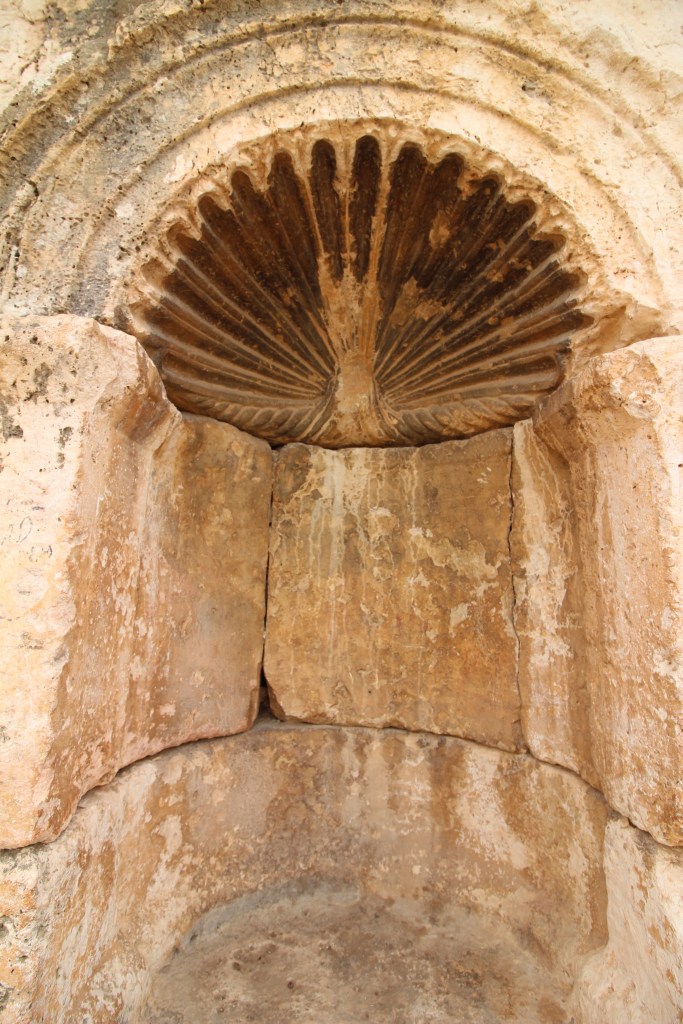
These carved enclaves still show the black stains form the candles that used to burn centuries ago


Further down the street is the Nympheum. A large fountain that provided water to the whole city and where travellers would stop to access the water. Water used to sprout from the mouths of several lions head and there is evidence that this fountain used to be adorned with marble.

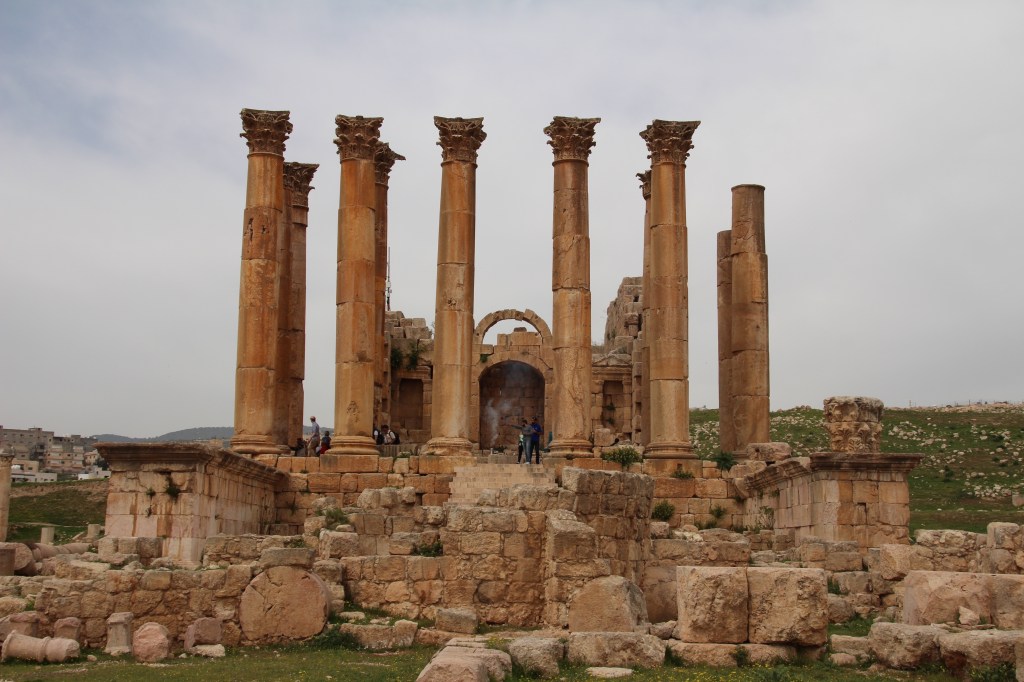
Continue walking down the street and we came across the steps that lead up the hill to the Temple of Artemis. The temple cannot be seen from this viewpoint but if you make your way up and over the hill the grand ruins will stand proudly at the top of the hill.
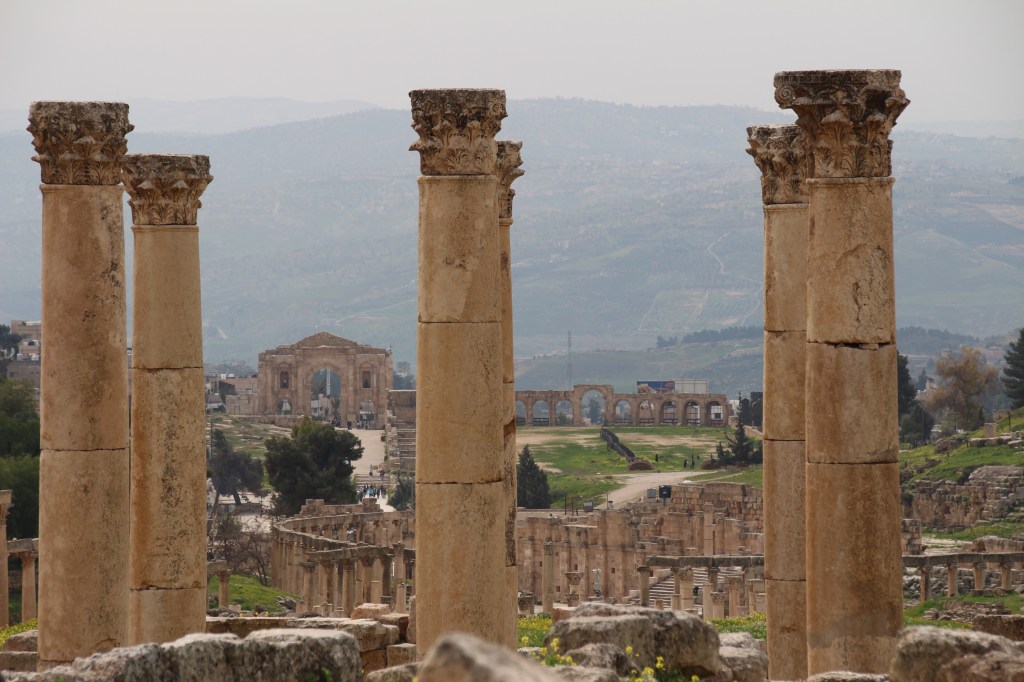
Jerash has three amphitheatres. We climbed to the top of the largest one which seated more then three thousand people. It was a little daunting being so high up and the steps were very steep. But once we were at the top the view back over the ancient city shows just how expansive the area is and you can see remnants of the city wall in the distance. Beyond the walls, you can see more ancient ruins that are scattered amongst modern day buildings which shows that the city extended much further then what has been uncovered.
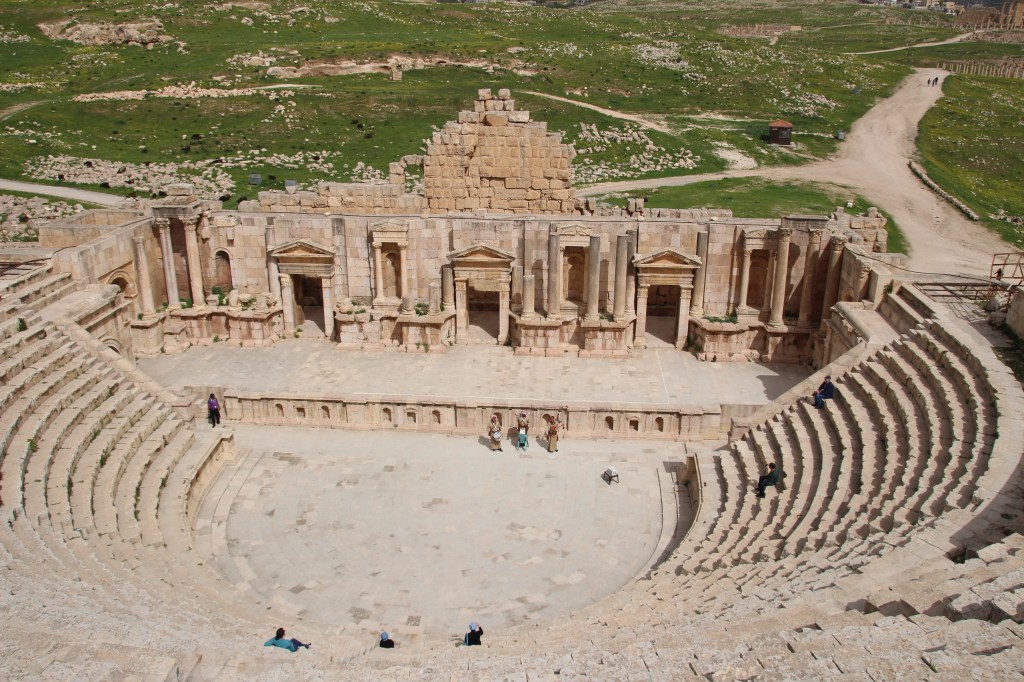

There were two men playing bagpipes in the amphitheatre which showcased the amazing acoustics of the theatre. Conversations between them on the stage floor were clearly audible from where we sat at the very top of the theatre. The echo of the music playing is enhanced due to the small half circles engraved in the stones on the bottom level of the theatre.
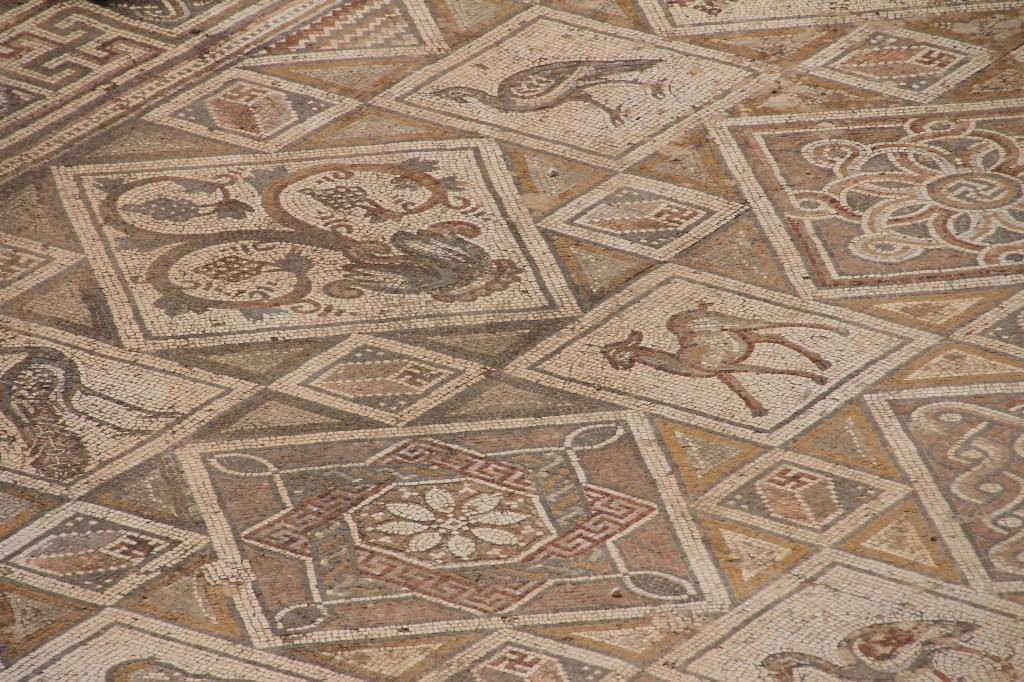
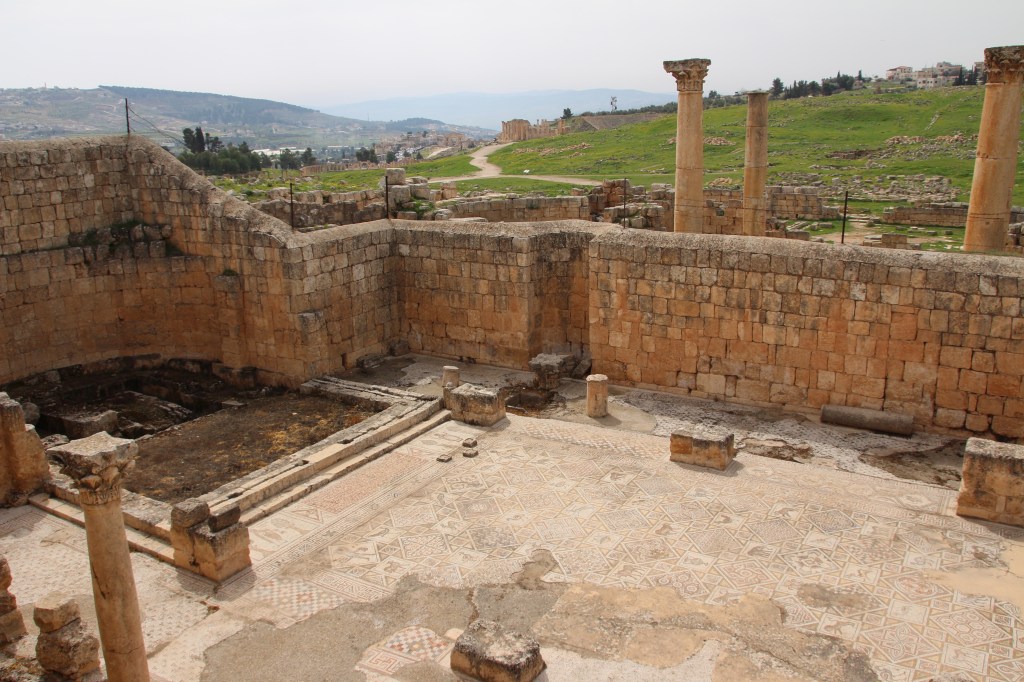
Before leaving Jerash we explored ruins of the Byzantine churches. The remarkable mosaic flooring that is so well preserved. It offers yet another layer of history through pictures of that era which tells another story of that time.

 Postcards From Britt
Leave a comment