
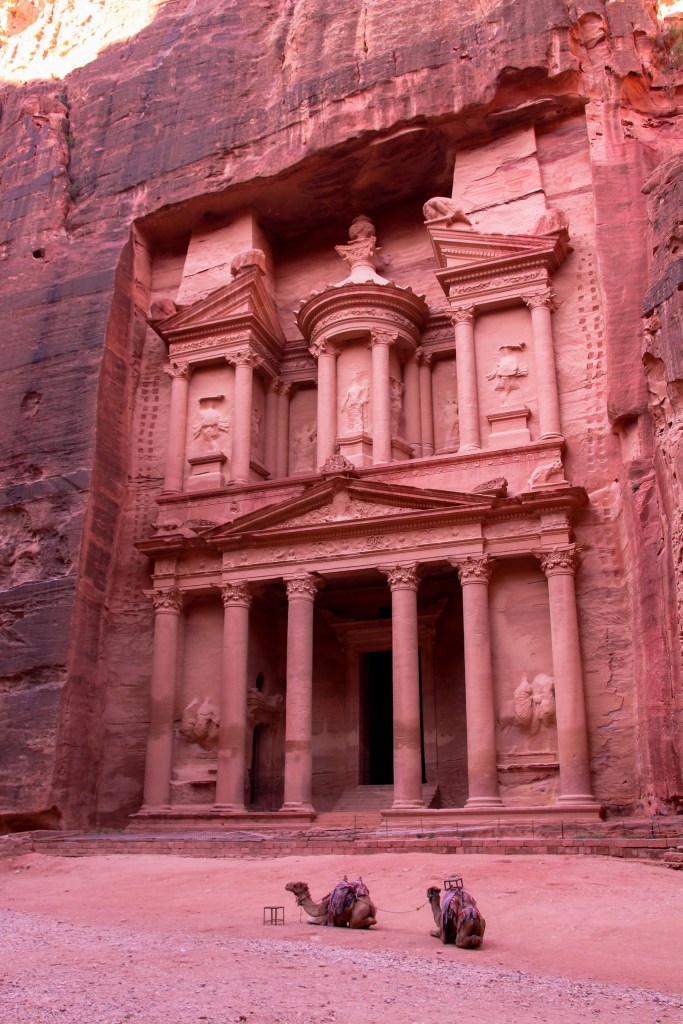
Today we spent the whole day exploring Petra. Petra is an ancient city that is carved into the rose coloured sandstone cliffs. It was once the thriving capital of the Nabataean empire between 400 BC and 106 AD. Around the 1500’s it became the home for the semi-nomadic Bdoul tribe, also known as Bedouins, who took up residence in the ancient caves. This UNESCO World Heritage site is famous for Al-Khazneh, aka the Treasury. However, there are so many more hidden treasures in this lost city than you realise.
We stayed at a comfortable hotel, the Seven Wonders Hotel in Wadi Musa. Wadi Musa is the township surrounding Petra which translates to Valley of Moses. Before checking in to our hotel we stopped at Lookout Point which offers a panoramic view over Wadi Musa and Petra. This ancient city is so well hidden amongst the large rock formations that it is no wonder it stayed hidden for so many centuries. It is recommended to admire this view during sunset or sunrise to enjoy the transformation of rich colours over the landscape.
My advice is to arrive before the sun is up. That way you are sure to get your shot of the treasury before it is littered with tourists vying for the same instagram worthy shot. It also guarantees a peaceful and breathtaking experience when seeing the Treasury for the first time. Our hike started at 5am and we returned to base at 5pm. We hiked over 27 kilometres and did over 35,000 steps. It was an exhausting day but so worth it, and although we did not get to see everything we still managed to see a lot. I would recommend staying an extra day so you have the time to explore so many more secret trails including the hike from Little Petra to Petra.
When we arrived at the gates, just after 5am, the sun had not yet risen and the temperature was extremely cold but the excitement of what lies ahead made me forget how cold it was. The walk form the front gates through the Siq is an easy flat walk. However, it is long so if you struggle walking long distances you may want to ask for assistance. You can hire a donkey to transport you however please consider what this means for the animal. I saw a large overweight man being led up to the monastery on a small donkey which was not so nice for the donkey!
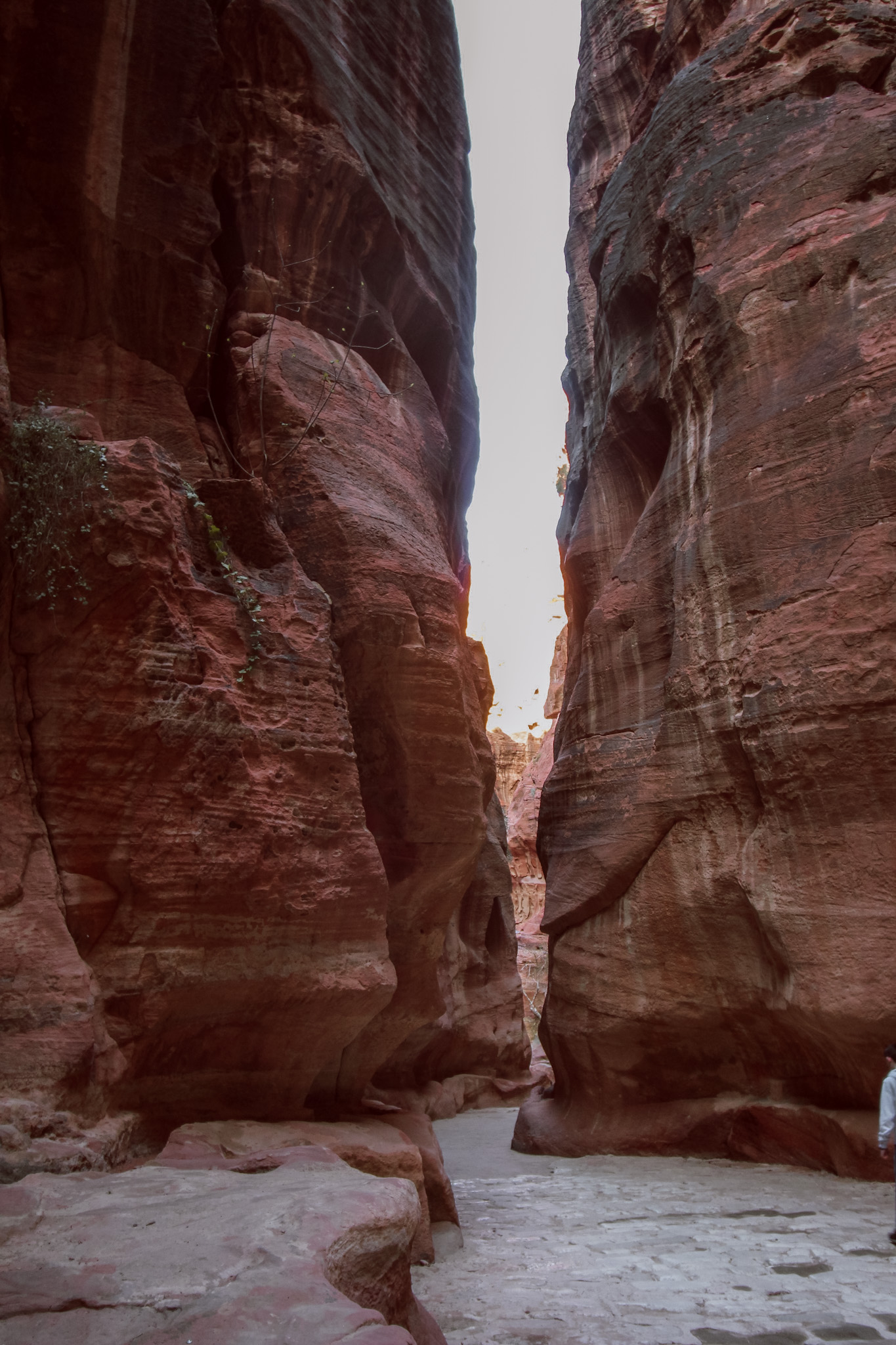
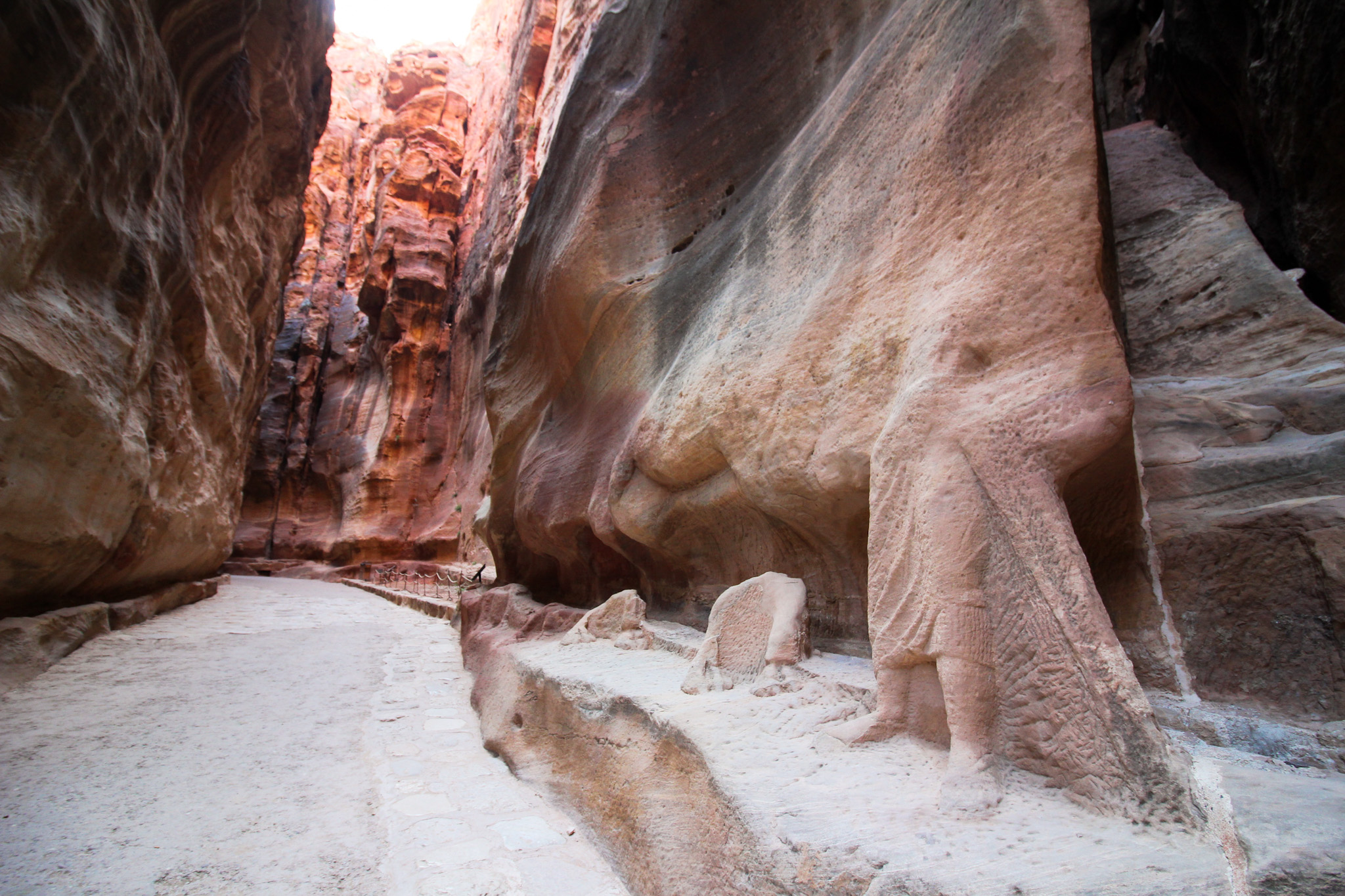
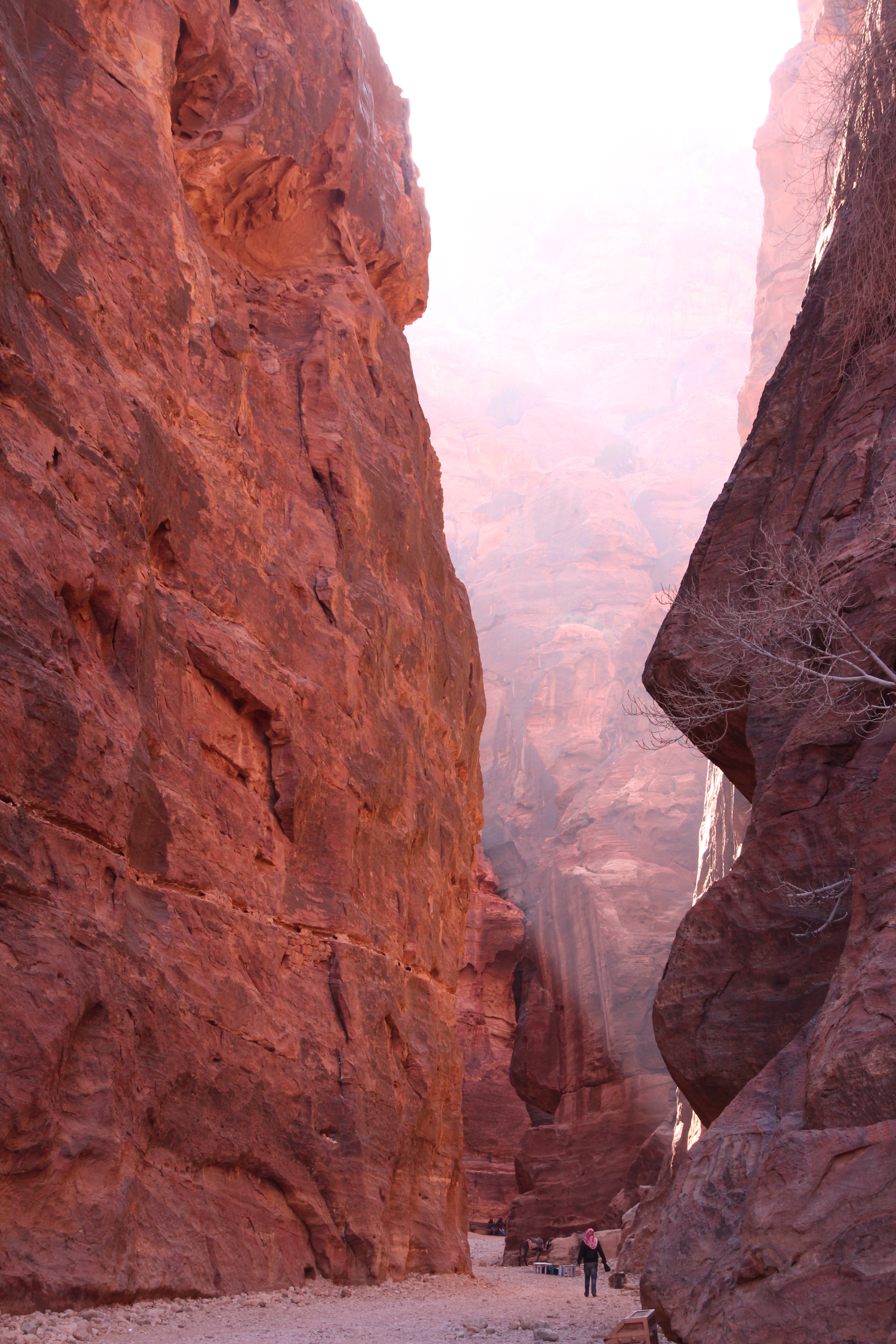
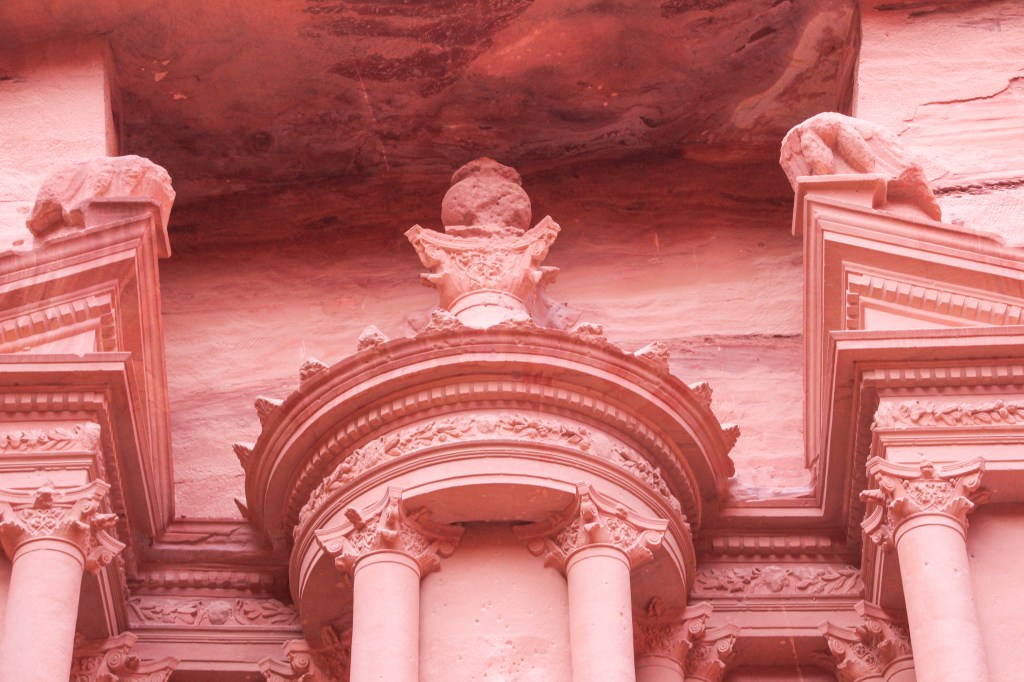
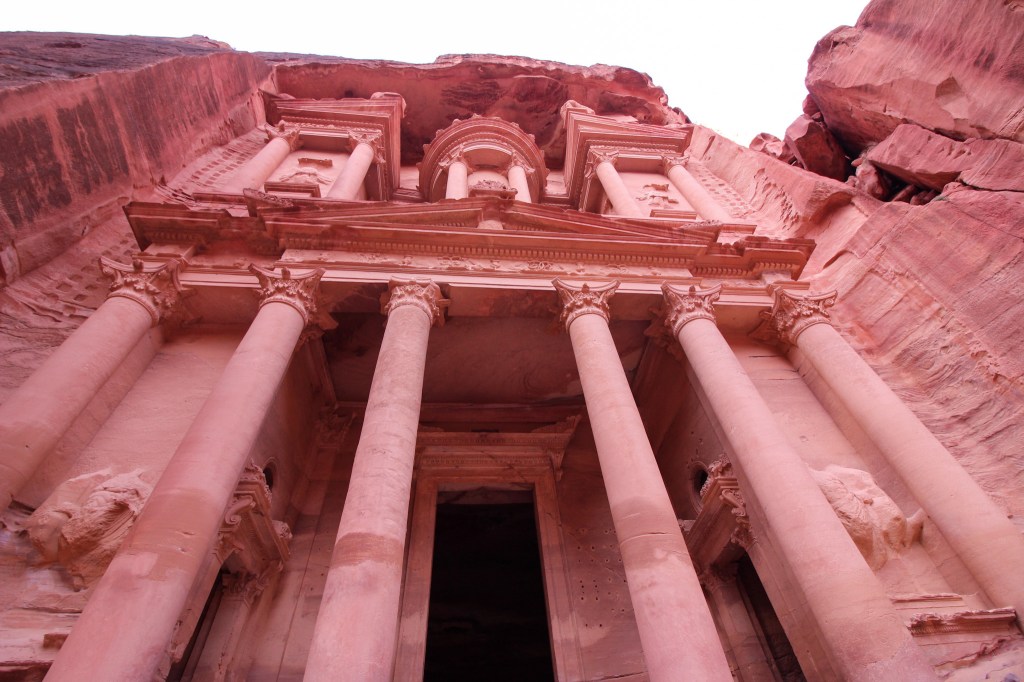
The Siq is a narrow gorge that leads you to the Treasury. It is 1 kilometre long that is surrounded by a narrow gorge that towers 80 meters high above you on either side. As we meandered our way through the ancient winding path, our footsteps echoed off the walls which rose high above us on either side. On the way we spotted faint Nabataean carvings and found remains of the ancient Nabataean water channels that were carved into the walls to transport water to the city. Every step we took the anticipation grew, as we knew we were getting close. As the Treasury rose up through the Siq, the sun was rising which cast the most beautiful golden light on the Treasury. This highlighted the sheer size and detailed beauty of the Nabataeans craftsmanship.
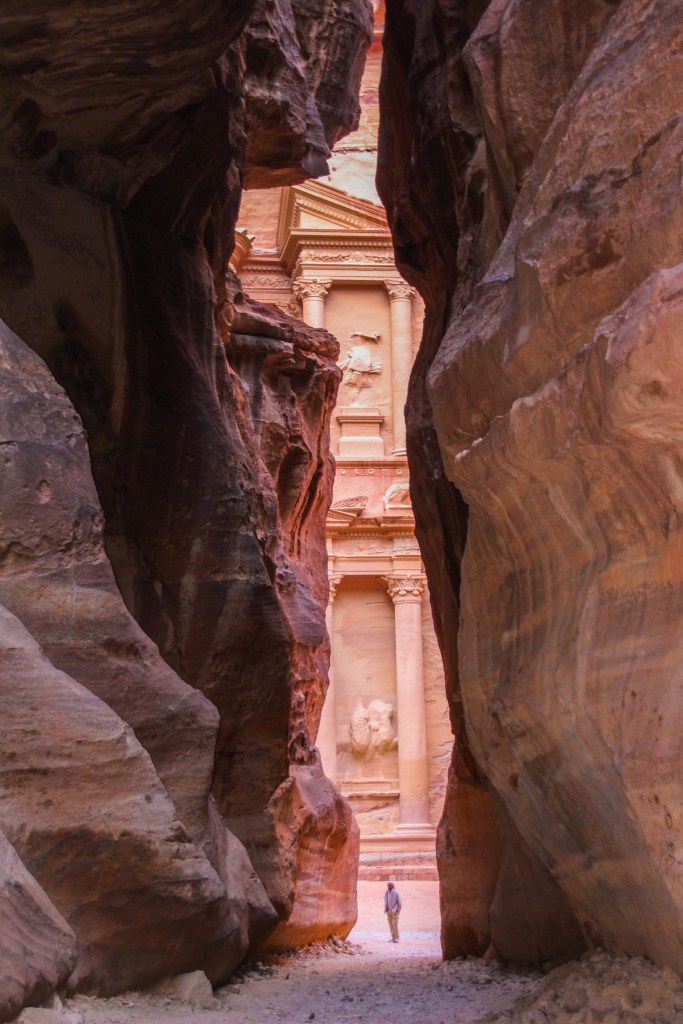
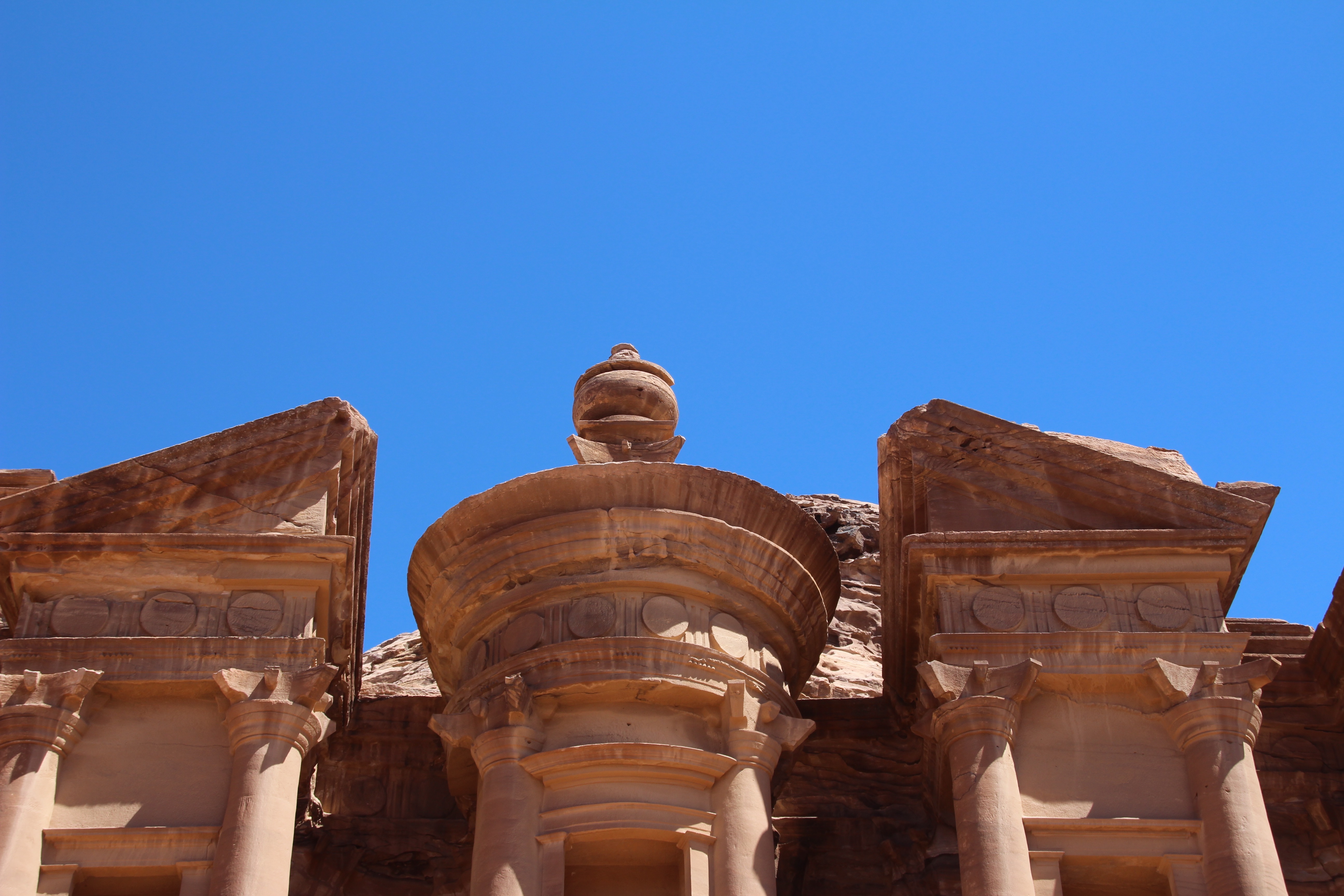
It is believed that the Nabataean people carved the Treasury into living rock over 2,000 years ago as a royal crypt. However, local Bedouins believed that the decorative urn in the centre of the facade was filled with treasure, hence why it was named the Treasury.
It is something that is indescribable and so remarkable that photos do not do it justice. I could not stop staring at the detail of the carvings in the rock face. Because it was so early in the morning and no other tourists were around the surrounding silence of the canyon provided for an eerily transforming moment that I recommend you must experience first hand.
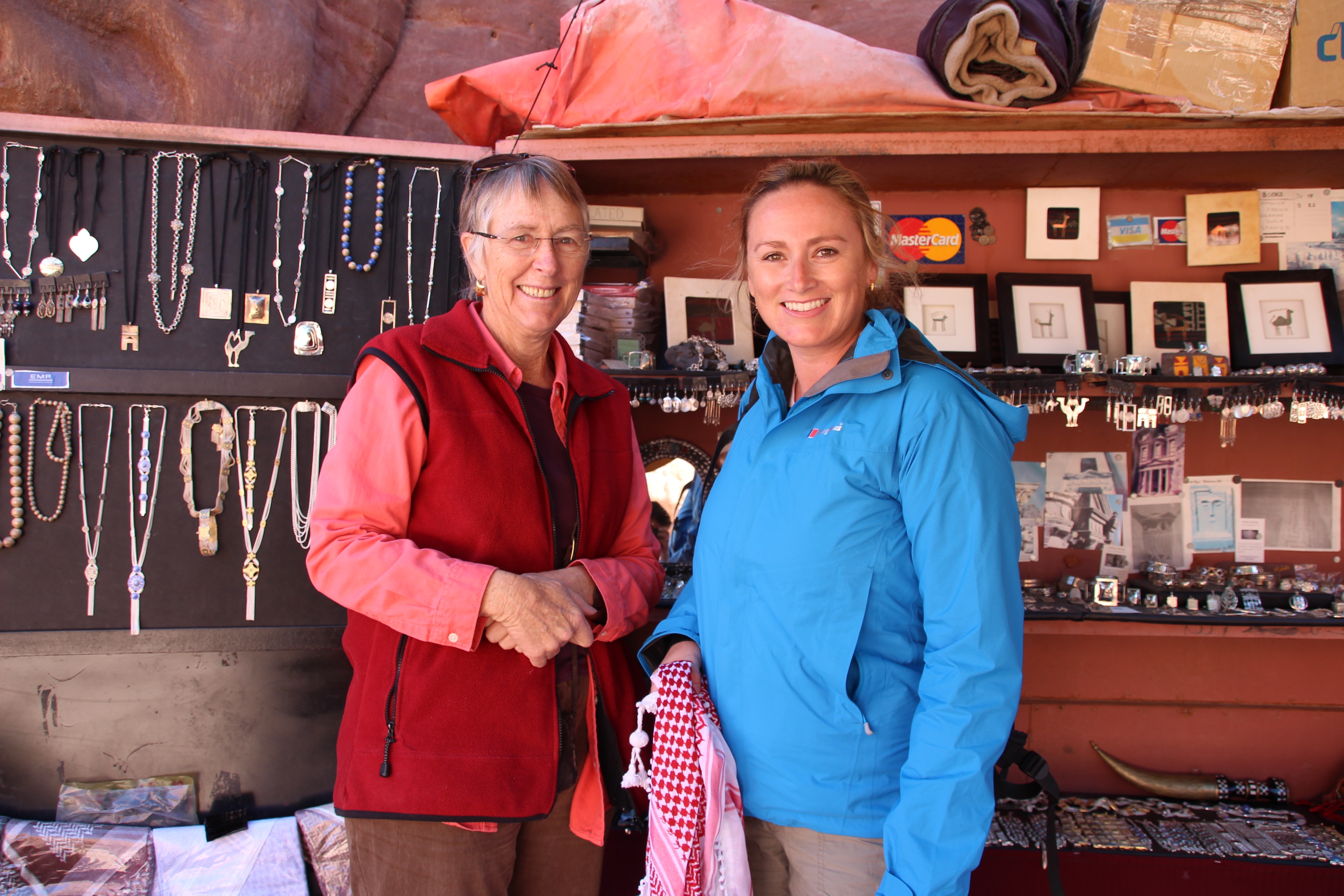
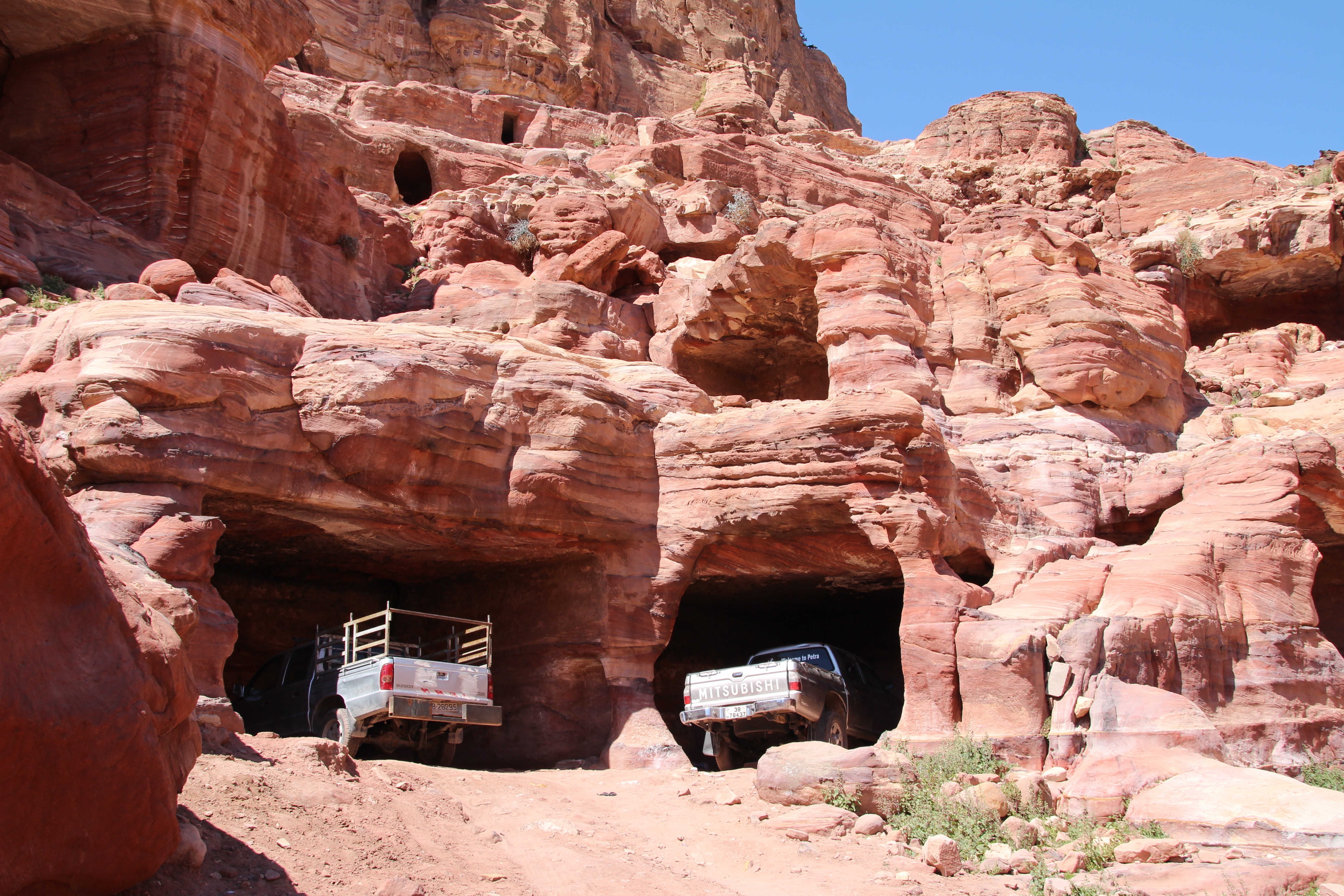
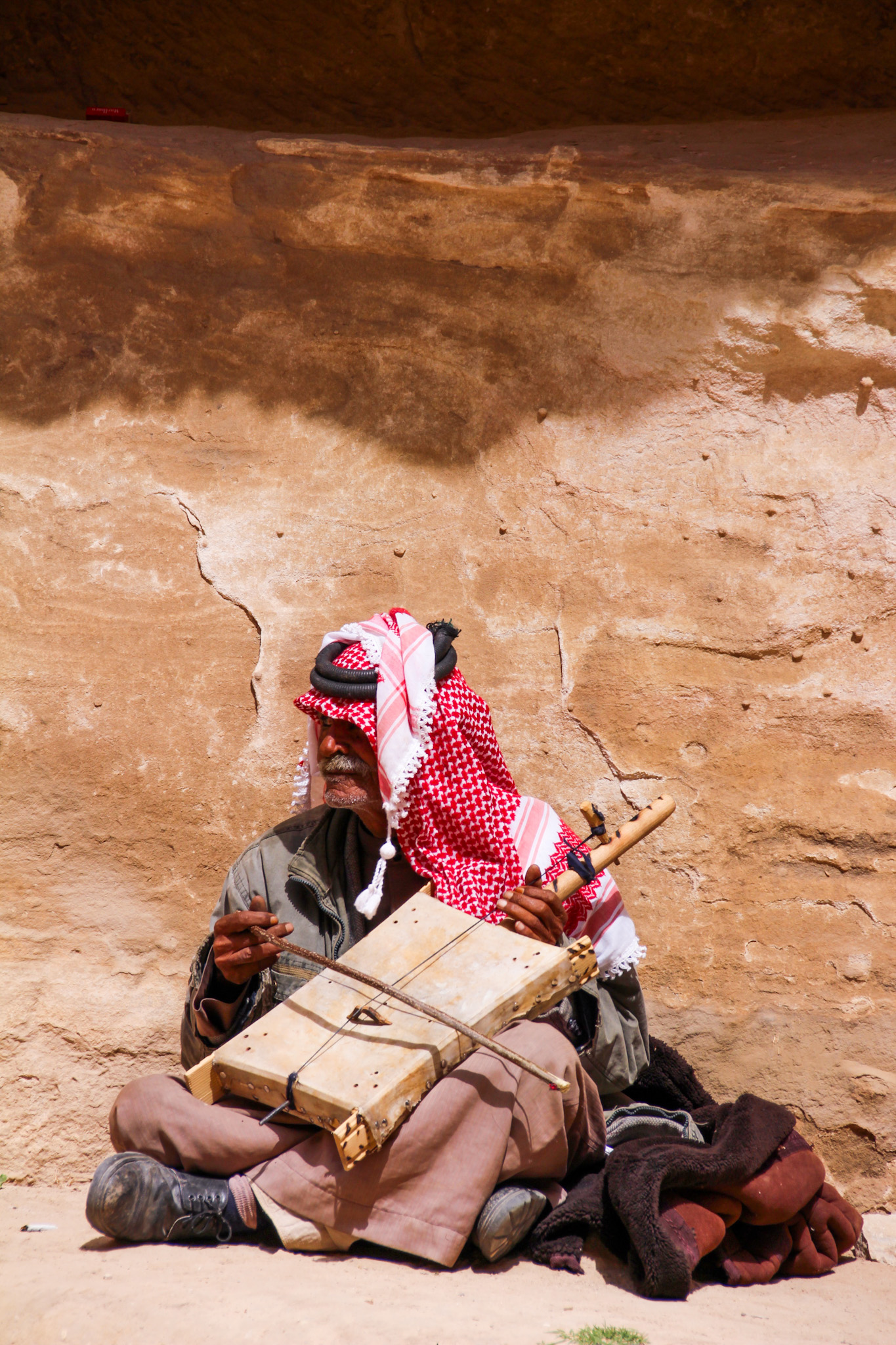
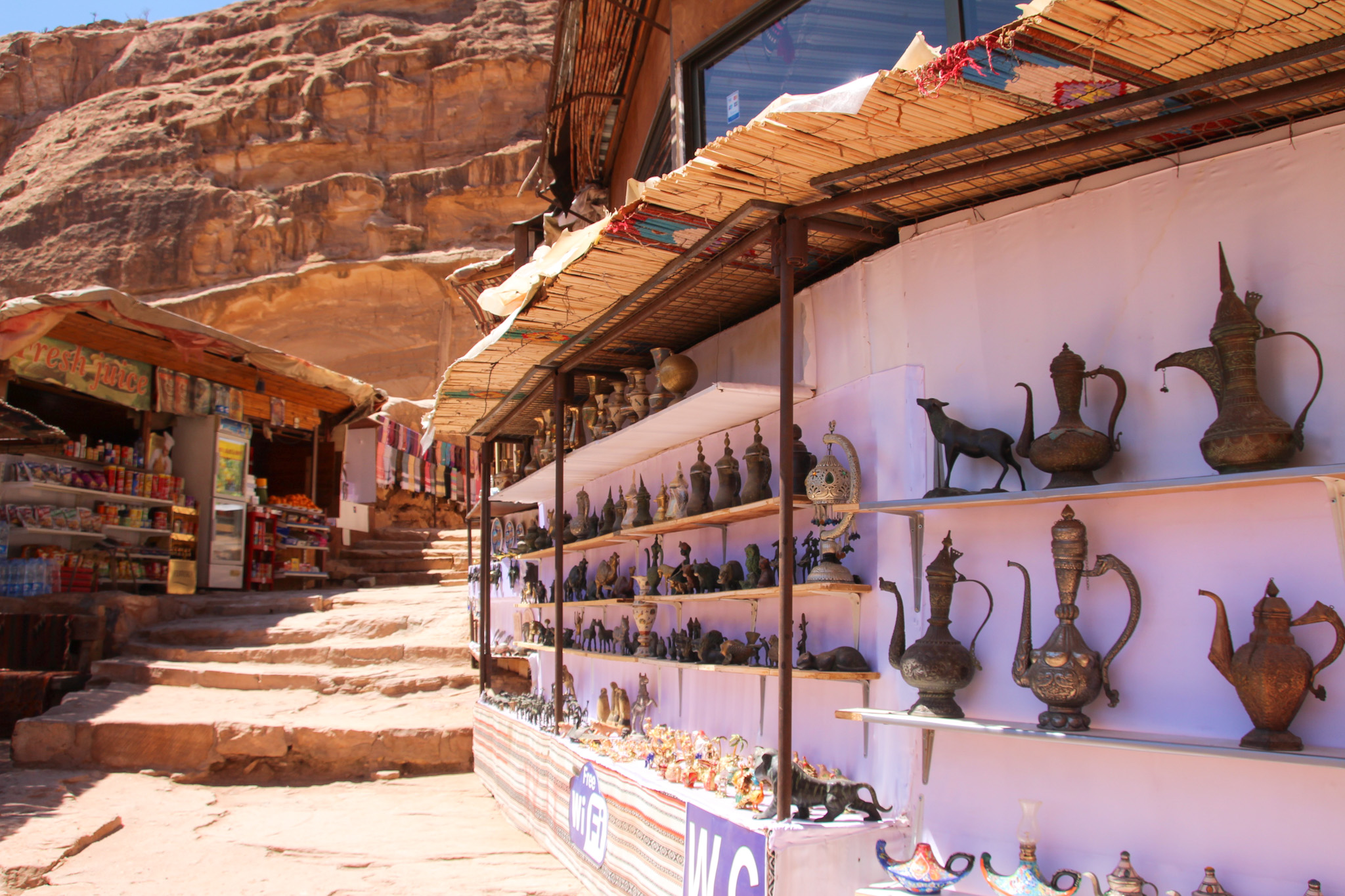
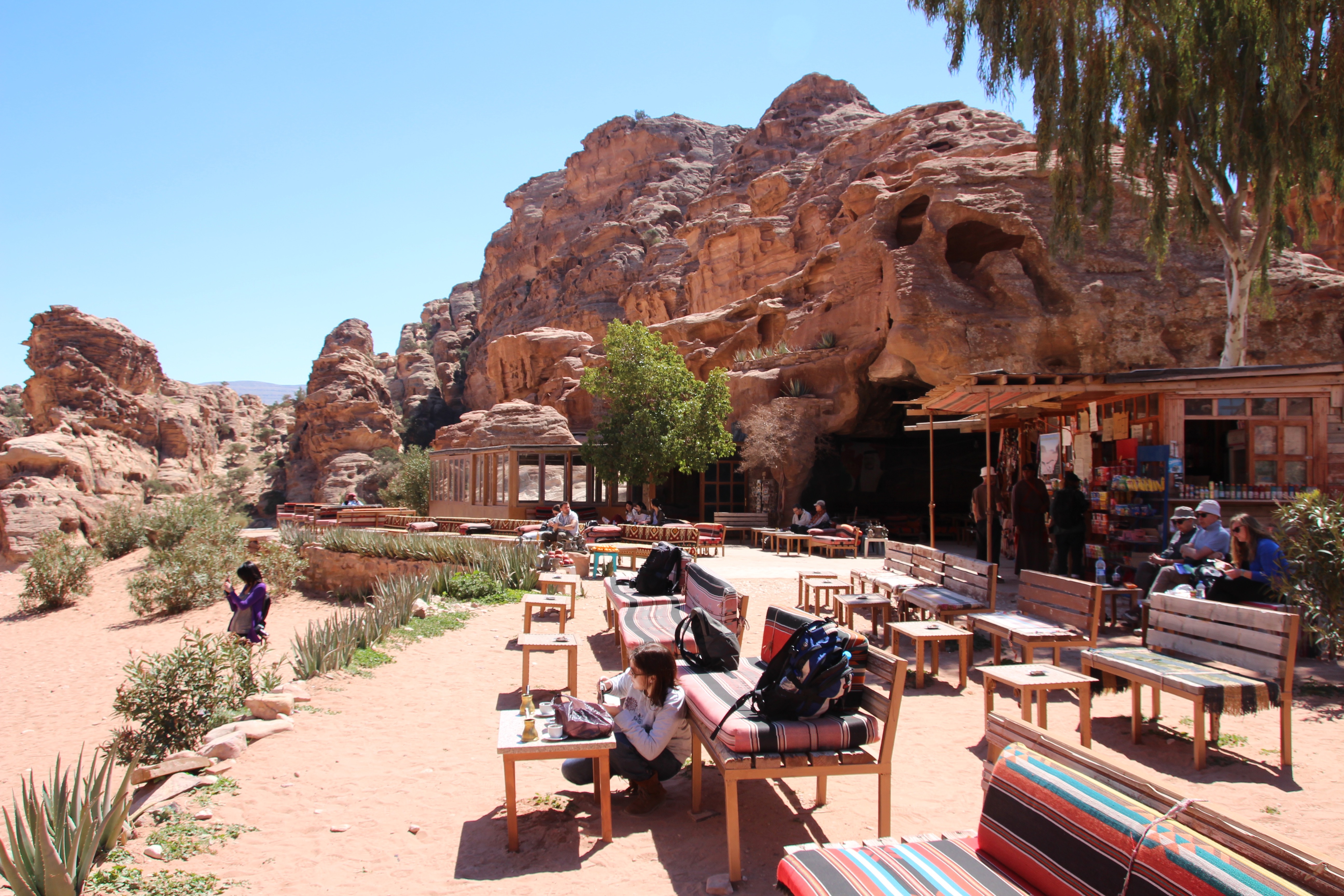
After you witness this magical monument continue on past multiple tombs carved into the cliff faces. We stopped and had an arabic coffee in a dug out cave in the side of a cliff. The room was quite dark but we made ourselves comfortable on the cushions. The cave floor was covered with colourful arabic rugs. While we enjoyed the strong aromas a little kitten decided to cosy up to us for cuddles. By the time we emerged from the cave Petra had come to life with local Bedouins on their horses and opening their stalls. There were so many little stalls selling everything from jewellery to books and hand made soaps. One stall worth visiting is run by a New Zealand woman named Marguerite, who in the 70’s ventured to Jordan on a backpacking adventure. On her travels she met a local Bedouin man whom she ended up marrying and living with, in a cave, in Petra for seven years before resettling in a nearby village. She sells beautiful silver jewellery and she also sells her fascinating biography called ‘Married to a Bedouin’ which tells her story about her life in Petra and the experiences of Bedouin life. An interesting fact about the local Bedouins is that over 150 families once lived in the caves in the ancient city right up until 1985 when the site was designated as a UNESCO World Heritage site. The semi nomadic people were forced to relocate to a nearby settlement. However, there are still a small amount of families who remain living in the caves in Petra and work by selling souvenirs to tourists.
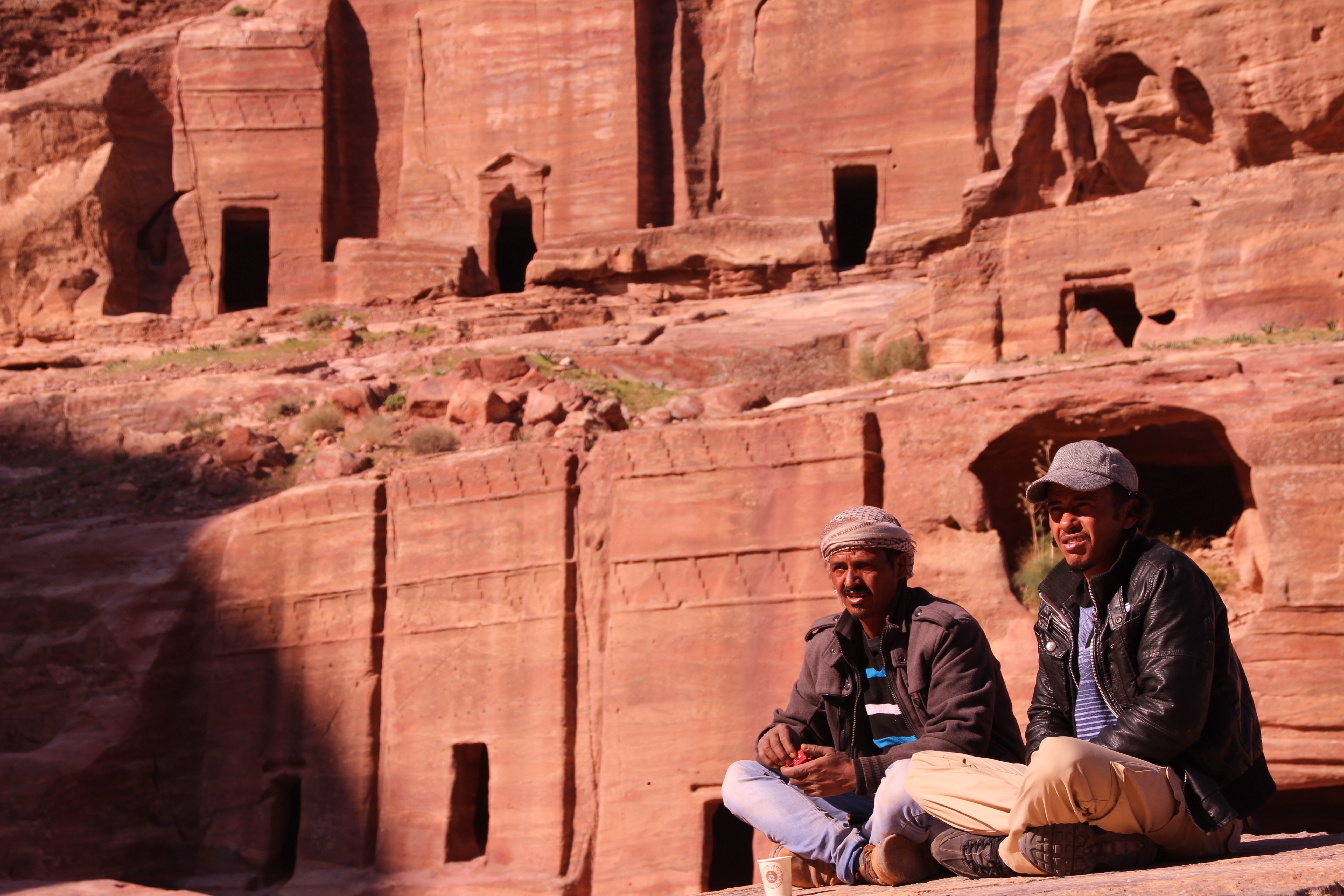
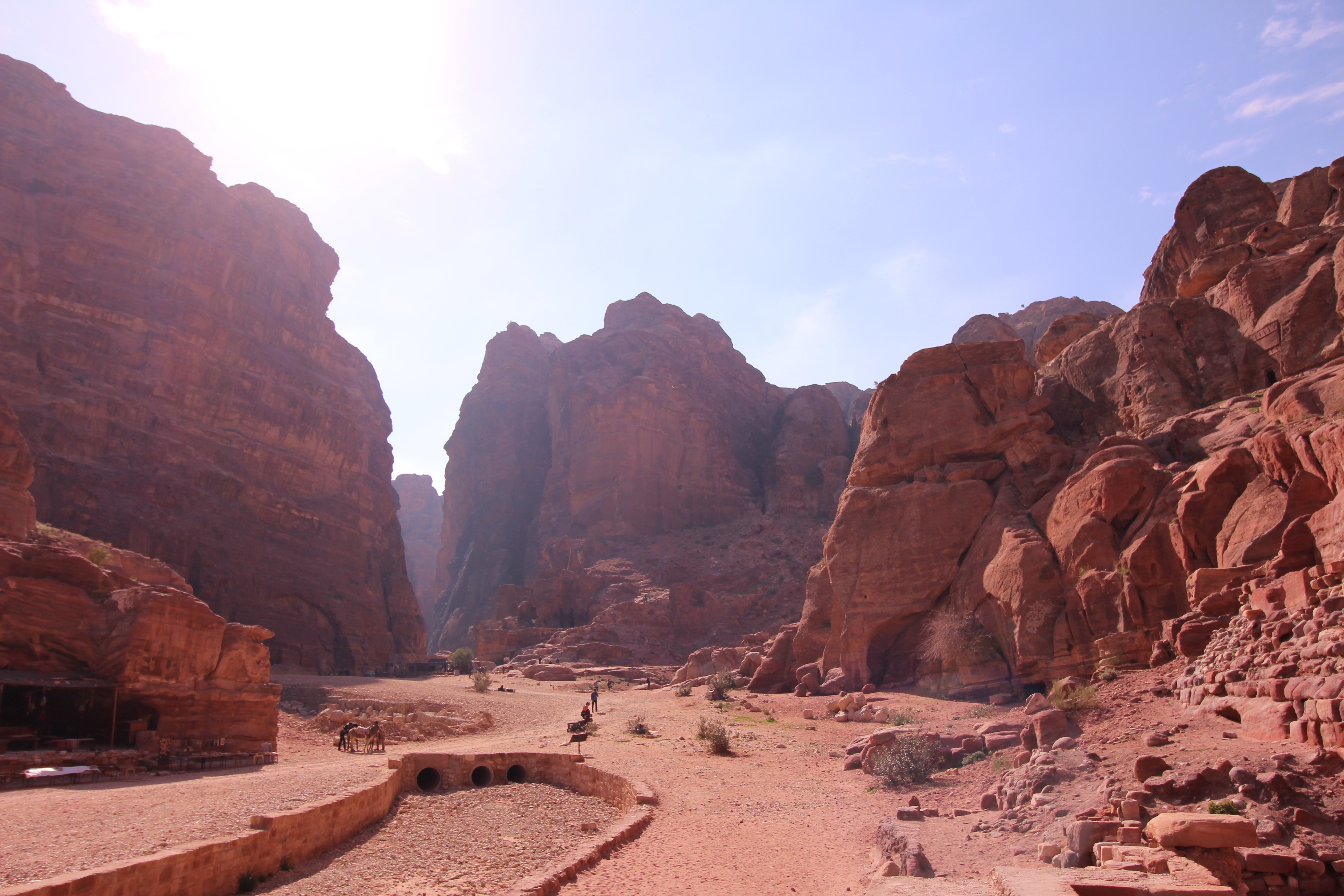
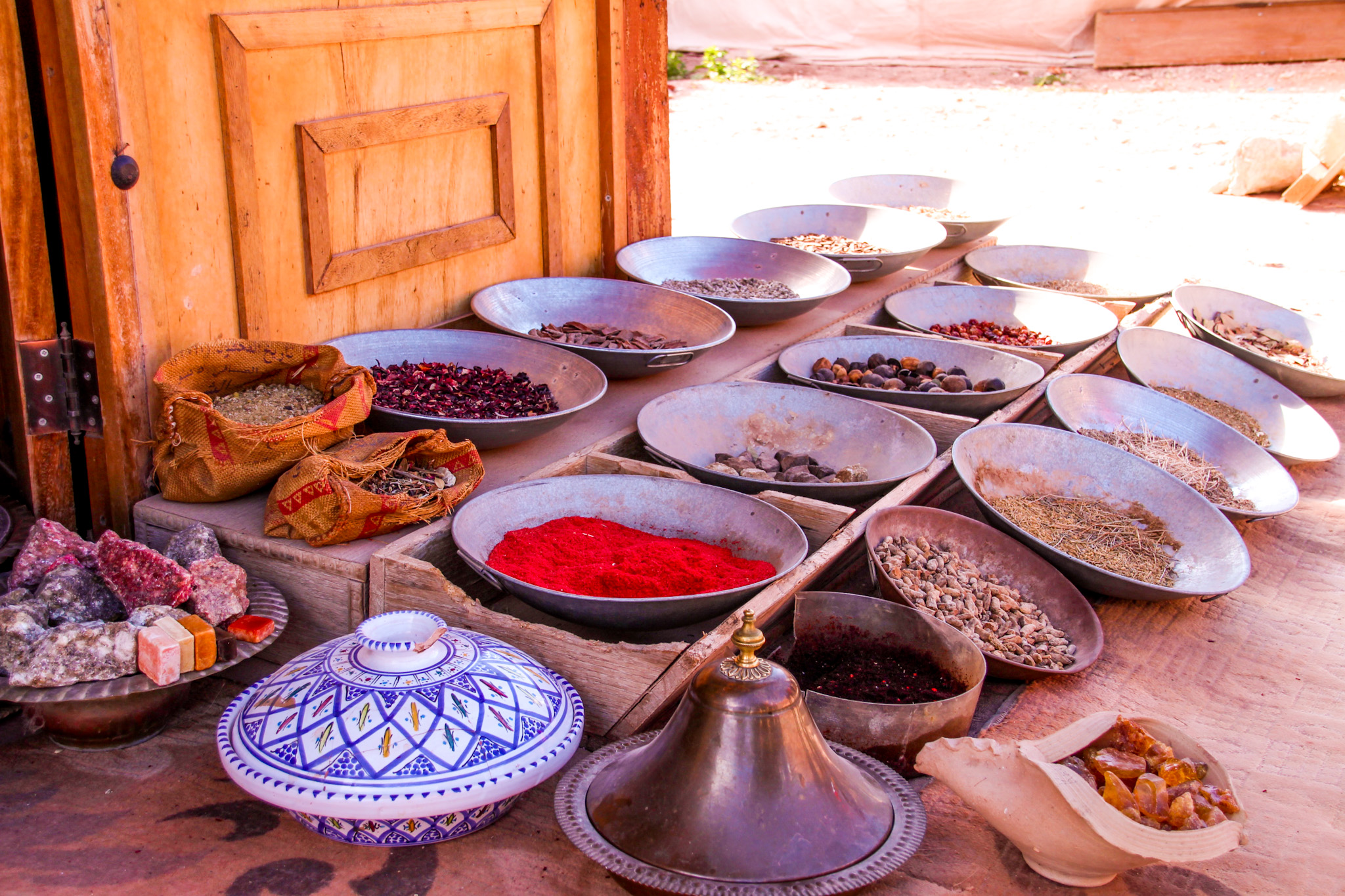
As we made our way down the winding road that led us to the only amphitheatre in the world that is caved into natural stone, we passed local men on donkeys and camels who were arriving for the day to offer tourists local transport around Petra and to the Royal Tombs. These are four prominent tombs that are carved side by side into the mountain that overlook the city centre. Due to their detailed facade, it is believed that they held prominent families of the time or even the Royal family, hence the name. The views from the top of the Royal Tombs across Petras city centre are remarkable. In the distance you can see Cardo Maximus and the ruins of a 5th century Byzantine Church which boast well preserved mosaic decorations.
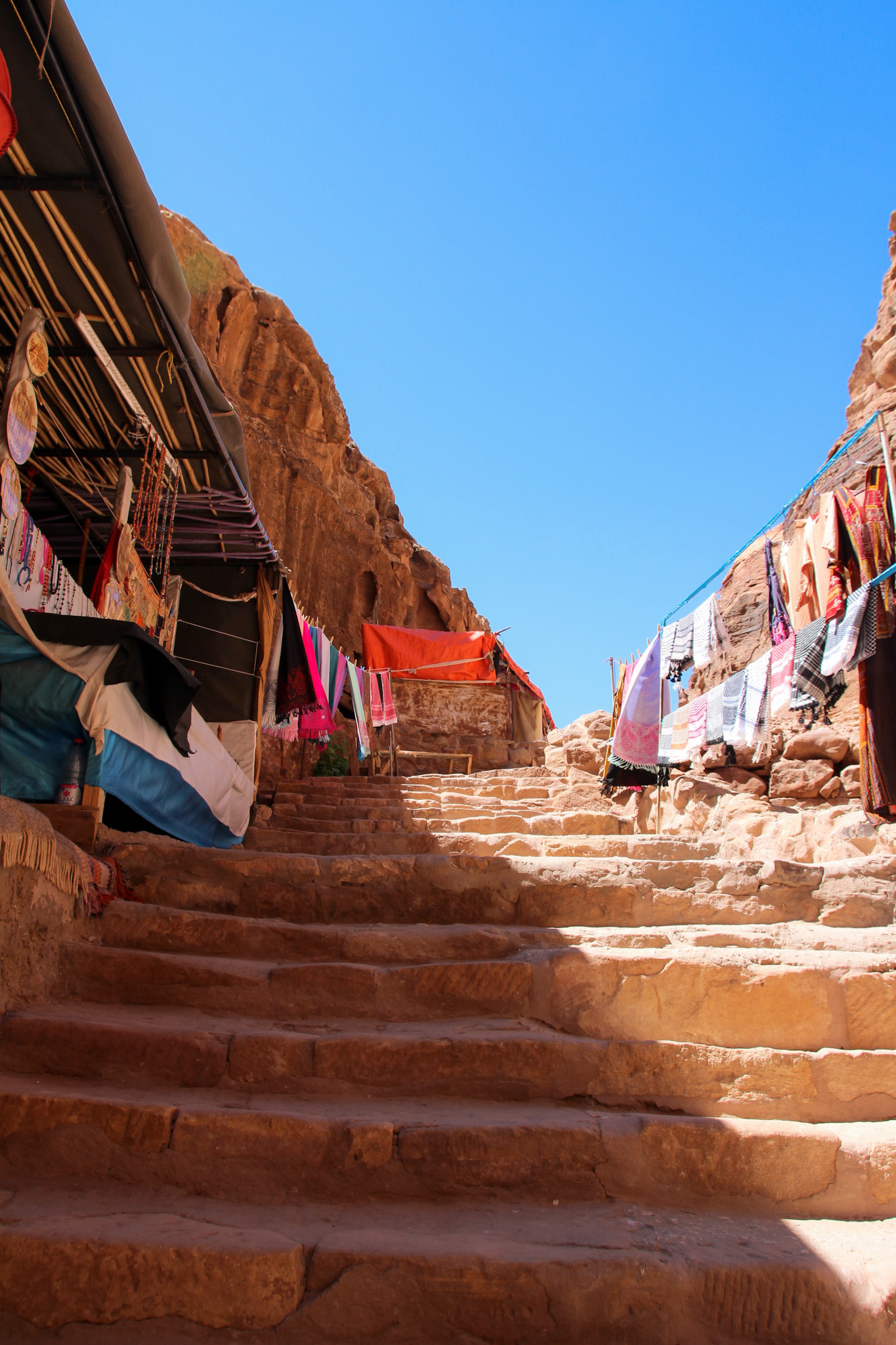
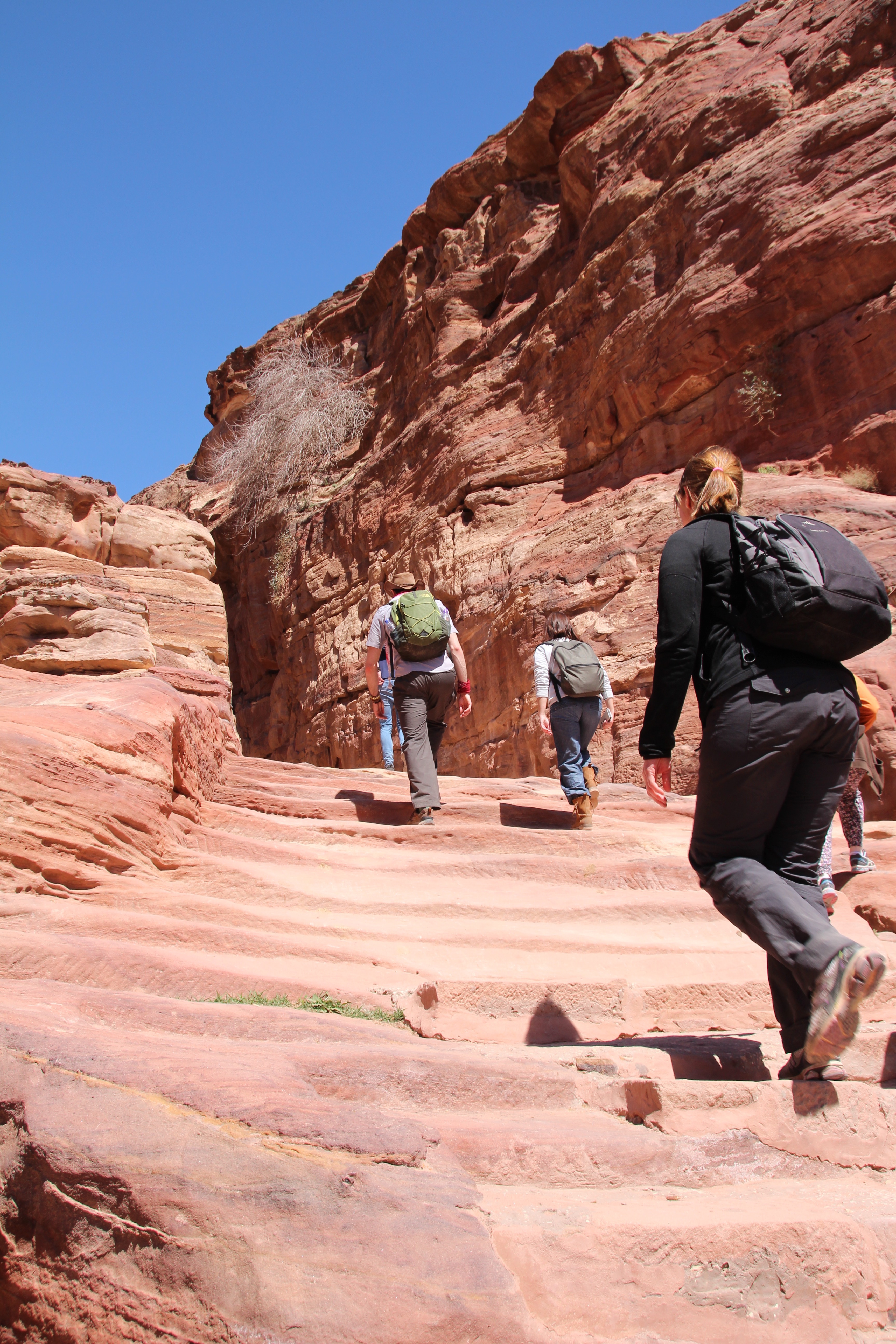
After a quick coffee break under the shade of some gum trees we made our way on the first big climb of the day, to Ed-Deir, aka the Monastery. This 850 step climb was slow going and quite difficult. It was a straight uphill climb and I had to keep stopping to catch my breath. Every local that we passed would tell us that its ‘not far”!! Not far, seemed very far! But it kept my momentum and was great encouragement to keep going. You can hire a donkey to take you up but I felt this was a bit cruel. Also, beware of stray donkeys making there way back down the steps as well!! They make their own way down the mountain on their own after dropping tourists at the top! Along the way, there are small stalls that line the path with locals offering souvenirs, coffee and water. Every stall was offering ‘happy hour’ prices. The good thing about the sellers, is that they don’t harass you like in other countries. When you say no, they accept that, and you keep walking.
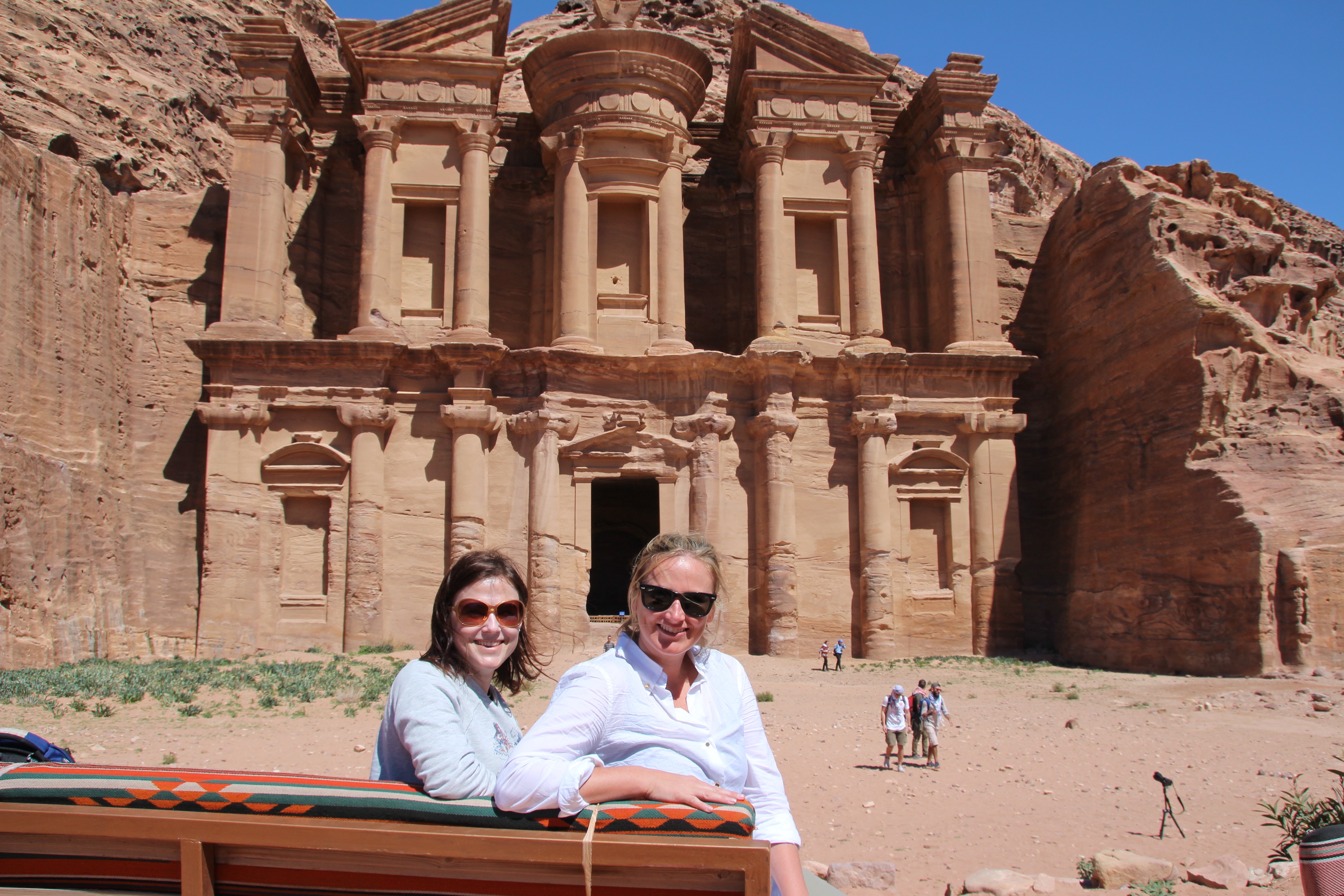
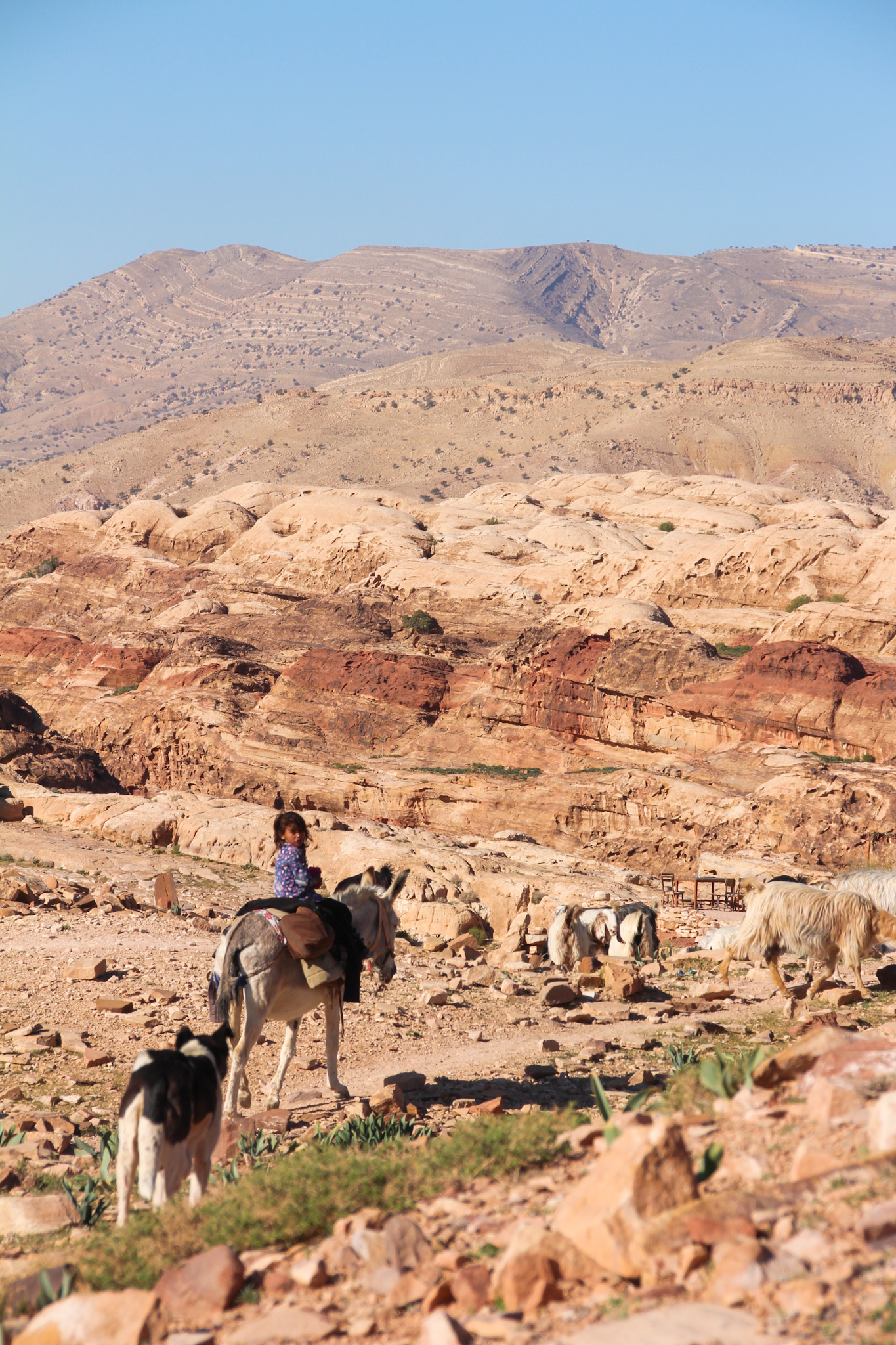
Although it was hard, the hike up was rewarded when you round the corner and see the Monastery looming over head. The grandness of the monument is daunting and photos do not do it justice. It is simply magic. This is another remarkable piece of history that is worth the uphill hike. I could have sat there all day and taken it all in. Goats and free roaming donkeys wander around looking for food and the silence with the occasional echo of a donkey in the distance is eerily peaceful and offers an ancient charm to the place. A cafe sits right in front of the impressive Monastery. We rested and took in the view and the atmosphere for an hour whilst enjoying a coffee and it was a great place enjoy some lunch of hummus and fresh flatbread.
From here, there are two other hikes that are not too long that offer views back over Petra and another one offering views over the Wadi Arabia. Before making the hike back down the mountain we had a look at new excavation that is taking place. The monuments also show evidence that the ground is much higher then it once was which has helped with preservation of the ancient city.
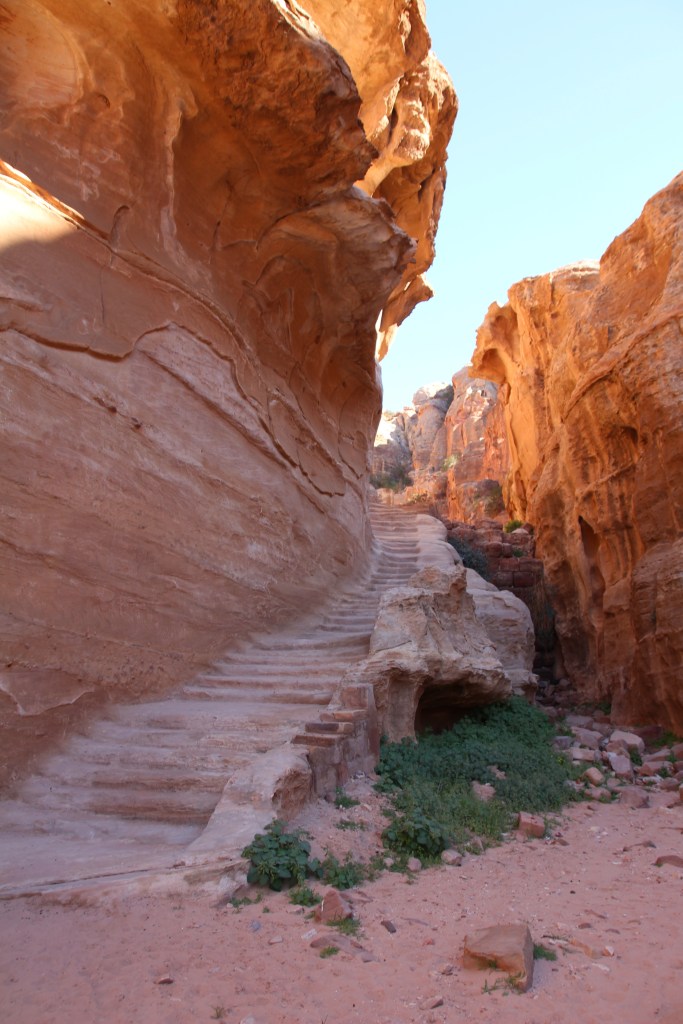
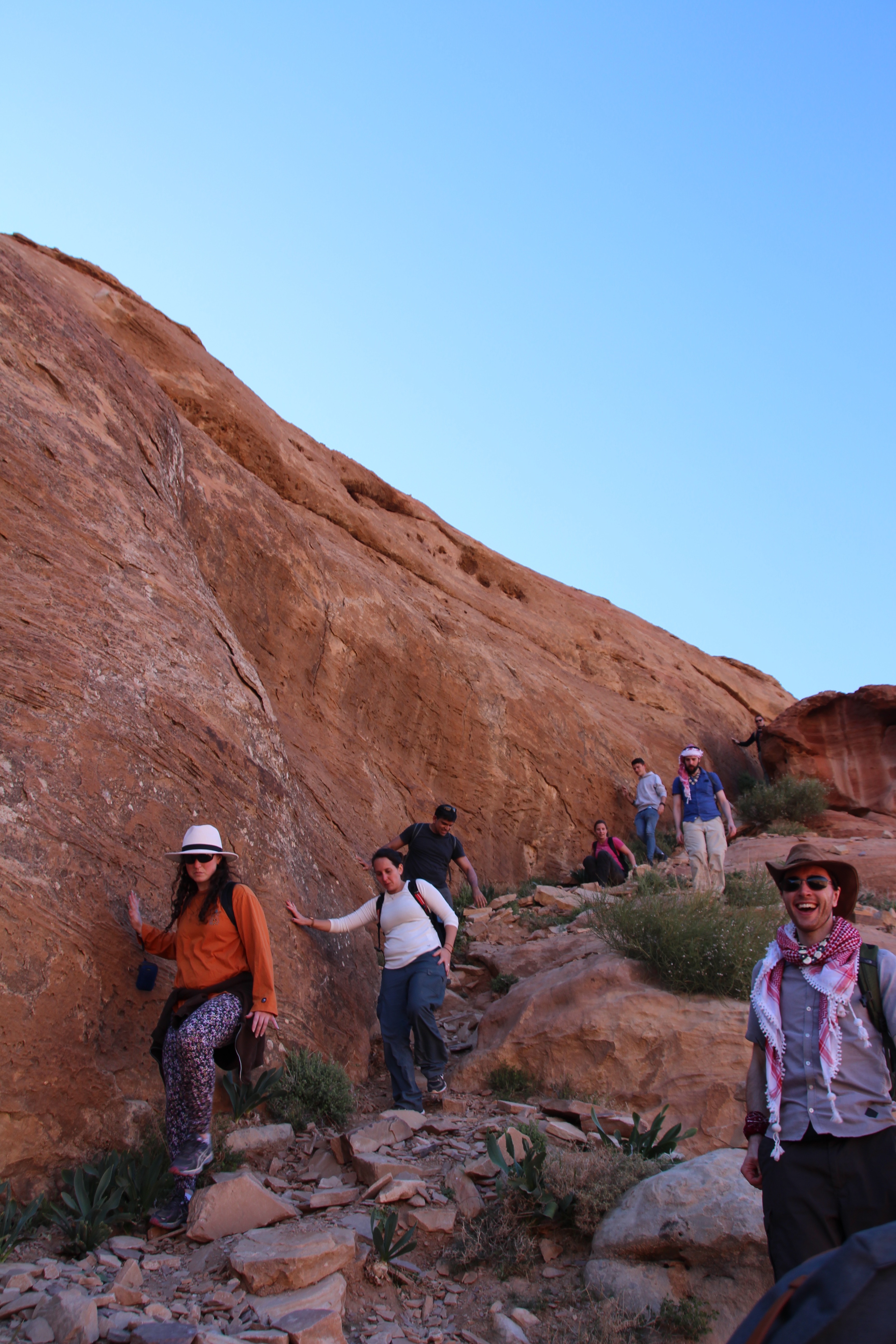
After lunch we hiked back down the mountain and made our way past Qasr el-Bint temple, which was the first freestanding structure that was built with wooden beams which allowed flexibility and movement from numerous earthquakes. This is credit to why the building is still standing today. We continued making your way up another hill which curved around through the hillside as we began a hike that the Nabateans would take on their pilgrimage to the High Place of Sacrifice. I thought this was going to be a lot easier however I was soon made aware that this hike was going to be a lot more challenging then the hike up the the Monastery. Maybe I felt this way because I was already so tired!
The stairs were a lot steeper then the Monastery and just kept going up and up! We stopped on the way at various viewpoints that offered a dramatic backdrop of the surrounding city of Petra. There were not as many stalls along this path but we did pass a couple of Bedouins along the way. Along the way we stopped at the Tomb of the Roman Soldier and opposite this was what was once the dining hall where travellers would stop and feast before continuing on their pilgrimage. Inside this tomb the ceiling was stained black which is presumed to have occurred from internal fires built by the Bedouins. This pilgrimage used to take days and we did this in one day. We also found the hidden drainage system that used to deliver water around the city.
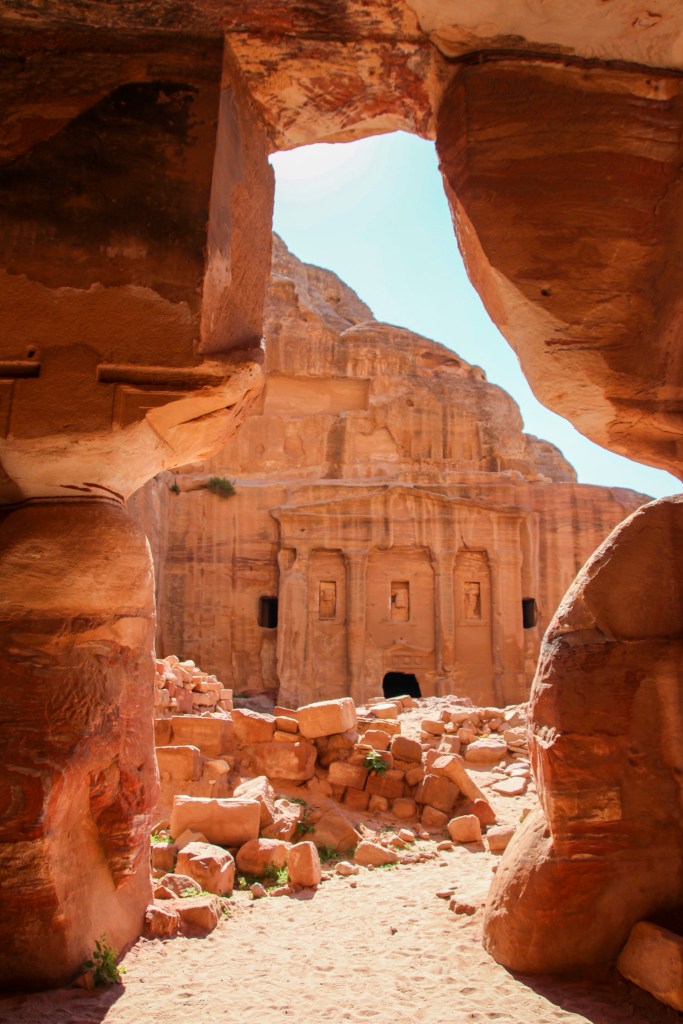
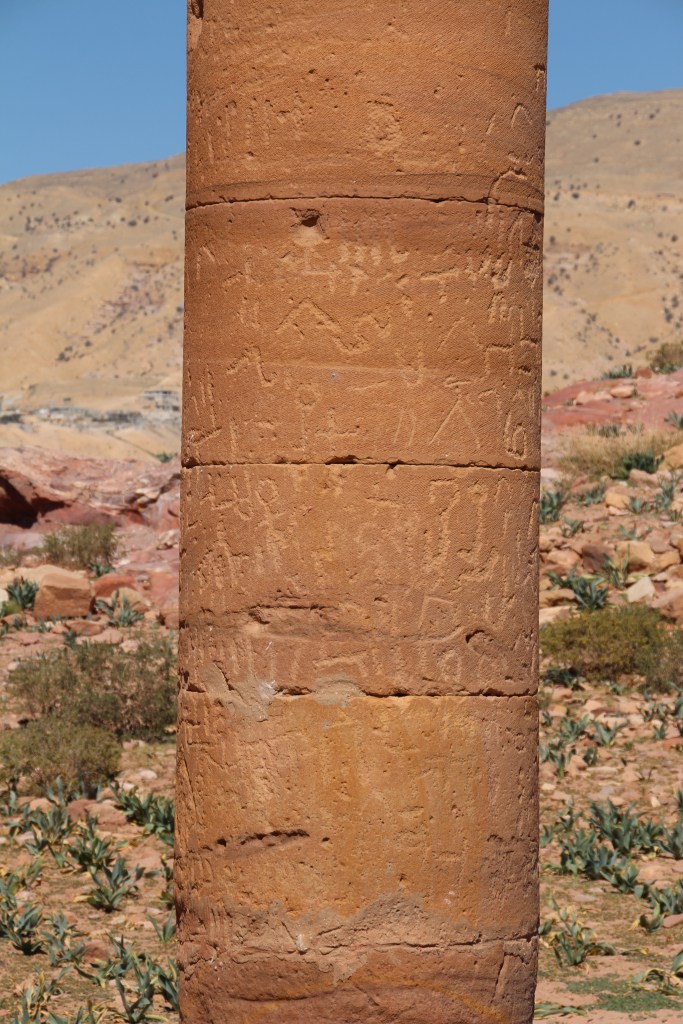
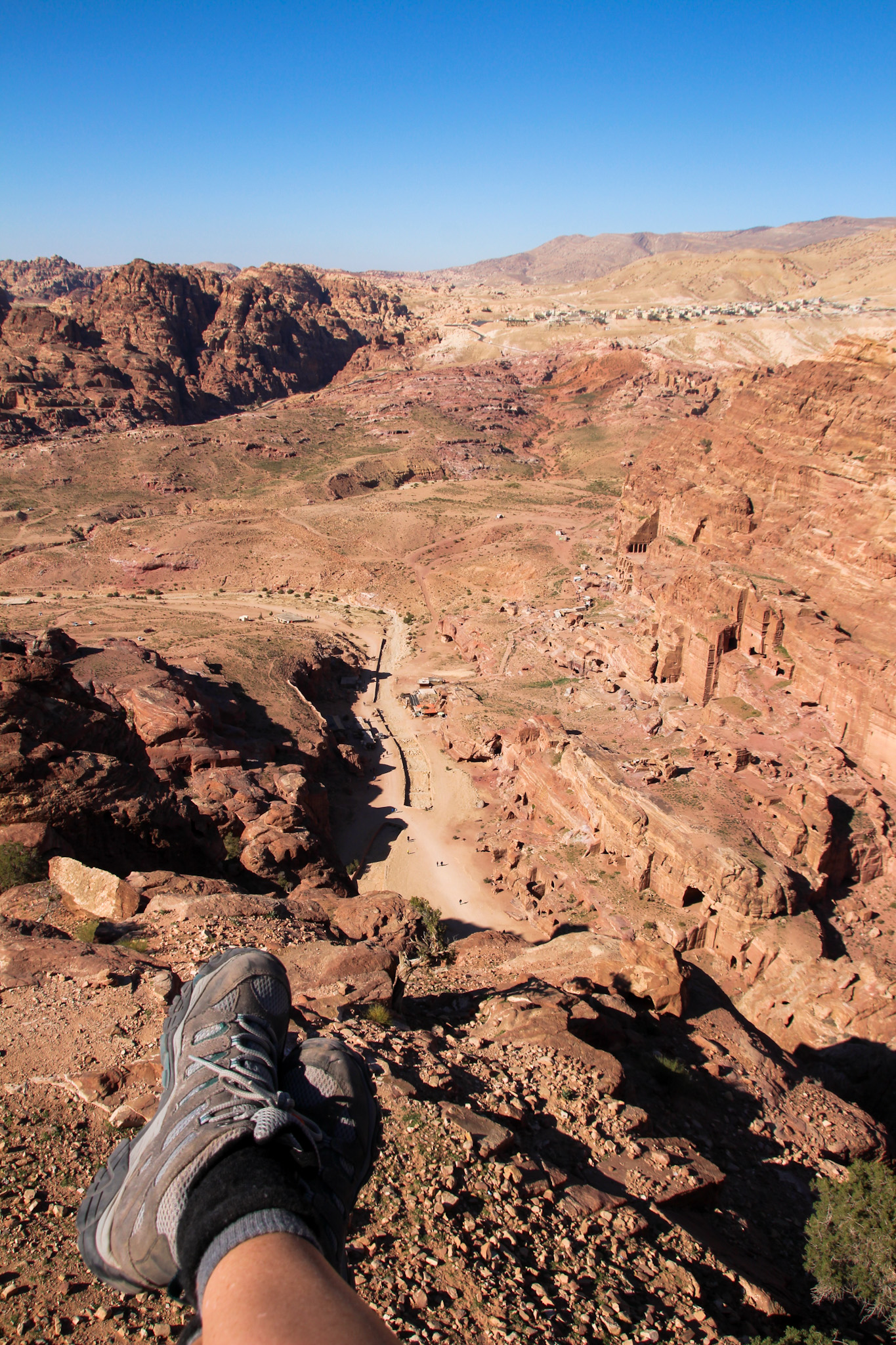
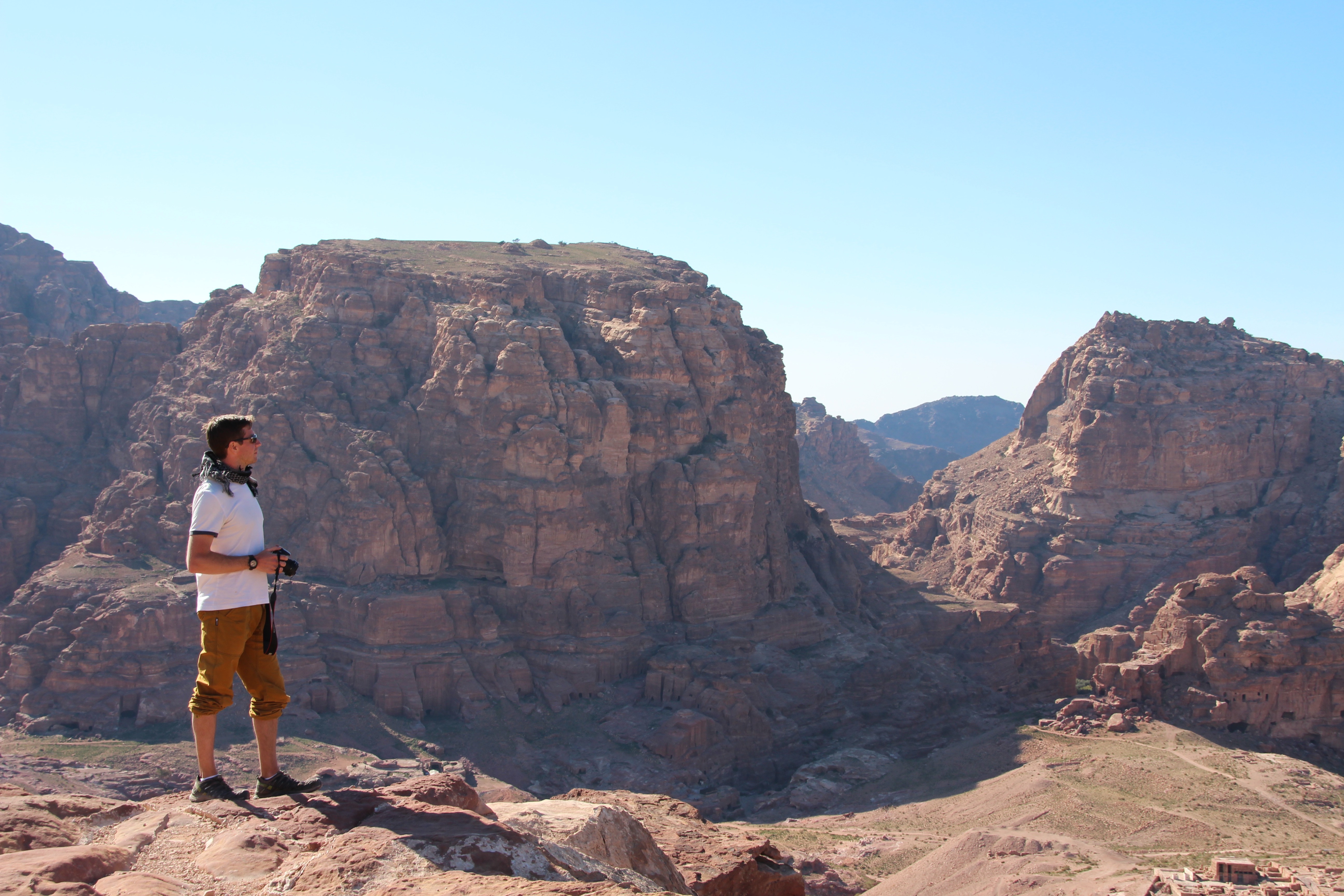
Once at the High Place of Sacrifice we saw where the sacrificial temple once stood high on top of the mountain which showcased a panoramic backdrop across Petra. From this vantage point, we could see the Royal Tombs and the top of the Monastery. In the distance to the left there is a tomb on top of the mountain that is said to house the brother of Moses. A fun fact, it is said to be the only place where all three prophets, Moses, Mohammad and Jesus, have visited.
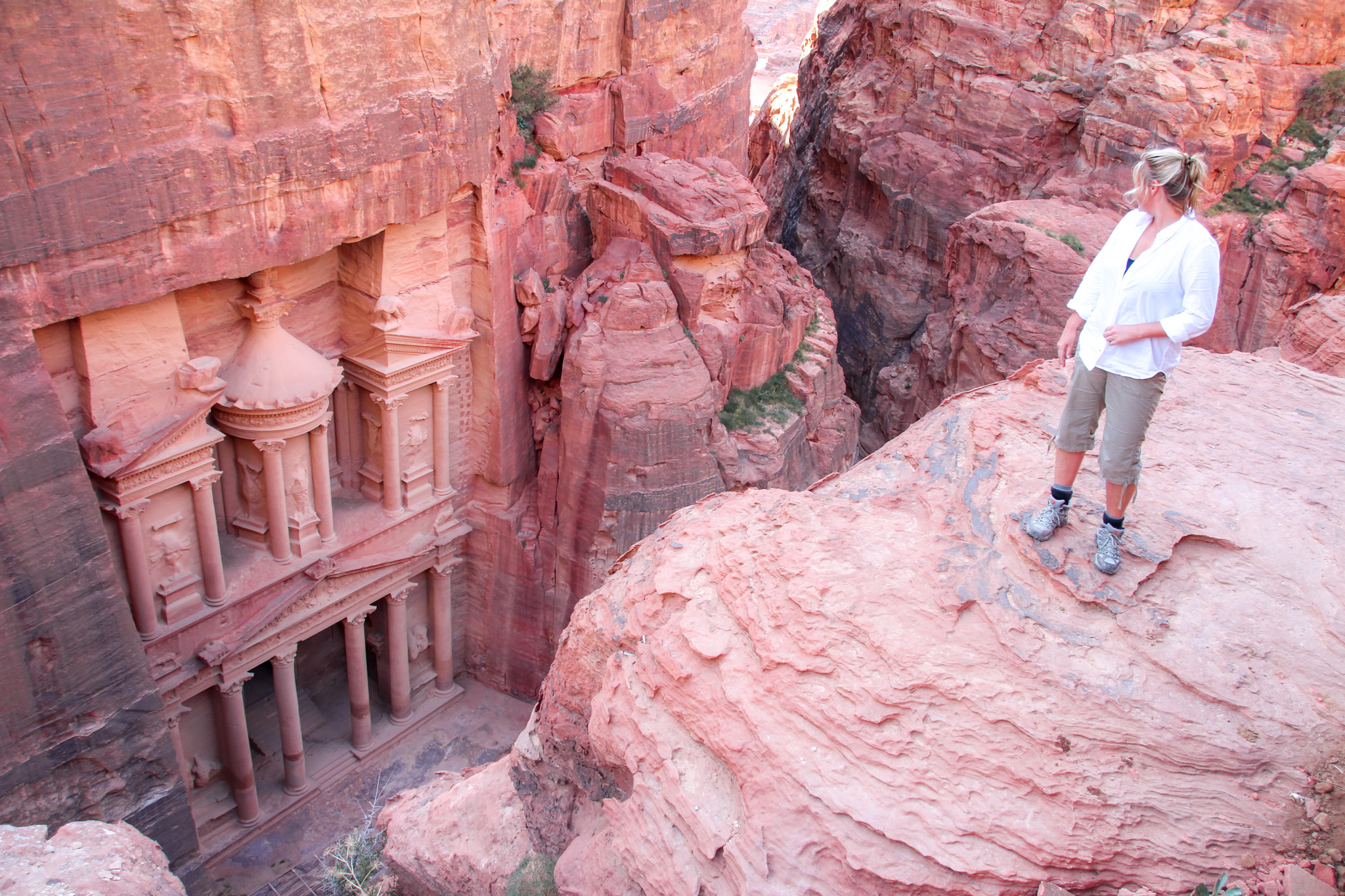
After a quick break, we continued our journey to find the viewpoint over the Treasury. We had 2 options, the easy way or the hard way. Of course we took the hard way! I felt like we were off the beaten path because we were climbing up and down rocks and we had no idea if we were even following a path. The viewpoint that looked down over the Treasury was so high up. It was daunting looking back down upon this stunning monument. And although we could not see other tourists down below we could hear how busy it was, with noise echoing through the canyons.
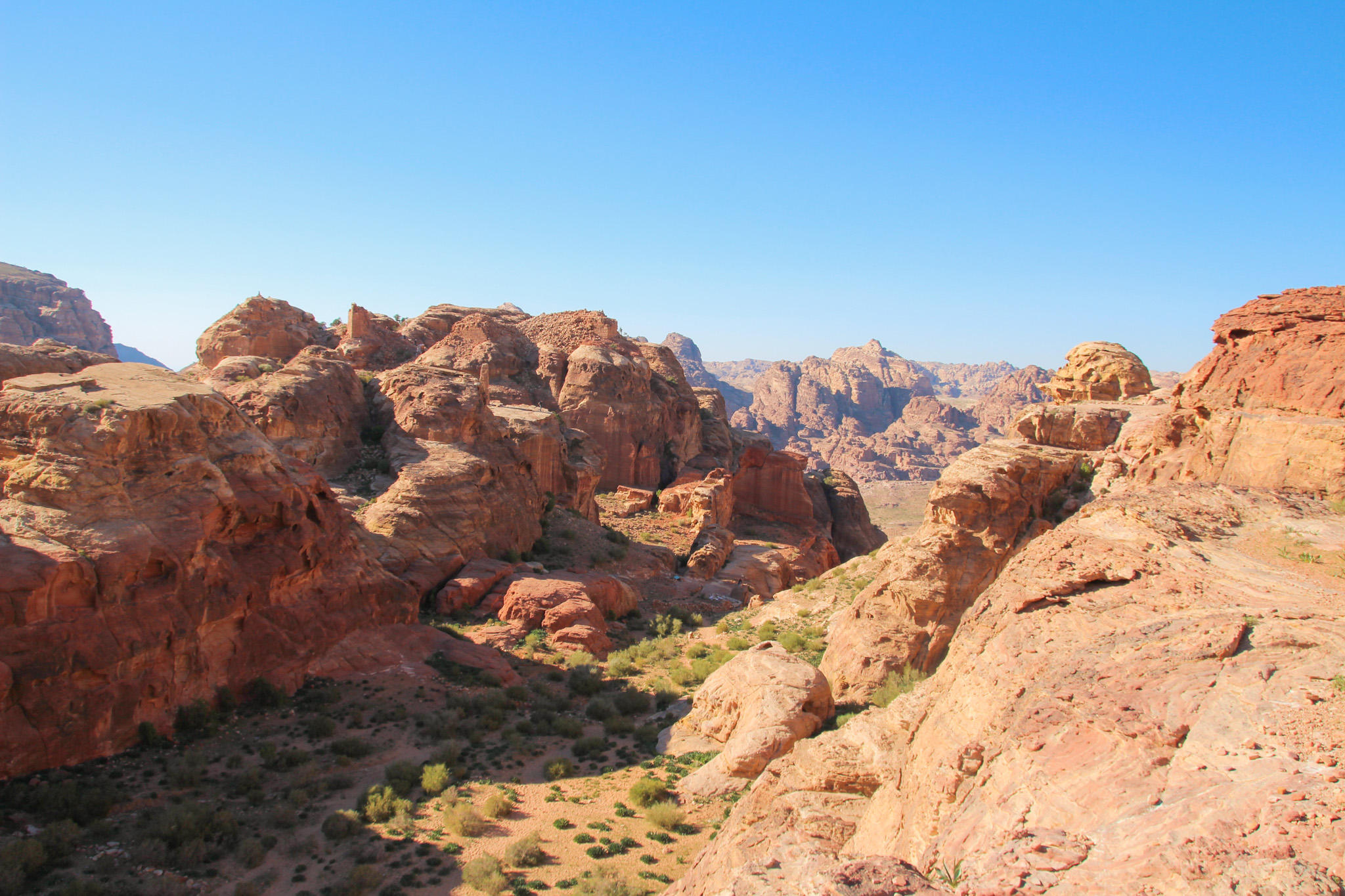
The hike back was much easier. After rock climbing back through some shrubs we came to an open, flat field, which was a nice change of scenery. I thought that this was the end of the up hill climb. To my surprise we had one more rock to climb and once we were at the top we found a smooth stone pathway, naturally forged from large rocks, that led us back to the main road in Petra.

After our massive day of hiking, we soothed our sore muscles in a Turkish Hammam before indulging in a relaxing massage. The steam room helped relax our tired muscles and assisted with recovery.
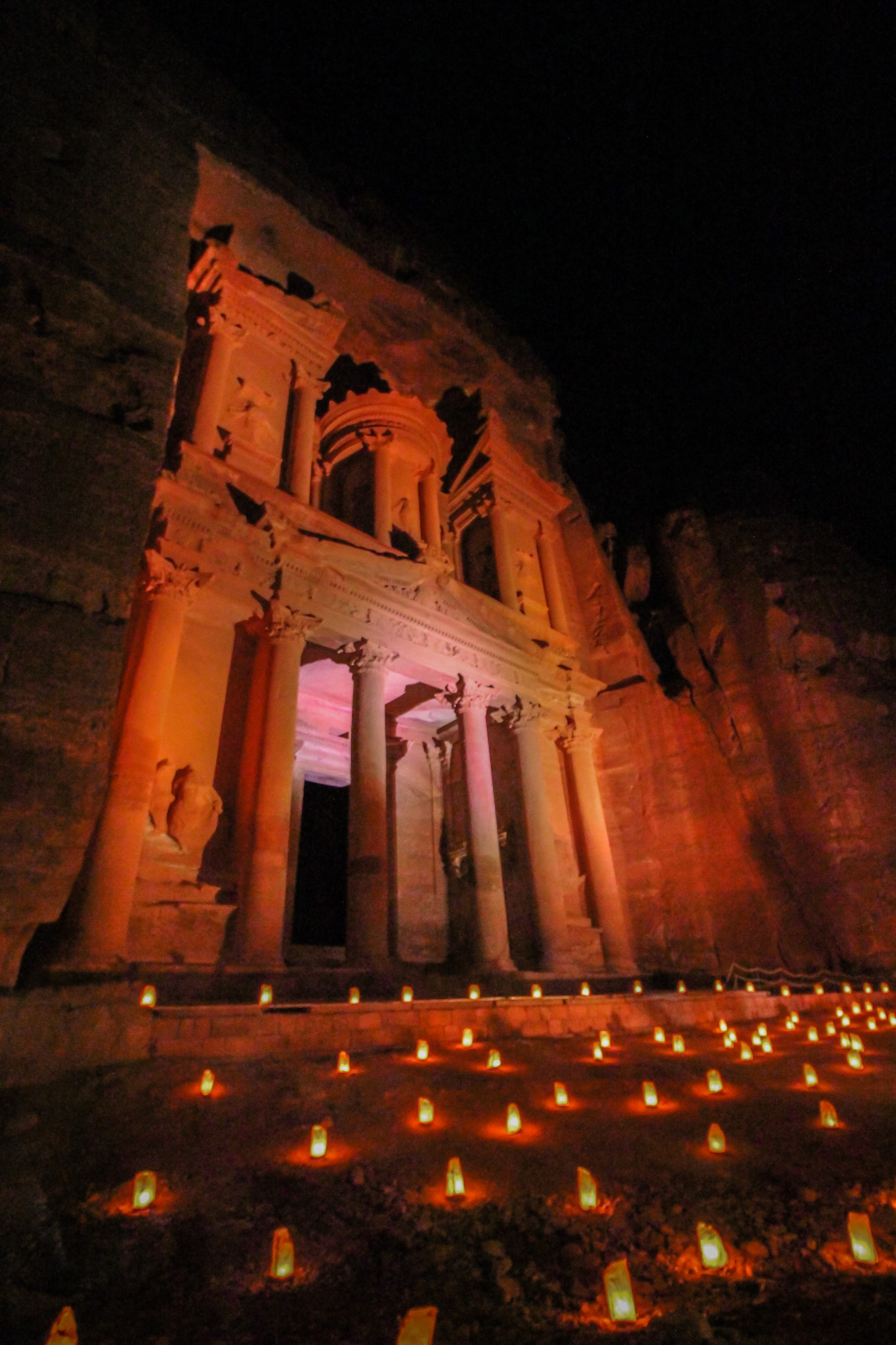
Before the day was over, made our way back to the Treasury for our Petra by Night experience. Walking back through the Siq in the dark, we followed a candle path and once we reached the Treasury there were 1,800 candles candles flickering in the breeze in front of the imposing monument. We found a spot to sit and we listened to live bedouin music which echoed through the gorge, while witnessing the Siq and and treasury lit up by candlelight. And although my legs were like jelly and my whole body was aching, it was worth the journey back to witness this magic!


Leave a Reply