
There are thousands of temples in the area known as Angkor. The archaeological site is listed as a UNESCO world heritage site. Most travellers visit the area to witness the majestic Angkor Wat, and they may choose to bypass the other temples because they believe, once you have seen one temple, you have seen them all. But I recommend you visit as many temples and ruins in the area as you can. They all differ in their architectural style and their purpose. From the smiling faces of Bayon, to the red walls of Banteay Srei and the jungles at Ta Prohm, each temple offers something very different and unique.
Angkor Wat
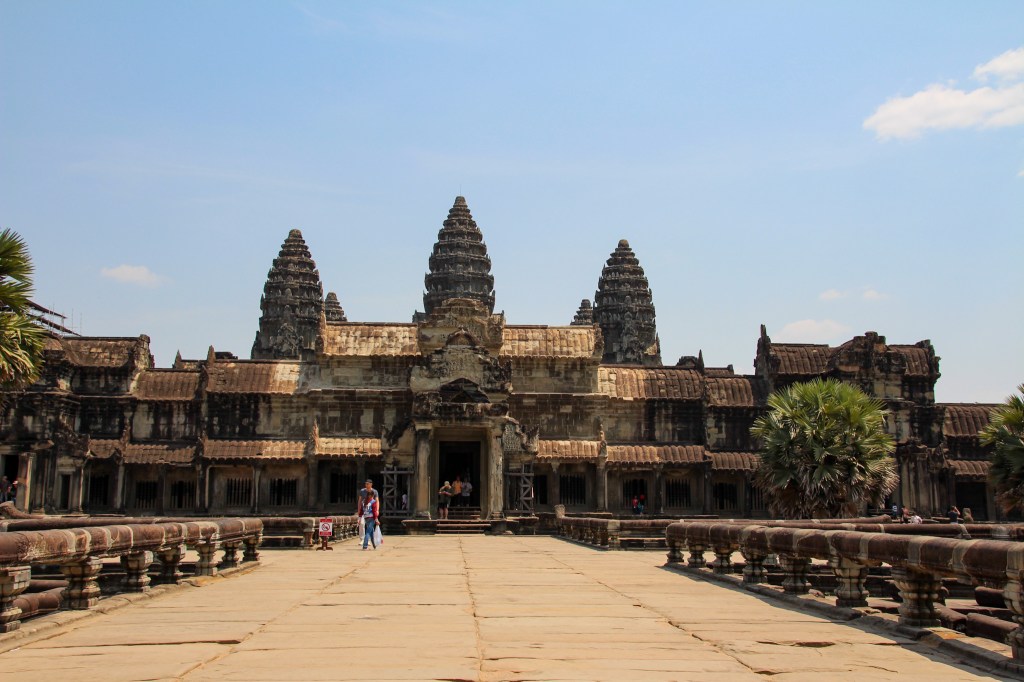
Angkor Wat is Cambodia’s ancient treasure and the largest sacred site in the world. It is now a UNESCO world heritage site and the 8th wonder of the world. The temple is admired for its grandeur and harmony of the architecture.

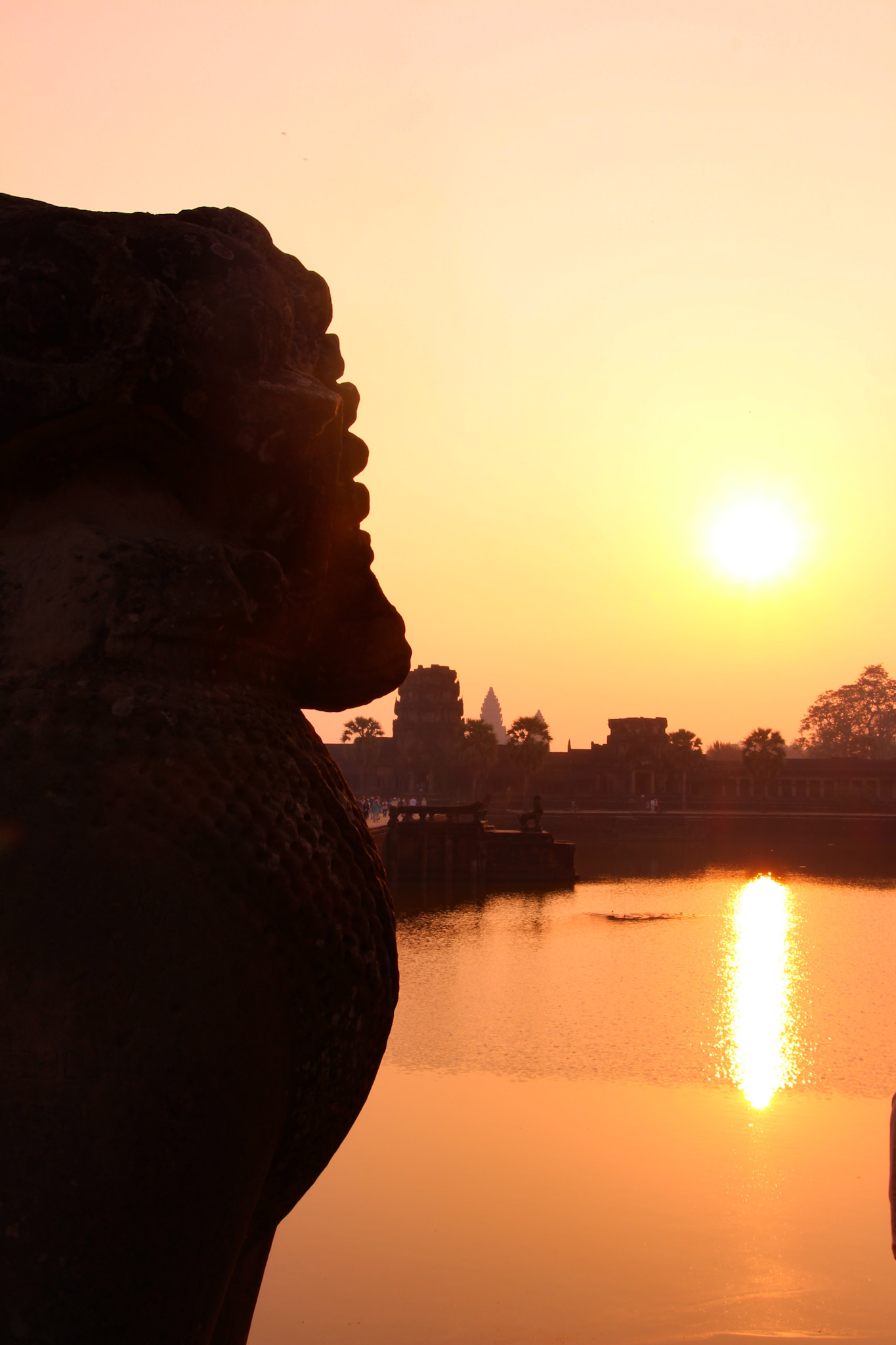

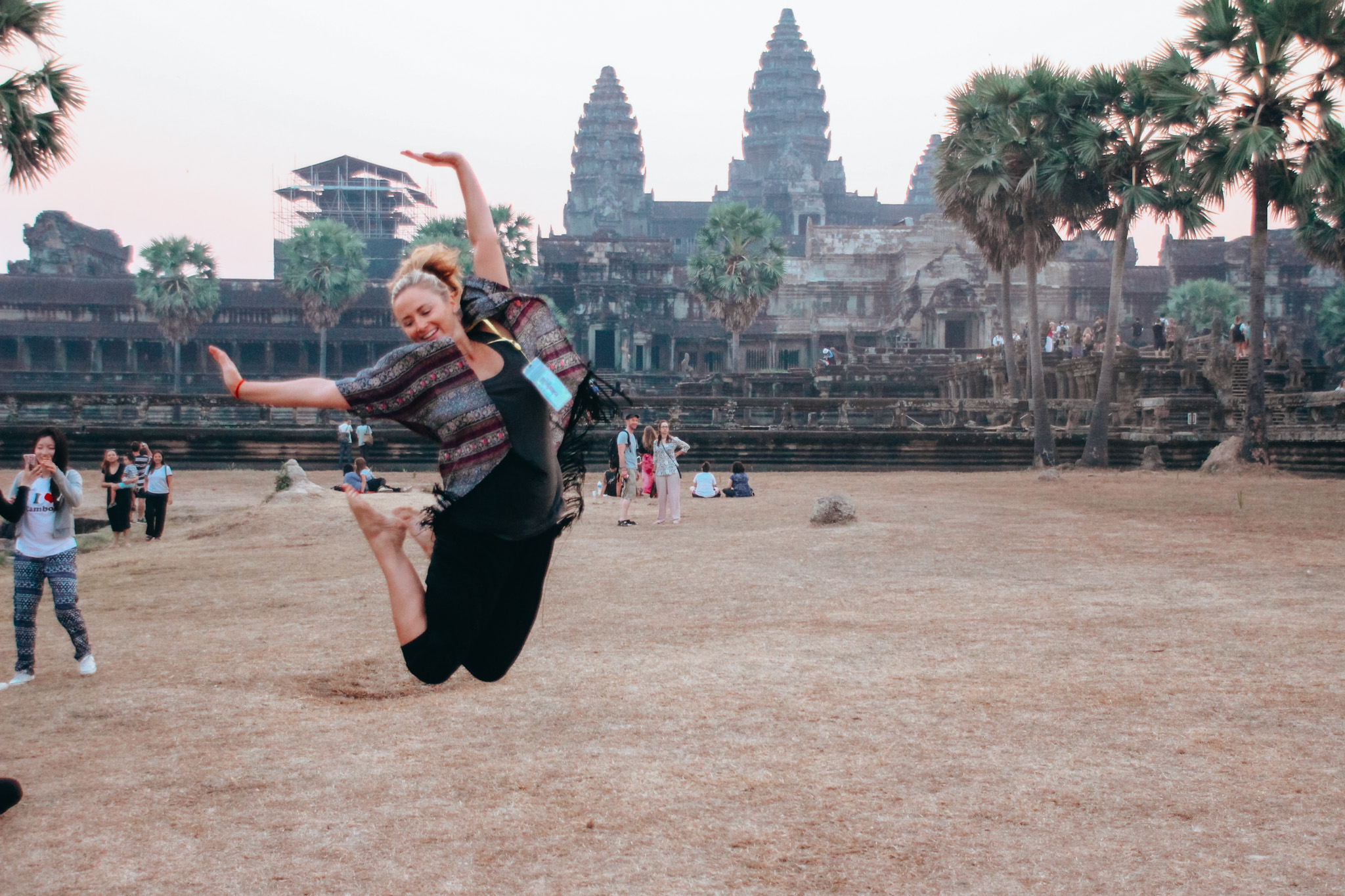
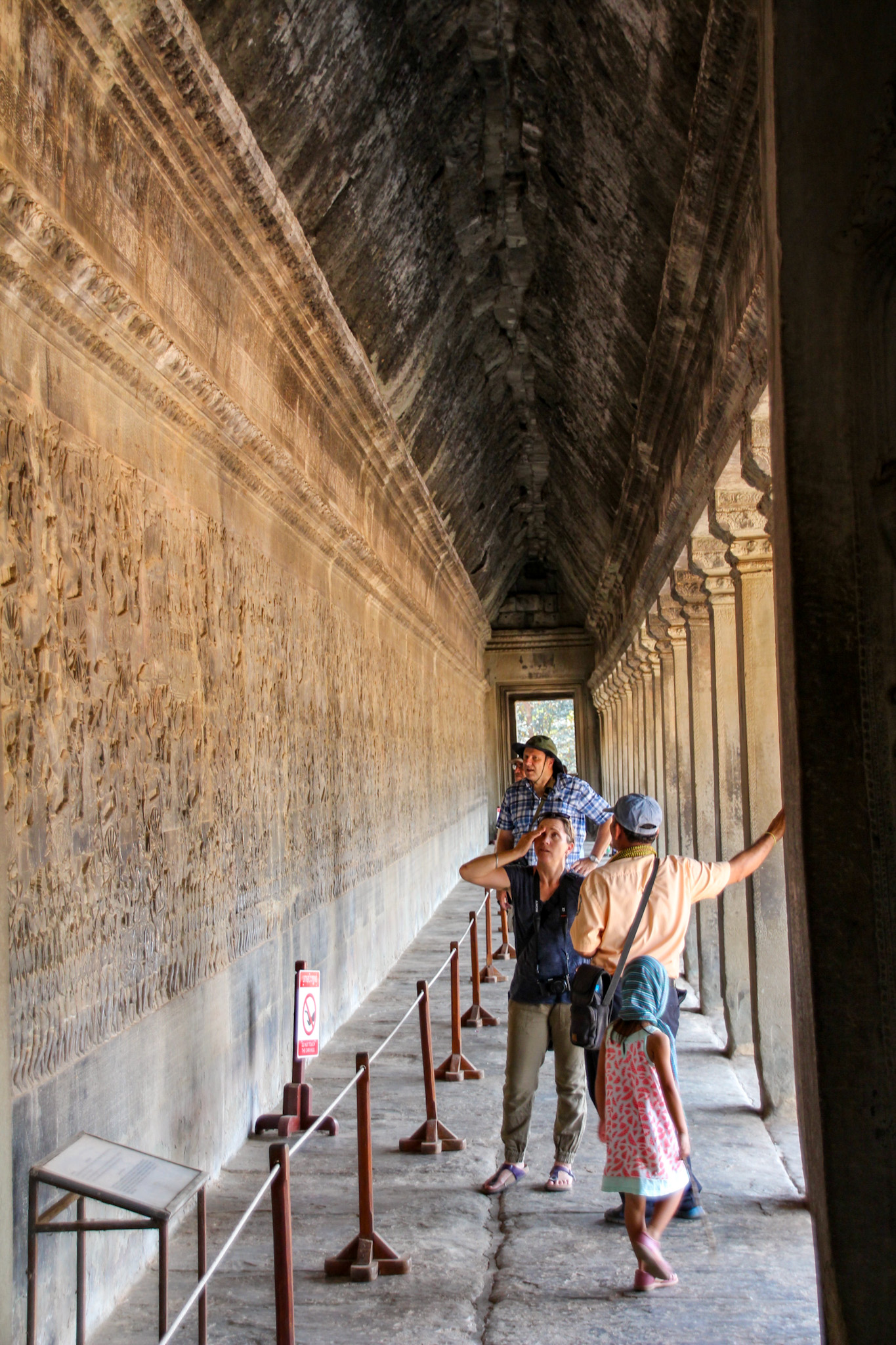
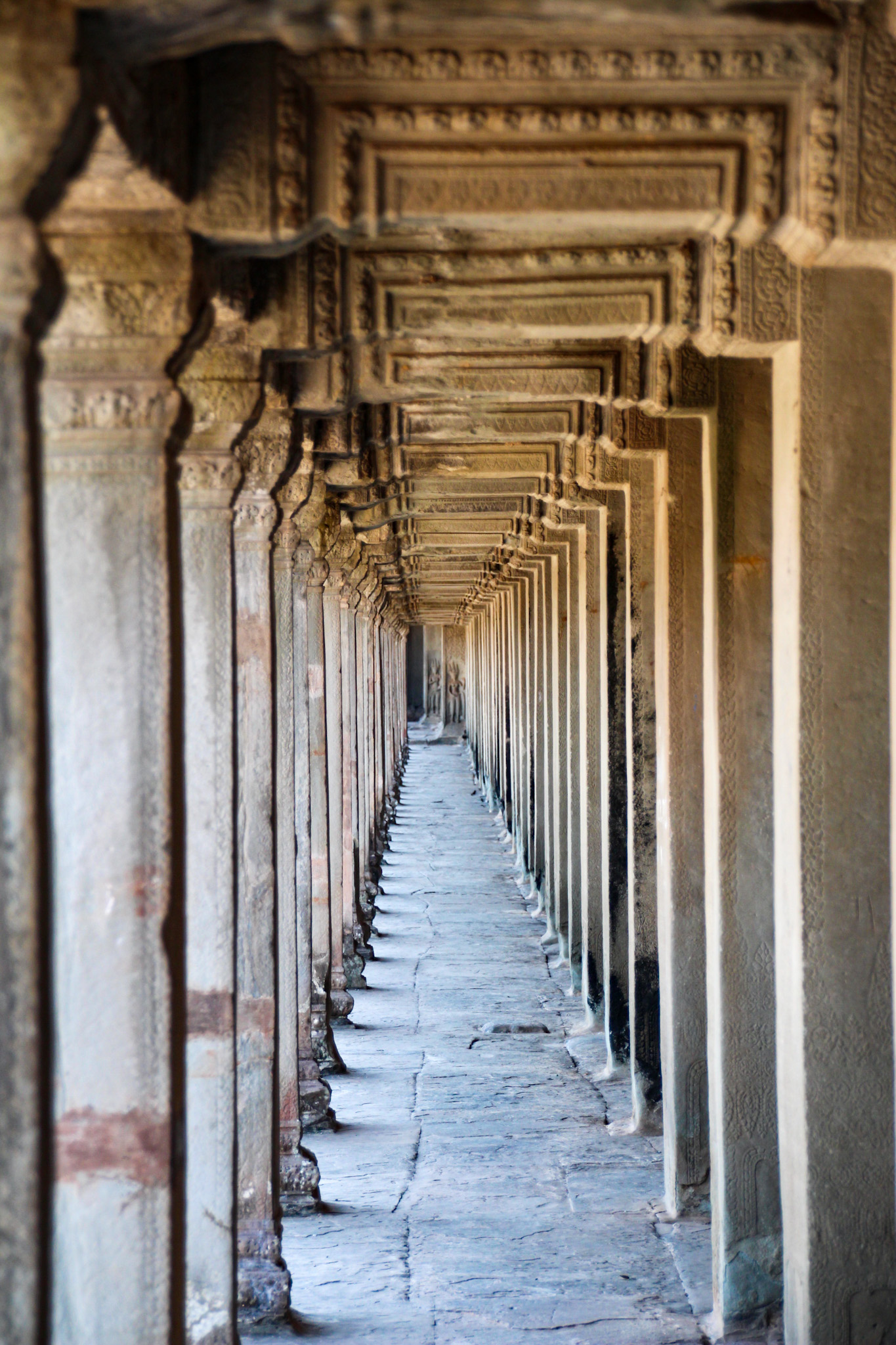
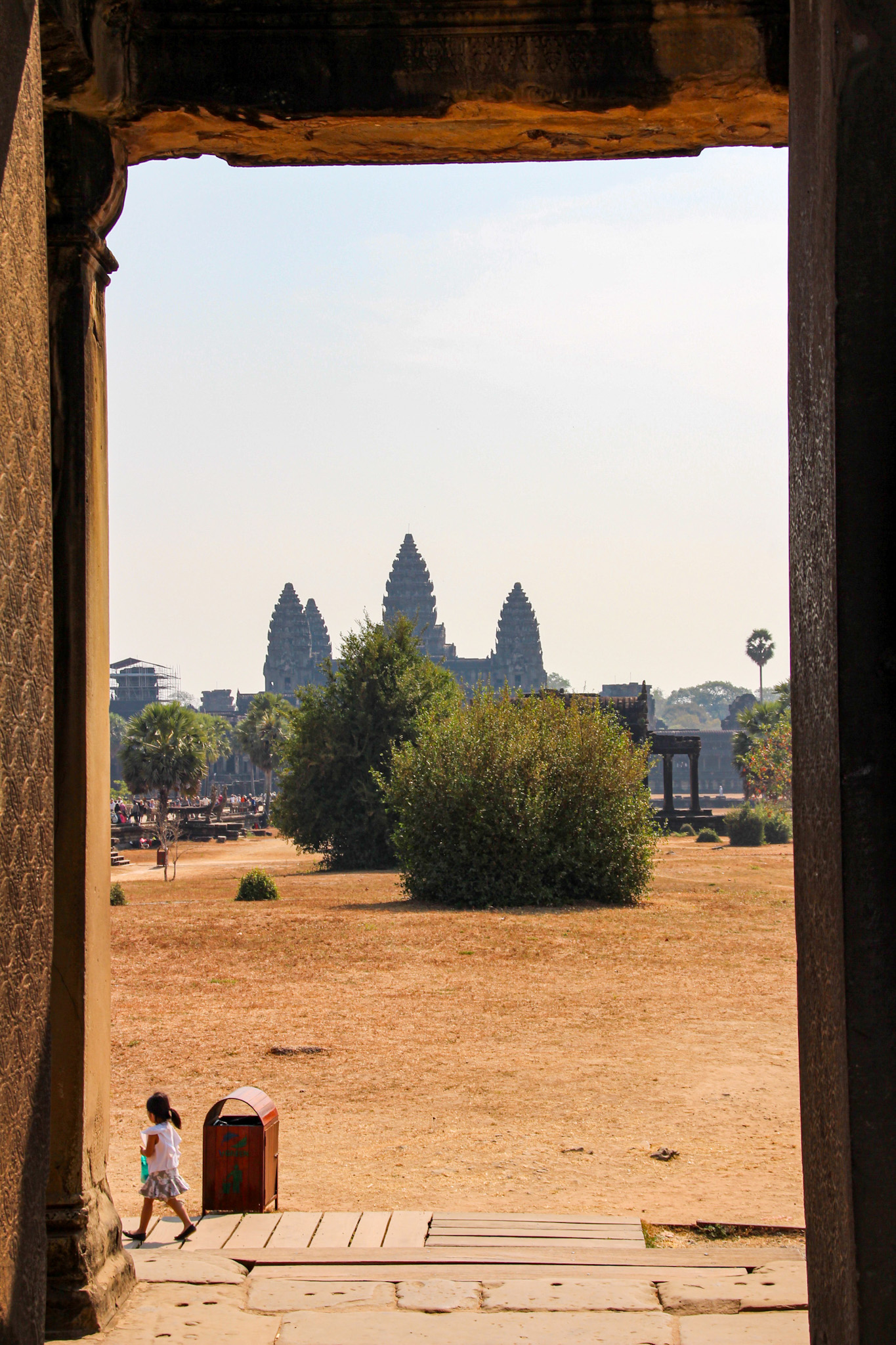
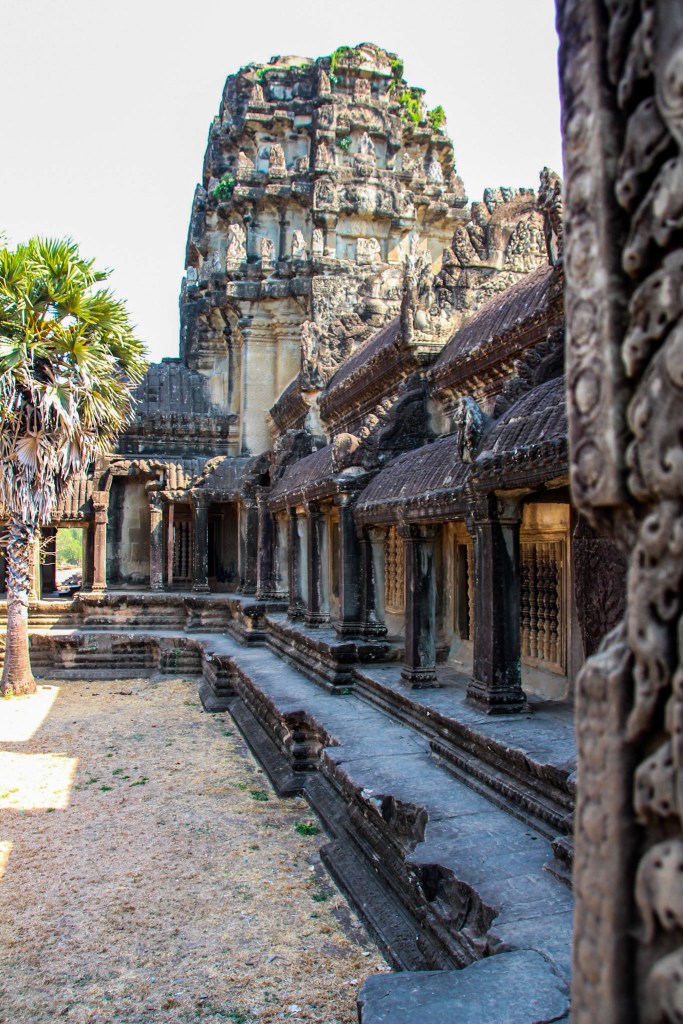
The large temple was originally built for King Suryavarman II, in the 12th century as the City Temple. Angkor meaning City and Wat meaning Temple. It was originally built as a Hindu temple and later transformed into a buddhist temple. Its grand design boasts the architectural style of the Khmer empire of the time. Some characteristics that stood out to me were the five prominent towers, that have tips resembling lotus buds. In Cambodian culture, the lotus symbolises enlightenment and purity. I also really enjoyed perusing the outer corridors which showcase intricate carvings that are so detailed, and adorn almost every inch of the sandstone walls, and columns that make up this temple. These carvings offer a glimpse into the history of the Khmer civilisation and tell stories from Hindu mythology.
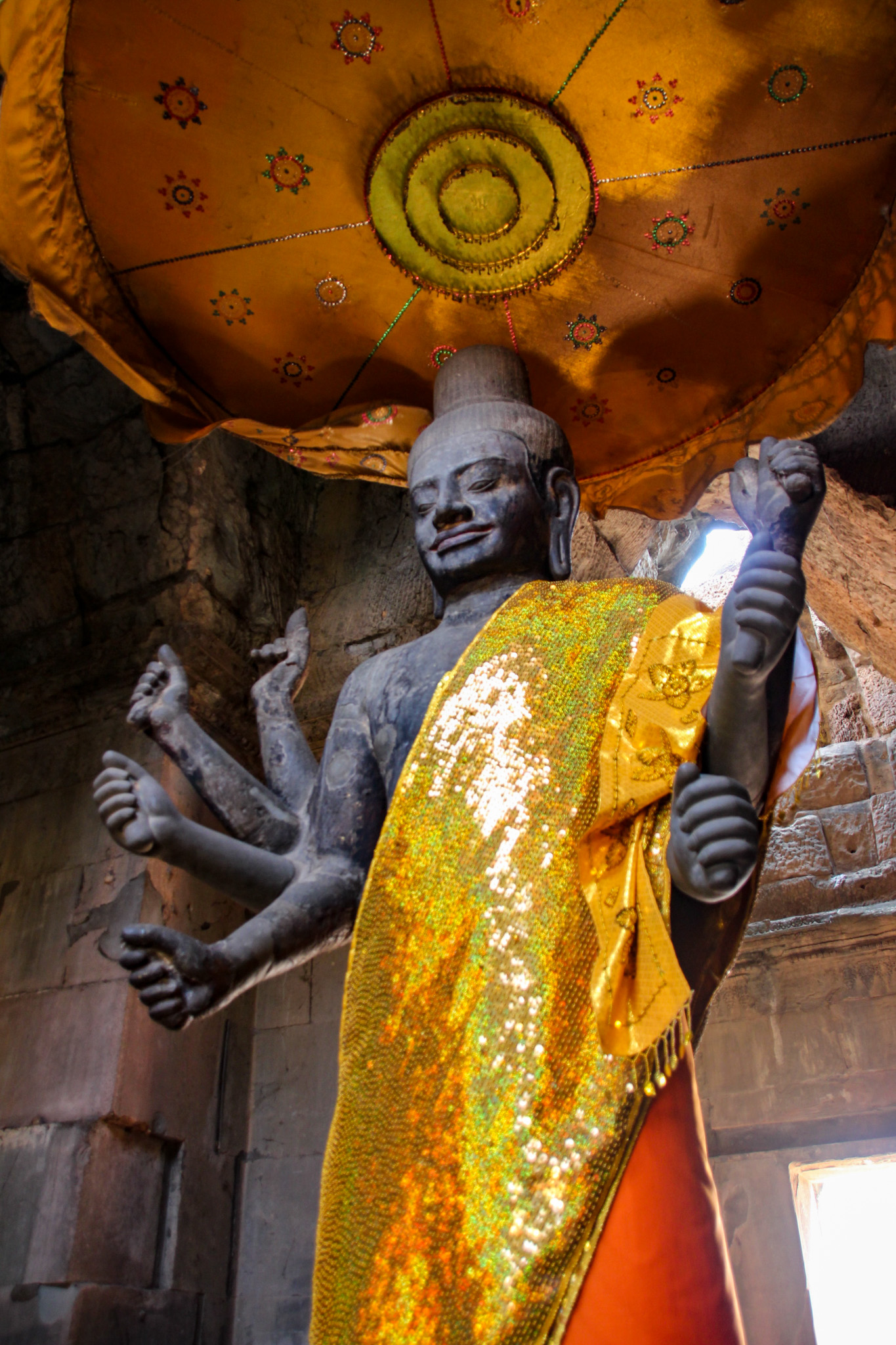


The sheer size of this temple is breathtaking and it is hard to imagine how they built a temple of this size without any modern day machinery. The symmetry and composition of the complex is perfectly balanced highlighting that the organisation and engineering of the structure was far ahead of its time. How did they carve the intricate carvings on over 520m of stone wall?

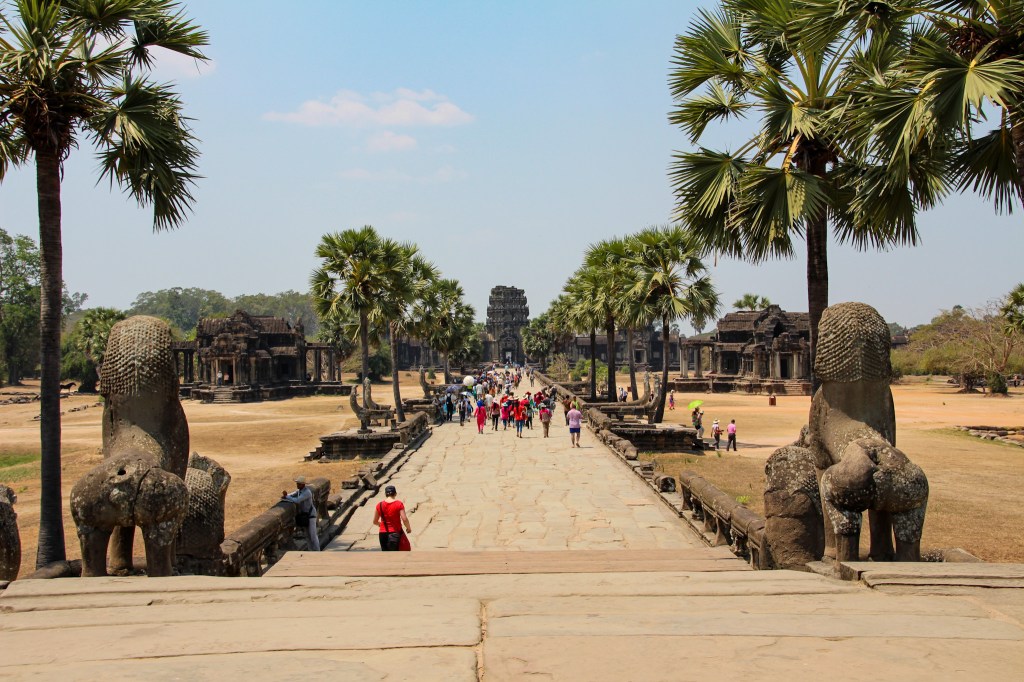
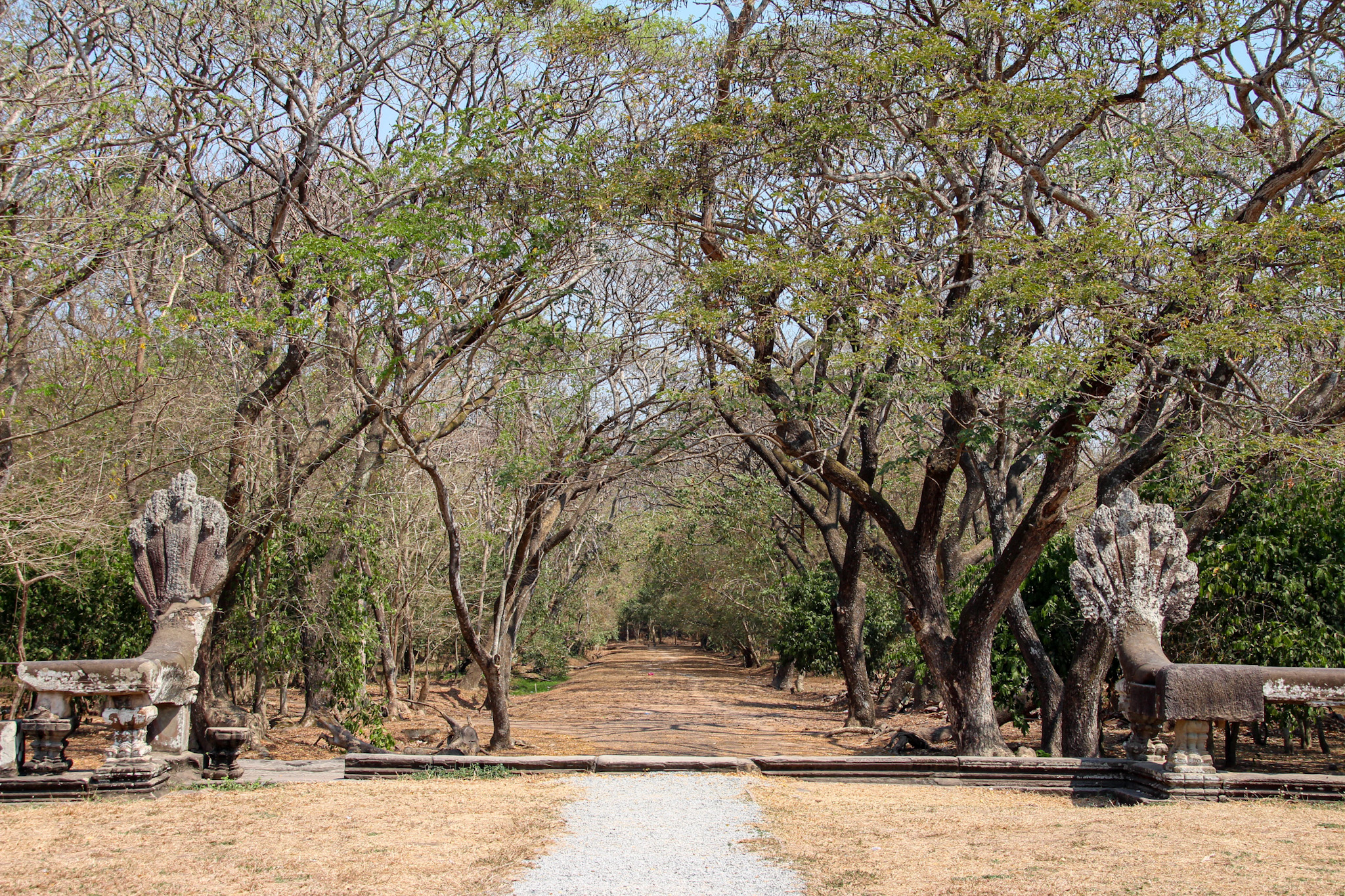
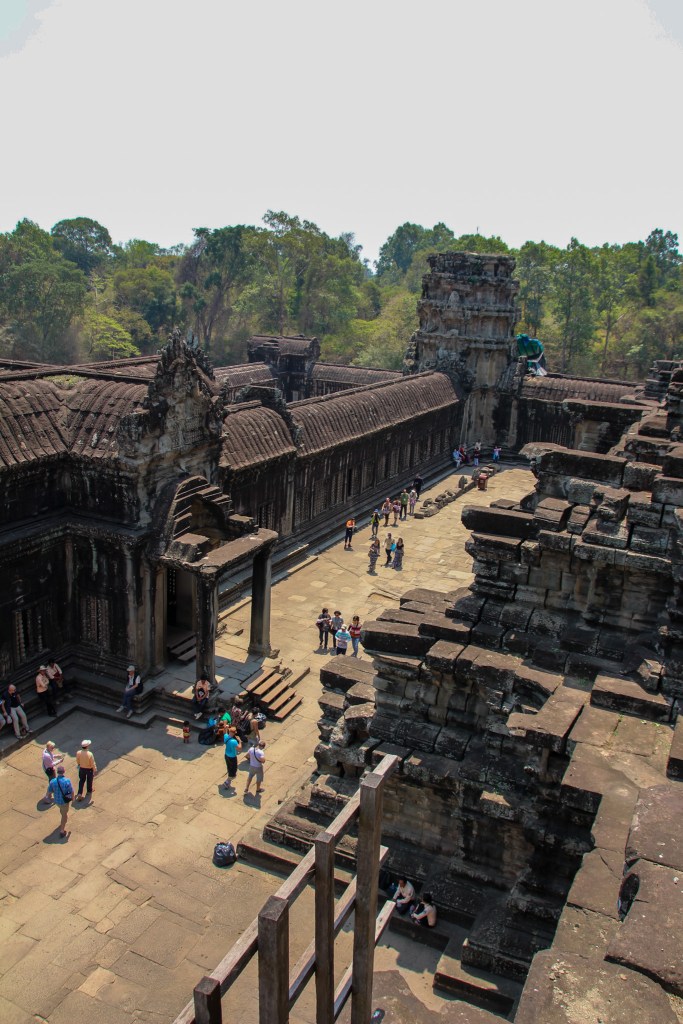
The temple grounds are surrounded by a moat and an outer wall, which is 3.6 kilometres long. There is a long, stone path heading towards the main temple structure. On either side of this path are two old libraries that sit in front of two large ponds. During sunrise, these ponds offer a beautiful reflection of Angkor Wat. They were a little dry during my visit, as it was the dry season with little greenery. When I reached the perimeter entrance, I entered through the most grand entry point in the centre, which was dedicated as the Royal entry. At the very centre of the complex are three tiers, which form temple mountain. Our guide explained to us that he temple represents Mount Meru, which in Hindu mythology refers to as the dwelling place of the gods. Each tier had 4 ponds, which would have been filled with holy water. Citizens would cleanse before participating in spiritual practice. There were rooms for meditating in prior to moving up to the next tier.


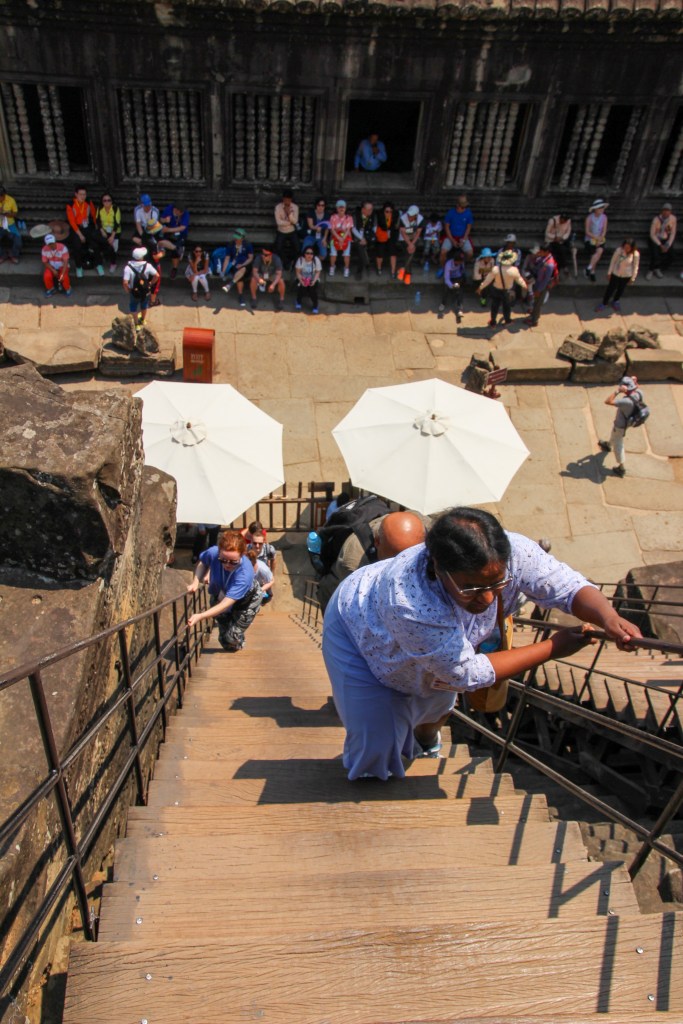
To get to the very top of the temple mountain, there was an extremely steep climb up some very narrow stairs. I was so nervous, I tried not to look down. Our guide explained, that the point of the difficult climb was to make the people realise that the path to enlightenment is not easy and that only the upperclass were allowed at the top of the temple. Once I reached the top, I was amazed by the breathtaking, panoramic view, that reached as far as the eye could see. It was amazing to see the precise symmetry of the below structures.


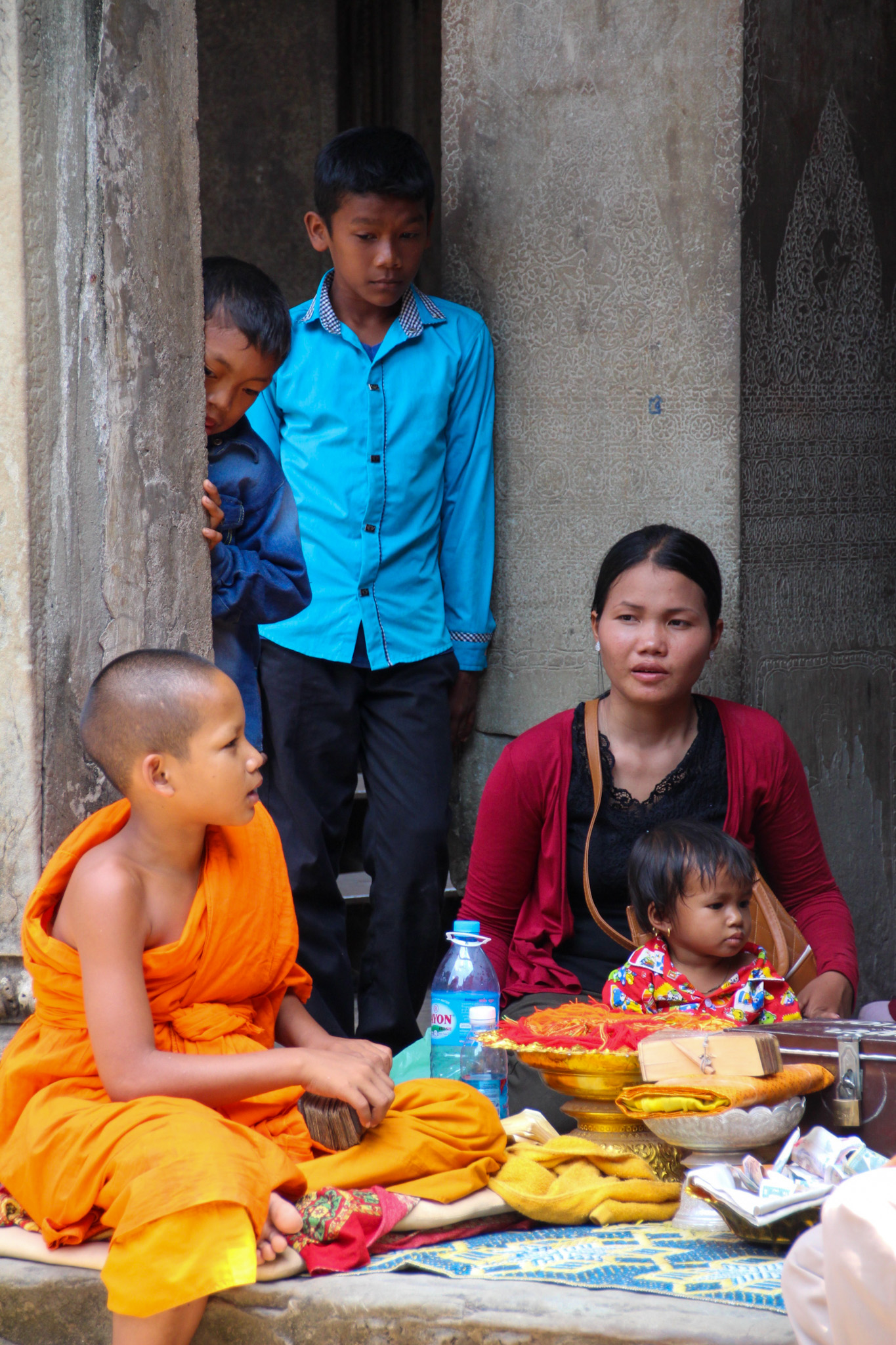
During our walk through the temple grounds, I came across a couple of young Bhuddist Monks who were reading to a local family. This was a very special moment to witness.



Tips Before Visiting
- Before entering the grounds, woman must cover their shoulders and knees, out of respect for the sacred grounds and religious customs.
- It was a very hot day and there were a lot of tourists, so I would recommend arriving early in the morning to beat the crowds.
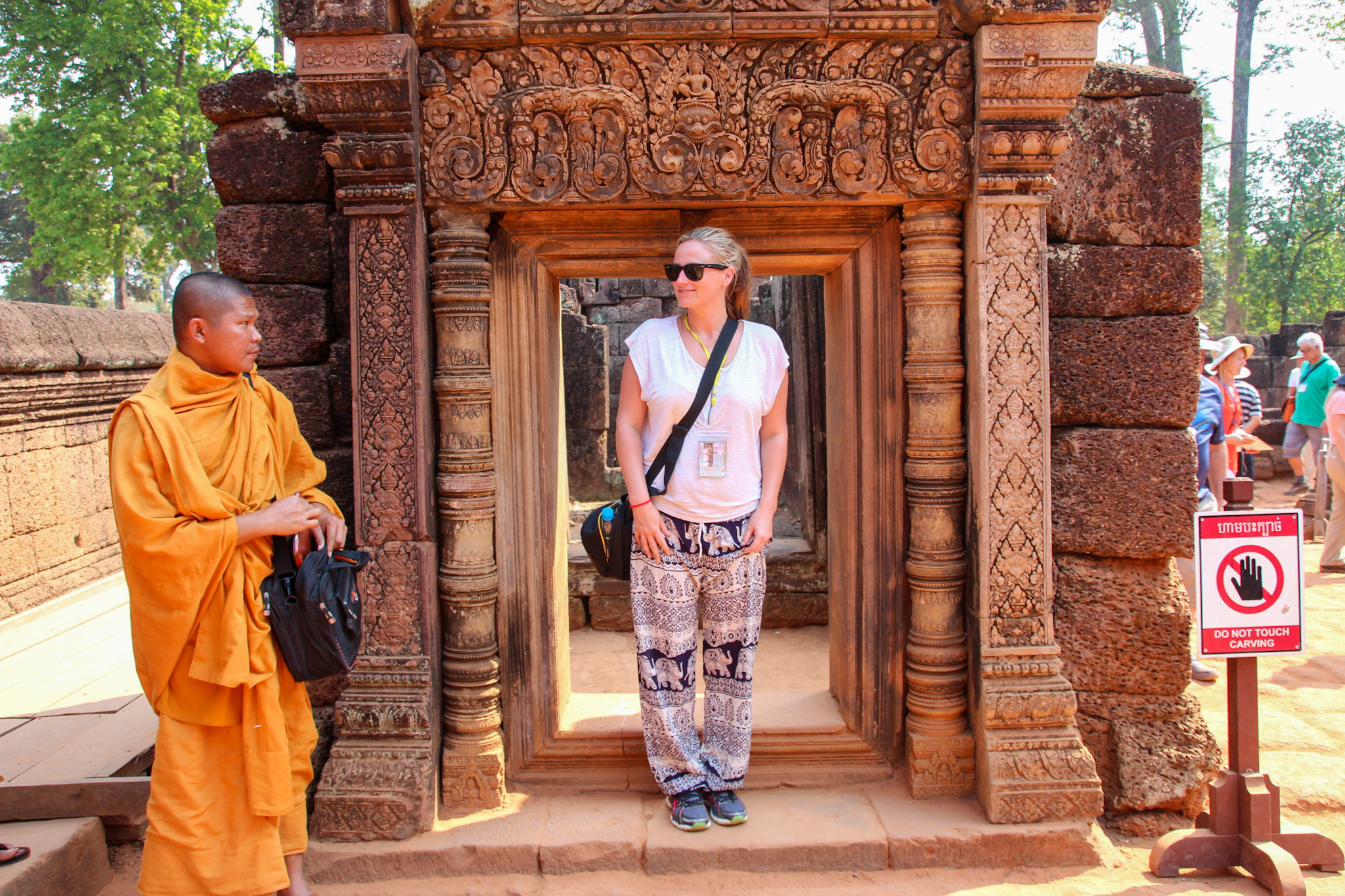
- Please refrain from touching the stone carvings as this is contributing to deterioration of these ancient structures.
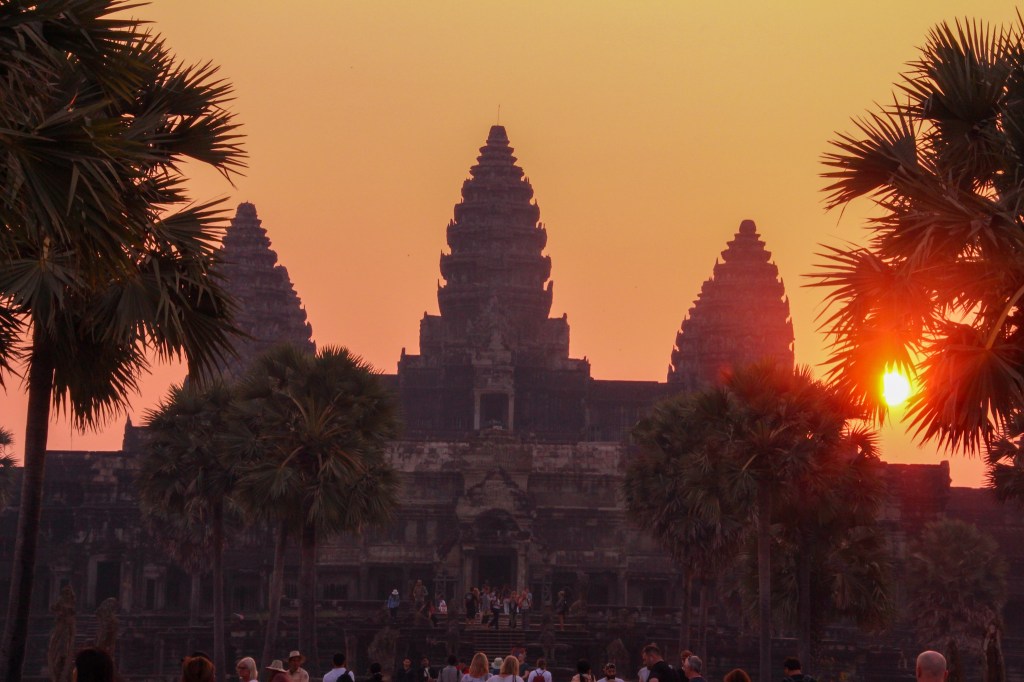
- I highly recommend waking up early to watch the sunrise over Angkor Wat. It is truly something special watching the rising sun transition from purple haze to a burnt orange which silhouettes the majestic temple. And you can buy $1 coffee while you are there.
Other lesser known temples in the area:
Banteay Srei Temple
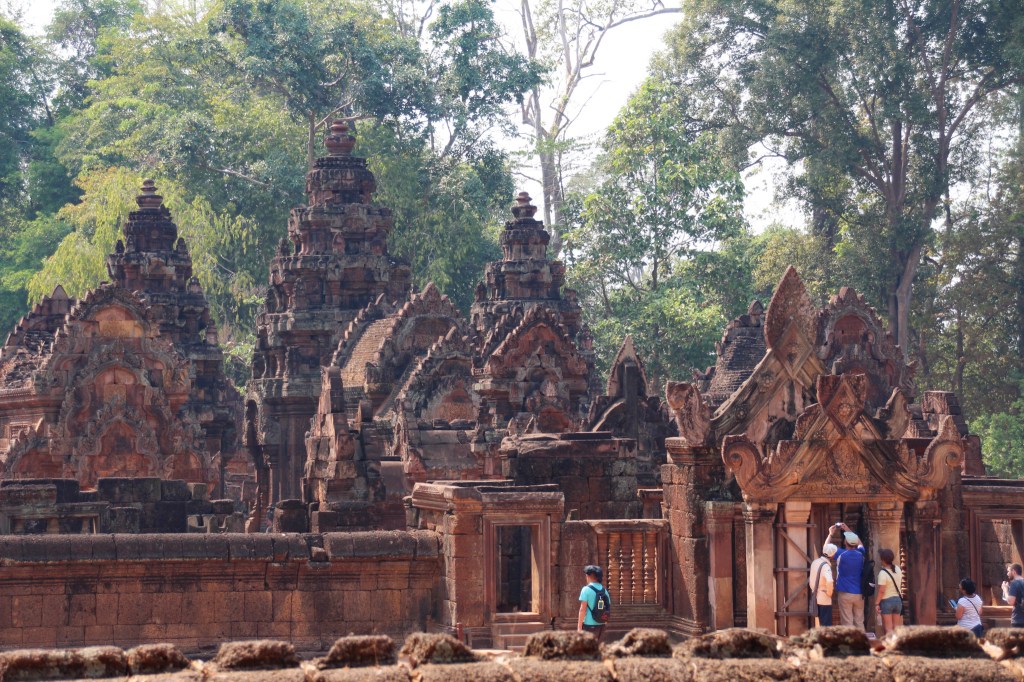
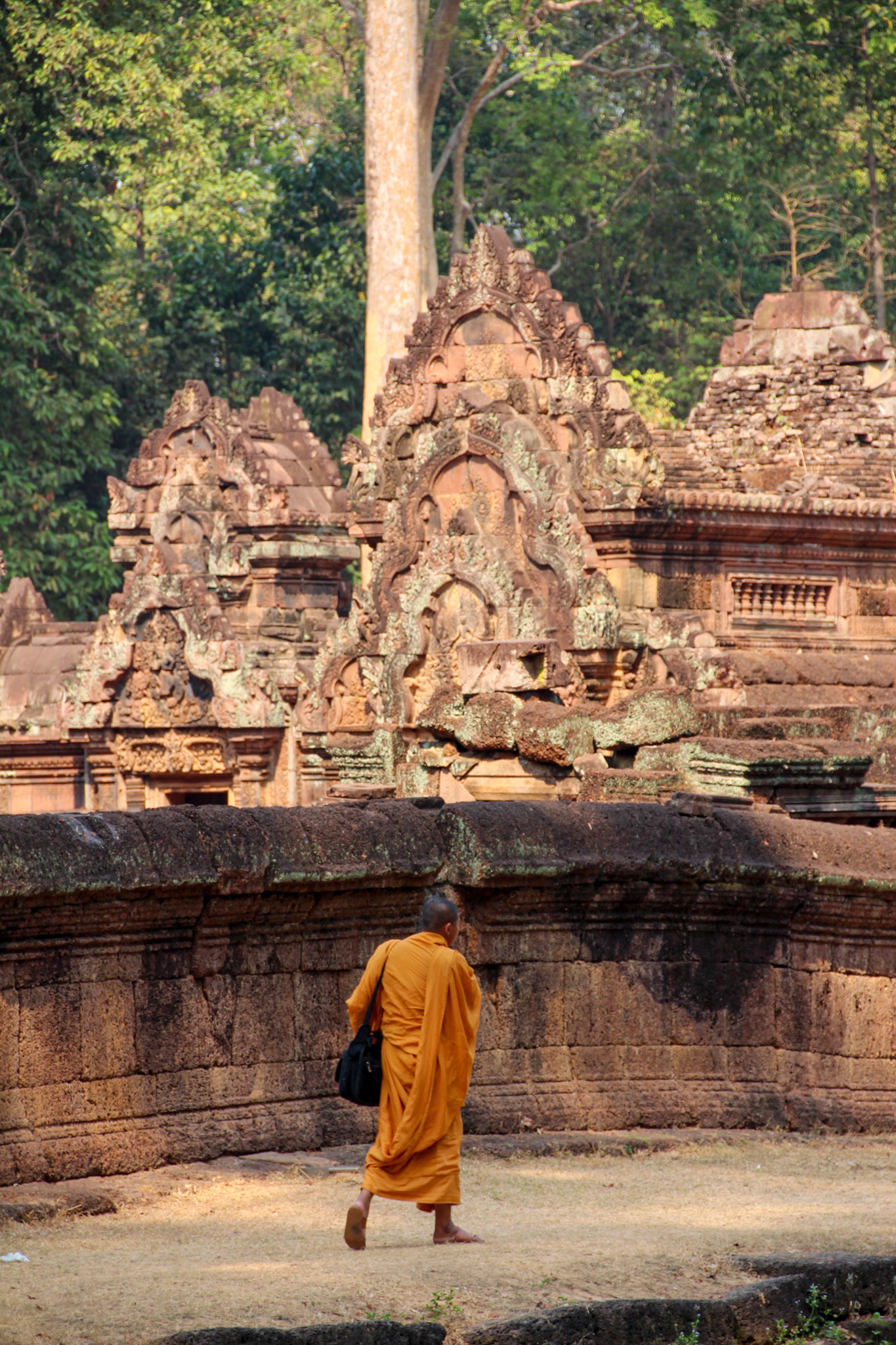
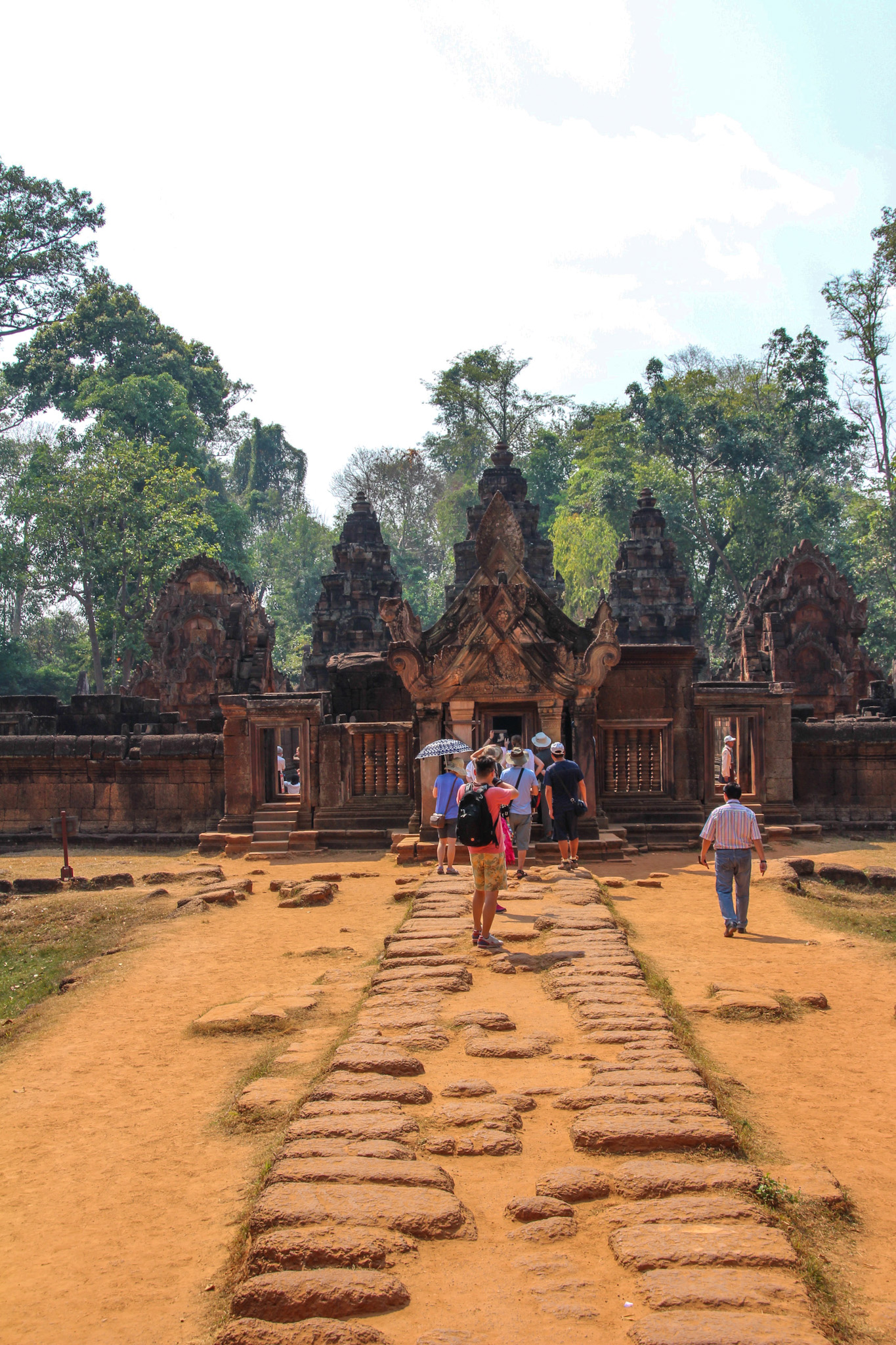
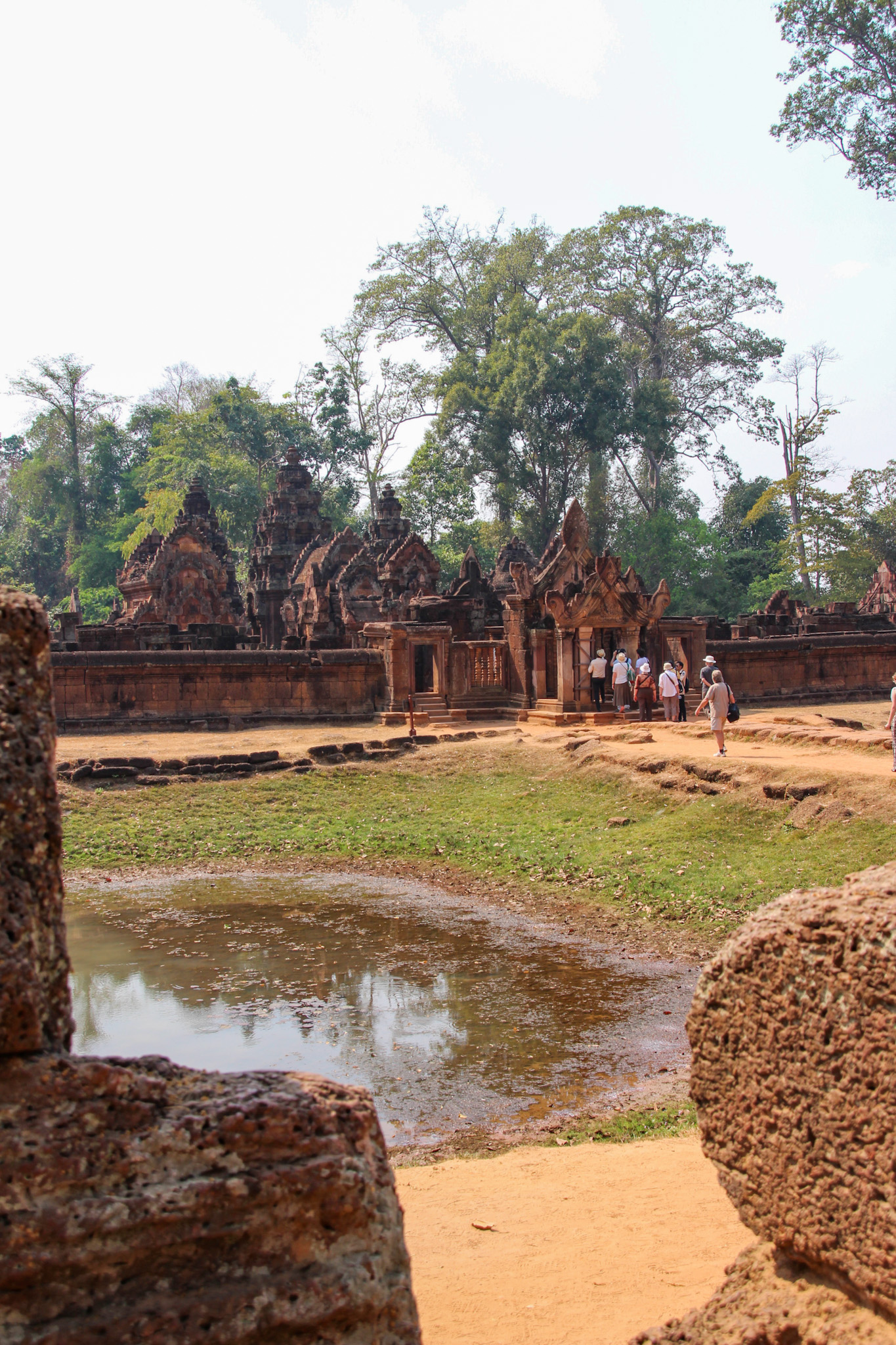
After exploring Angkor Wat, we visited a smaller temple called Banteay Srei Temple. It was built in 967 AD, roughly 150 years before Angkor Wat. Also known as the “Lady Temple,” due to the belief that the delicate carvings of female deities, that are found all over the temple, were crafted by women. Not only is this temple much smaller in overall size but the individual structures that make up the temple, are a lot smaller in scale compared to other temples in the area. It is built mainly with red sandstone which showcases intricate and detailed carvings on every piece. It is very different from any other temples I have seen and the combination of the rich colour of the sandstone with the detailed carvings offer a beautifully unique piece of art.


Angkor Thom Temples
Before heading back to the hotel we explored the ancient city of Angkor Thom and the famous Bayon Temple.
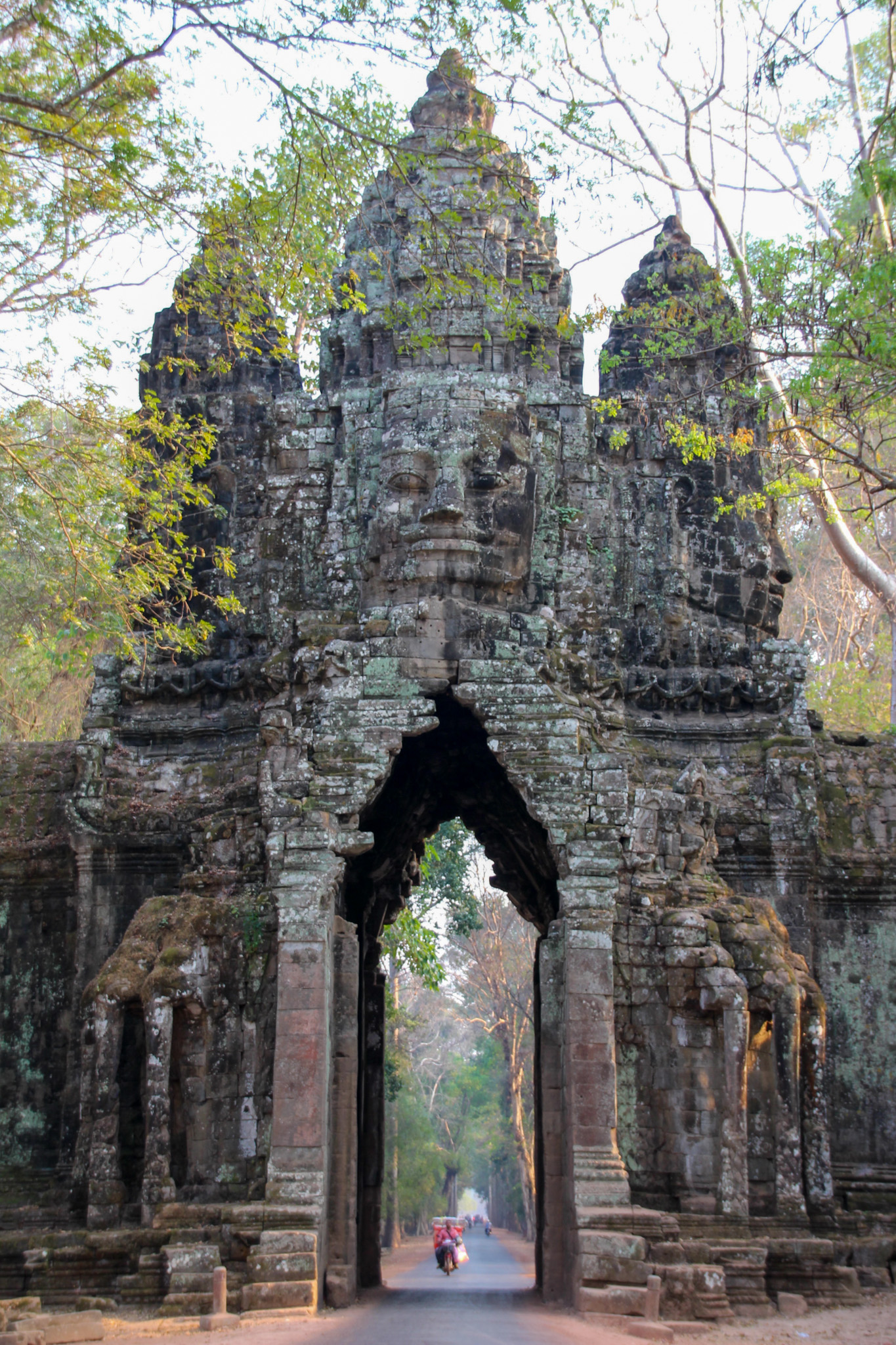

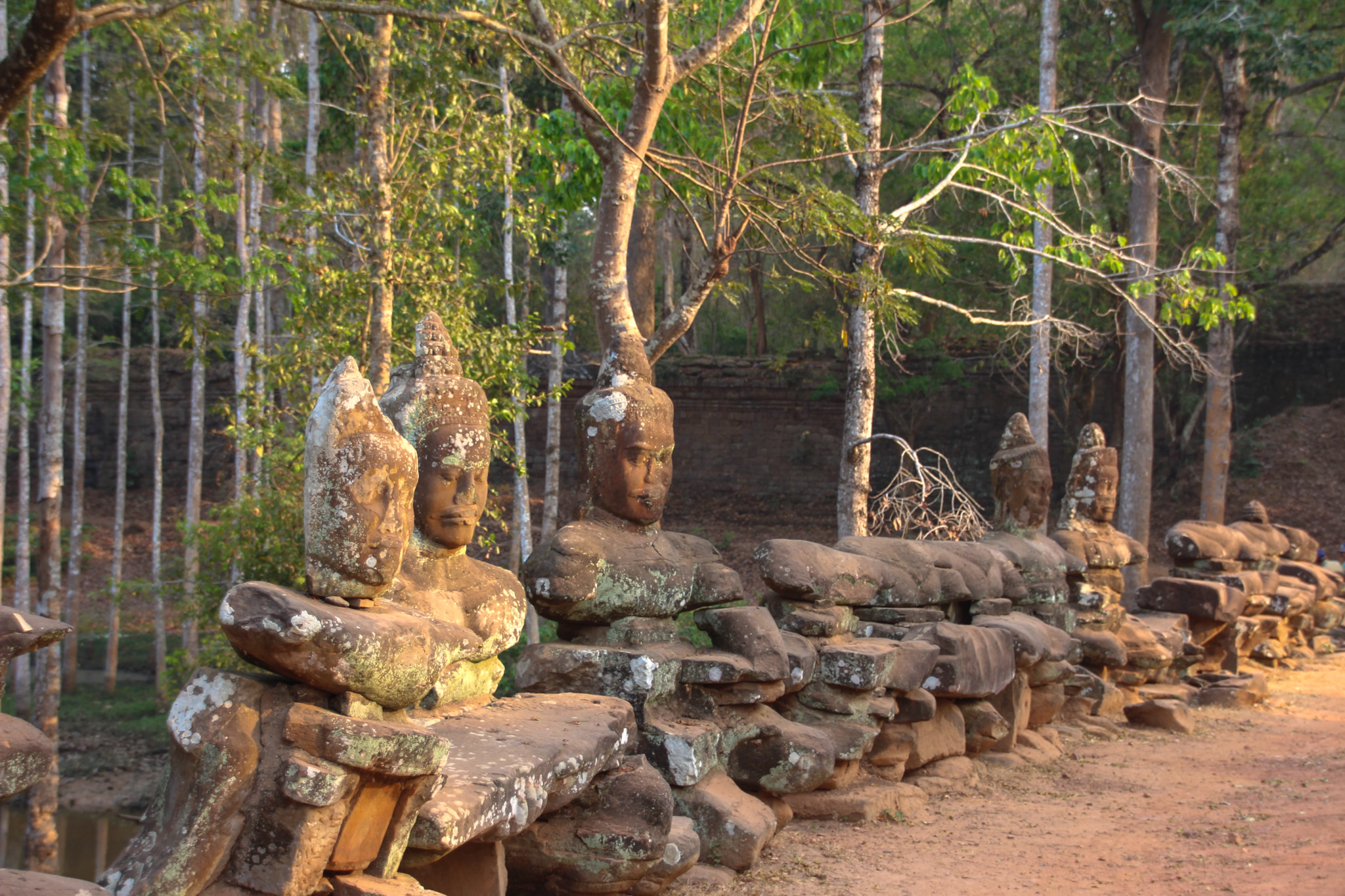
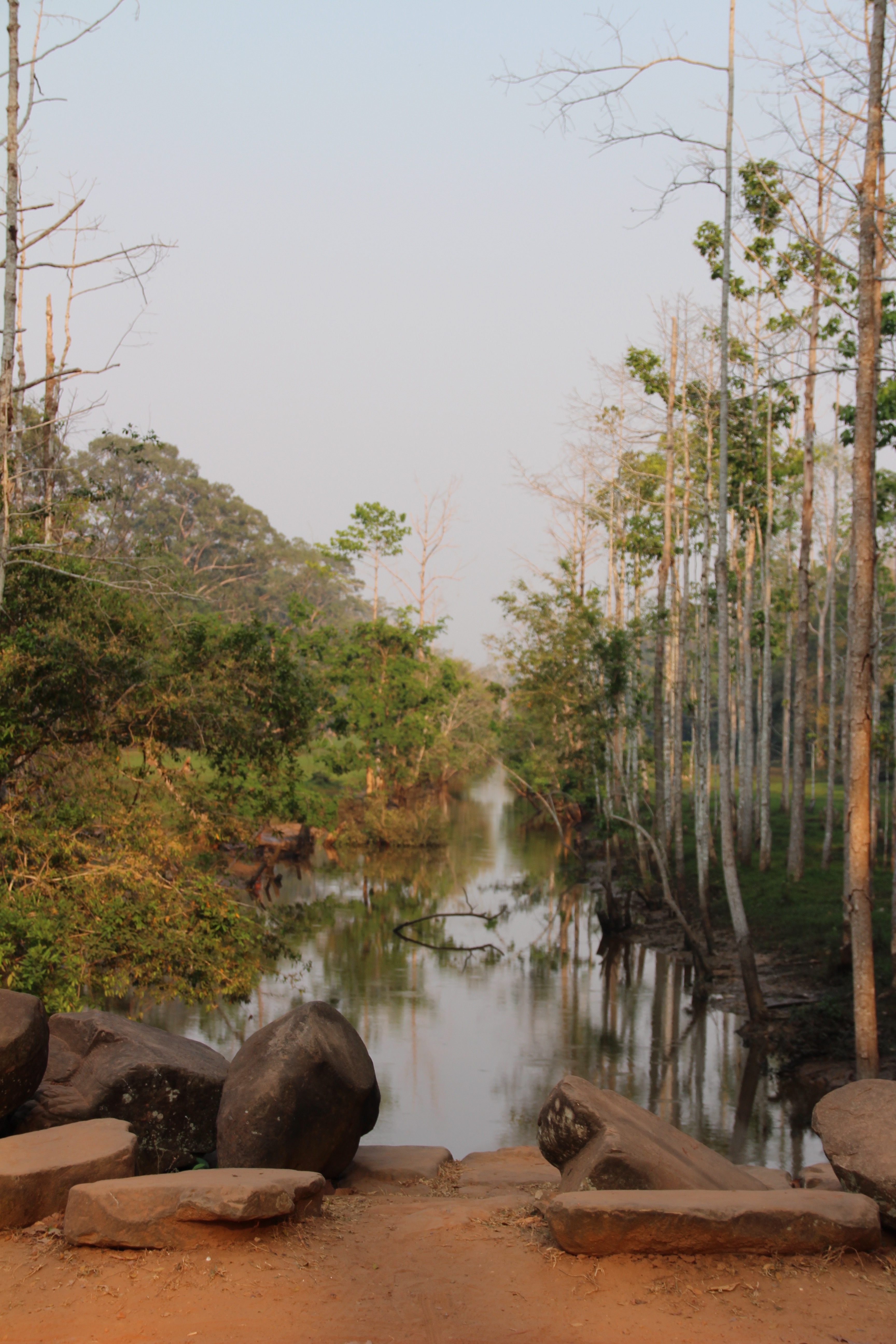
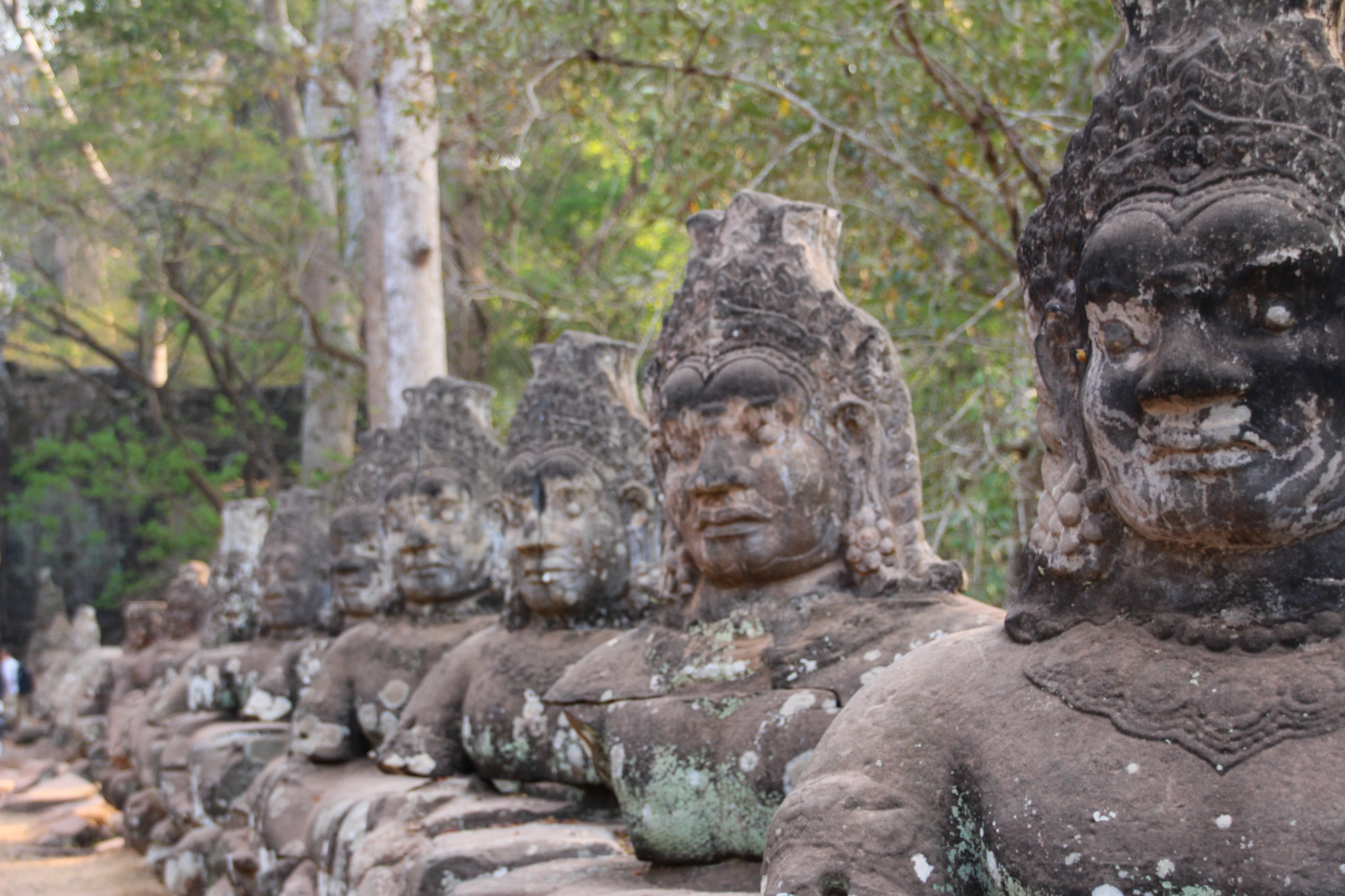
Angkor Thom was the last capital of the Khmer Empire which thrived in the late 12th century. The ancient city covers an area of ten square kilometres and is surrounded by a moat and a large wall with grand entrances on either side. We entered the walled city through the southern gate, Tonle Om Gate. As I walked towards the imposing gate, I was immediately drawn to the impressive statues that lined both sides of the causeway. On one side, there were 54 statues representing the gods, pulling the head of a serpent and on the other side of the causeway were another 54 statues that represent demons, who are pulling the tail of the serpent. In Hindu mythology, this depiction represents the ebb and flow of the ocean.


There are many ruins to explore in Angkor Thom including the Royal Palace, the Phimeanakas temple, Terrace of the Elephants, Terrace of the Leper King, to note a few. The most famous ruin is the Bayon Temple.
Bayon Temple
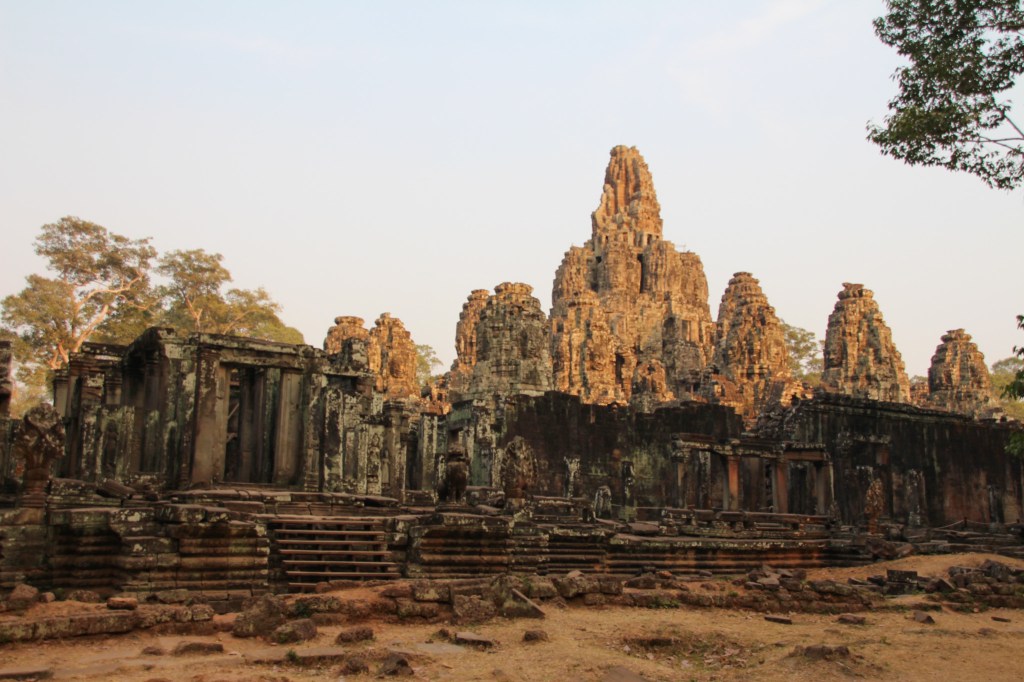
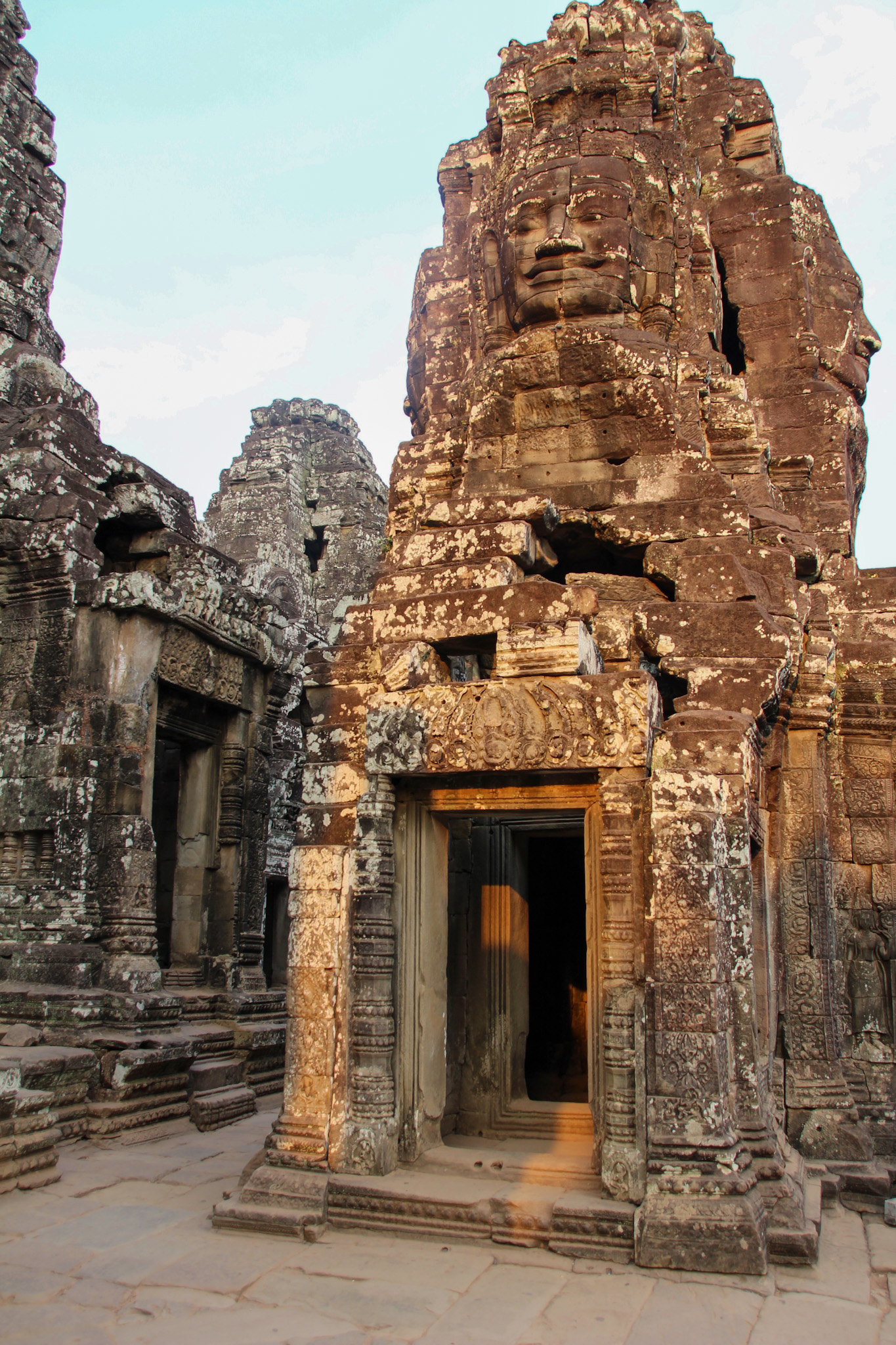
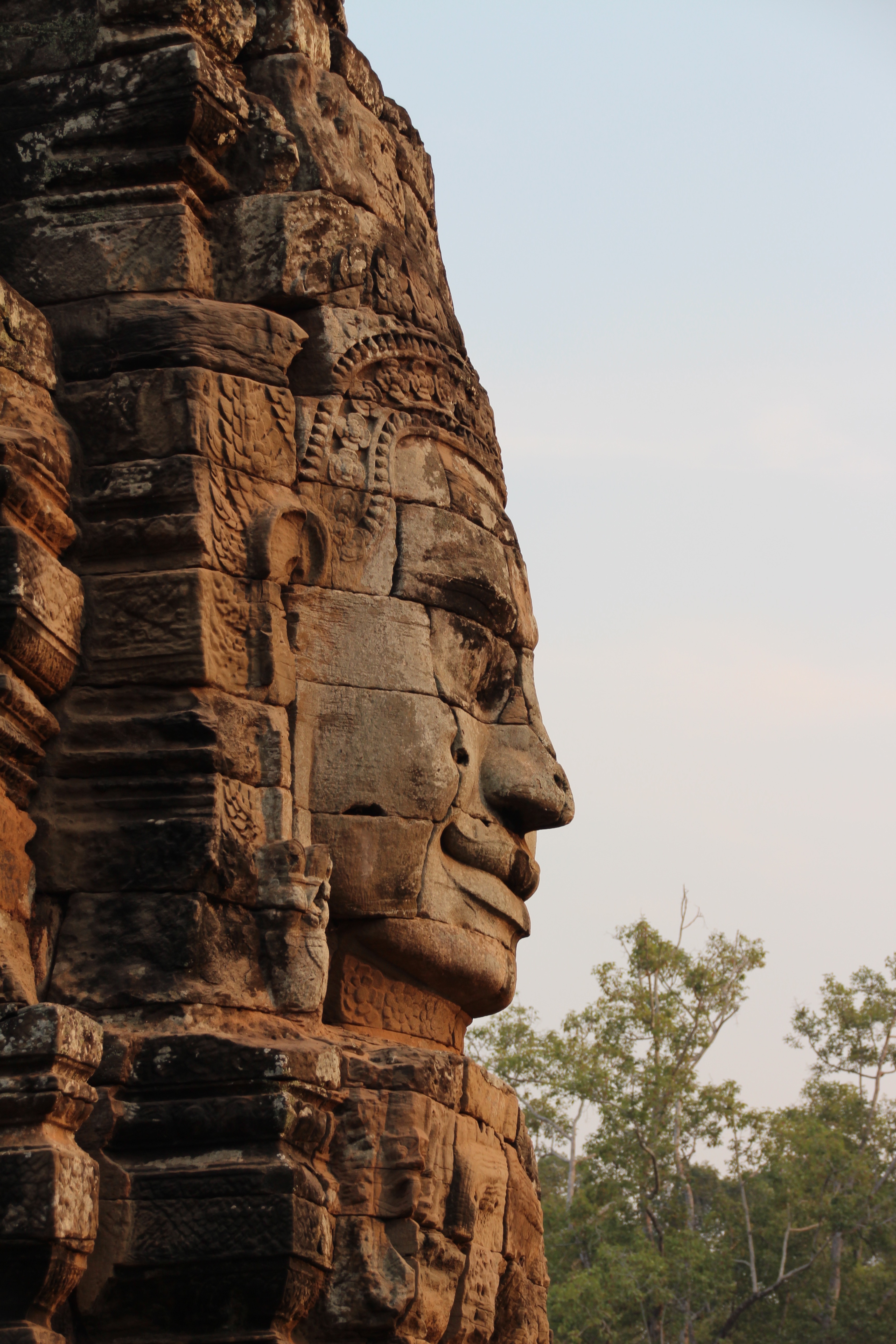
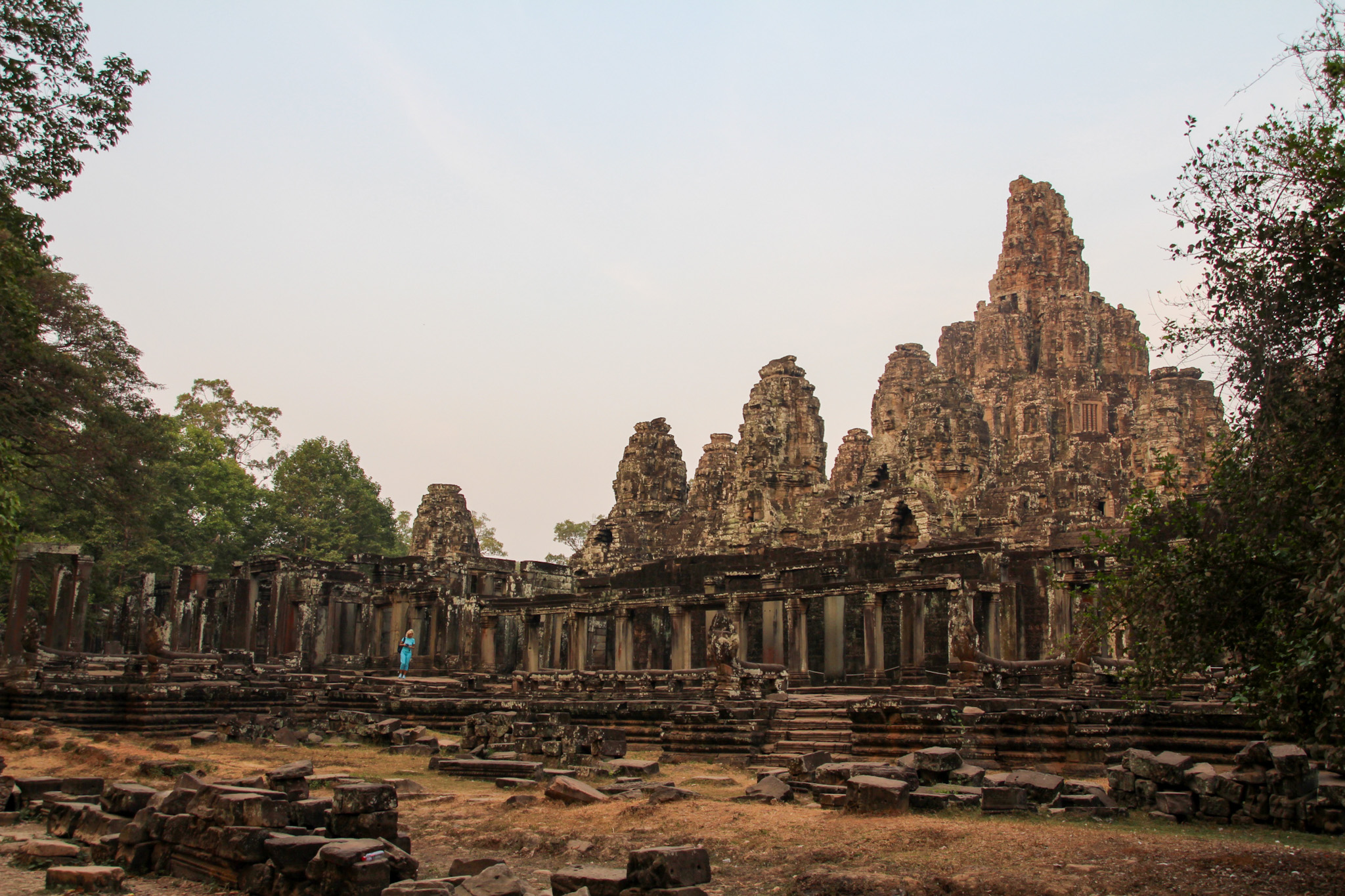
Bayon Temple is known as the”Temple of Smiling Faces,” and is located at the centre of Angkor Thom. The temple was built between the 12th and 13th century and features 216 large faces that are carved into 37 towers, that make up the temple. Just like Angkor Wat, the temple is built on threes levels that create a mountain like structure, which represents Mount Meru. Carvings throughout the temple show evidence of Angkor life as well as imagery from both Hindu and Buddhist religions. By the time I arrived at Bayon Temple it was late afternoon which was a beautiful time to explore. There, were no crowds and there was something special about the way the sun shone between the towers that had these gigantic faces smiling down on me. It created a calming and positive ambience.

Terrace of the Elephants
This terrace was used for public ceremonies and was once connected to the Royal Palace by a grand staircase. Our guide told me that, The King would stand on the terrace and speak publicly to the civilians and it is where he would welcome back his army from battle. Apart from the foundations of the terrace, there is not much left of these ruins, suggesting that the majority of the structure was built from wood. The terrace is 350 metres long and features large carvings of elephants along the front wall.


Phimeanakas Temple and the Royal Palace
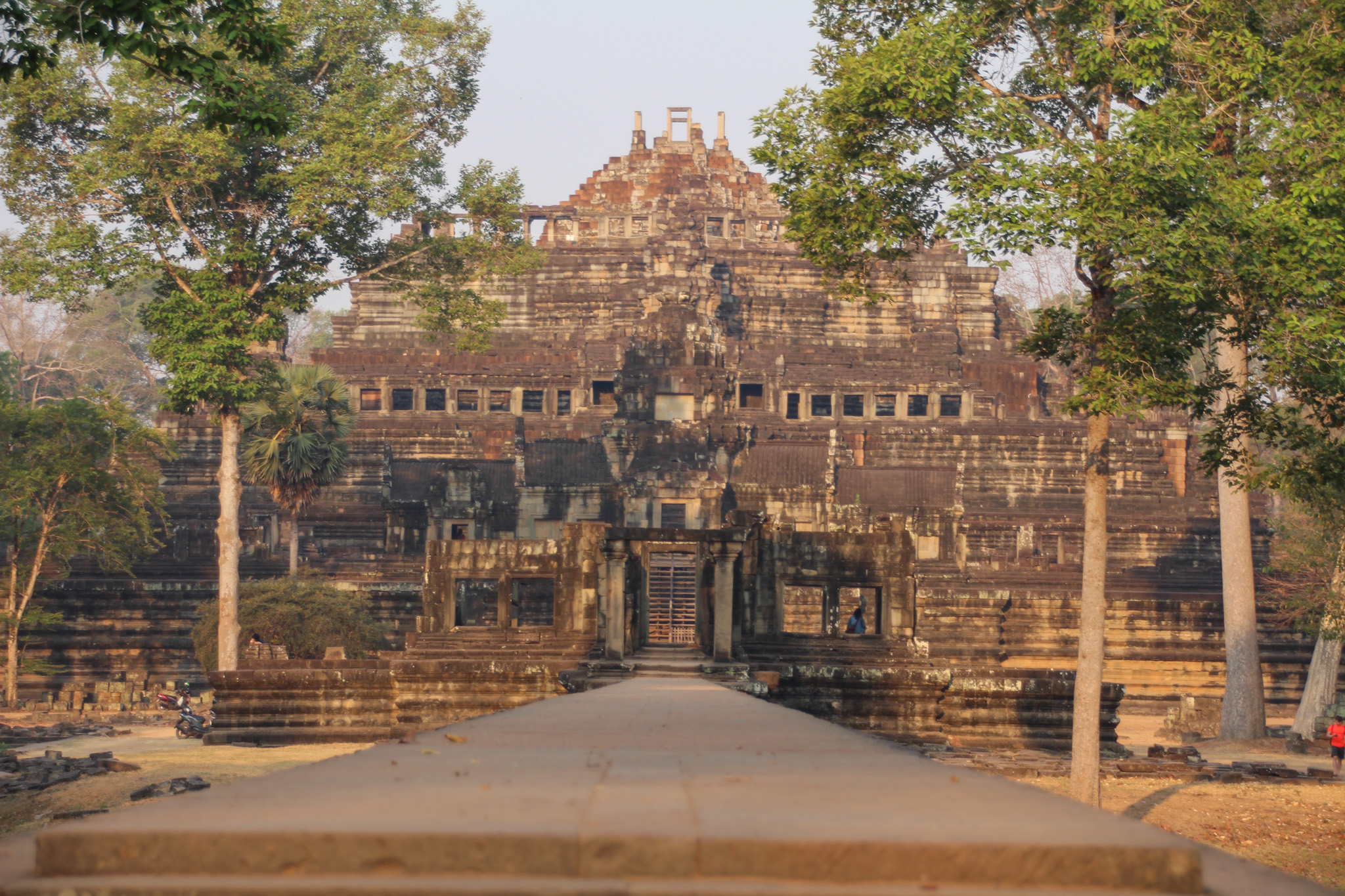
We did not get to explore the remaining ruins of the Royal grounds as we ran out of time during our tour. These ruins included the grand wall and entry gate to the royal grounds, the royal ponds, and many smaller shrines. And although I did not have time to explore Phimeanakas temple in depth, I was able to admire this impressive structure from a distance. The temple is one of a few remaining structures left of the Royal Palace. This Hindu temple was built in the 10th century and was used by the Kings as a place to worship the gods.

Ta Prohm
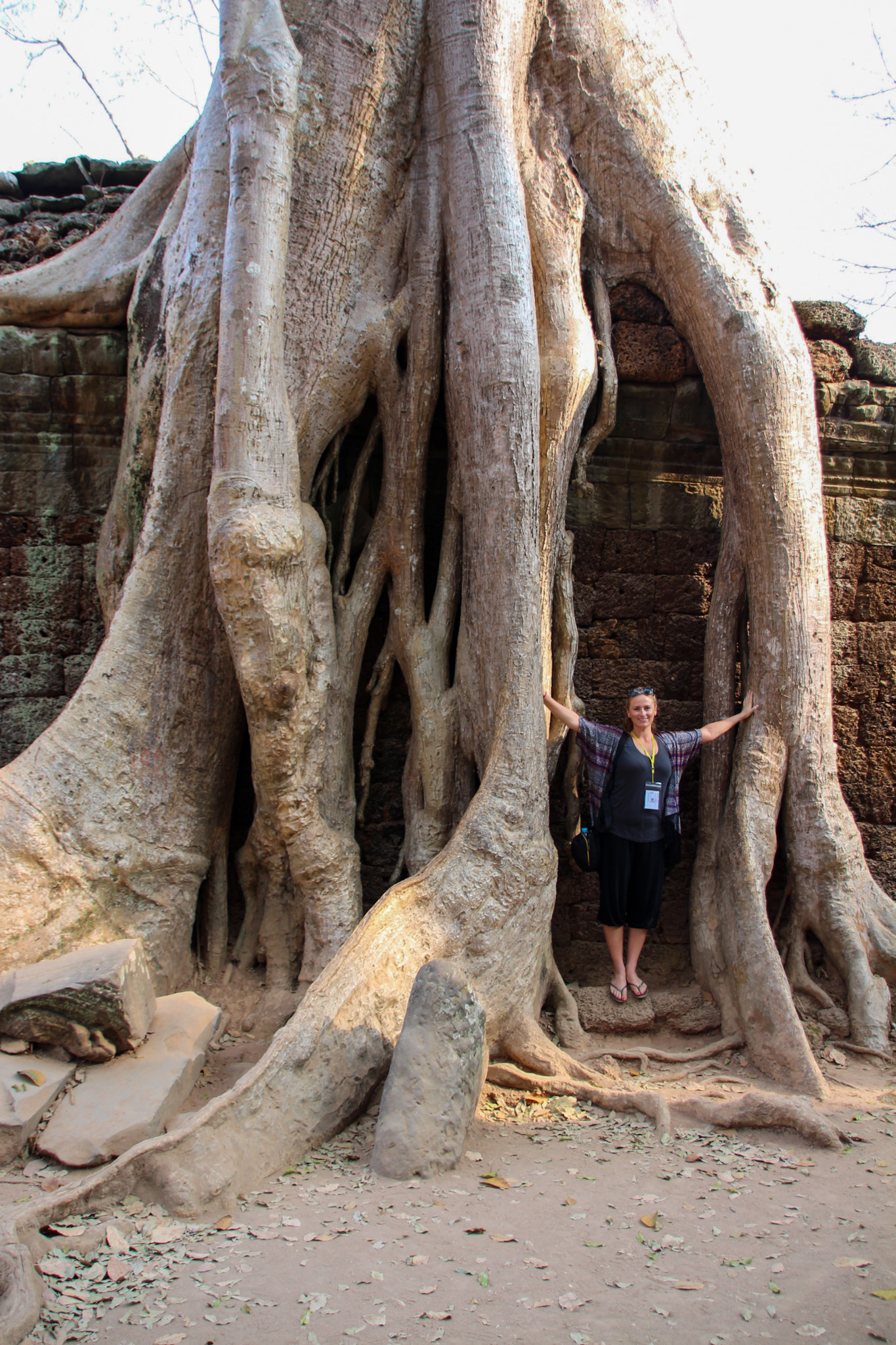
This has to be my favourite temple and not just because it is the Tomb Raider temple!! Ta Prohm is so unique and has so much character. Walking through the temple, dodging fallen stones on the path, climbing through doors that are shrouded with tree roots really made you feel like you were the one just discovering this archaeological site hidden in the jungle for the first time! This Bhuddist temple feels like it has been lost to the jungle, as its structure is engulfed with overgrown tree roots from the silk cotton tree and the strangler fig. The thick and thin roots twist around each other, and around the remaining ruins. I found it so interesting that the trees do not grow through the temple, rather they grow on top of the temple, with the roots cascading down around the walls of the temple as if it is swallowing it whole.

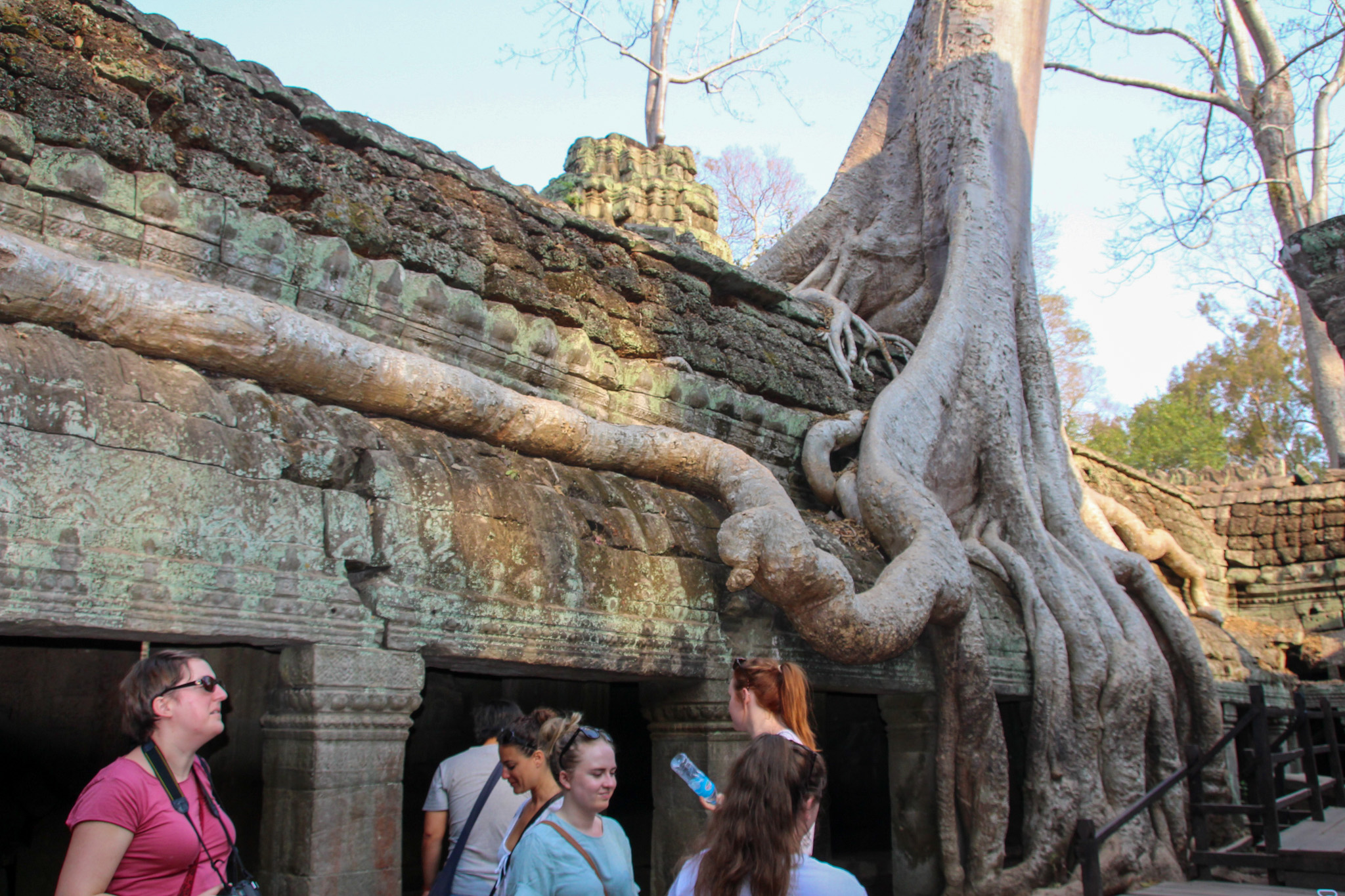


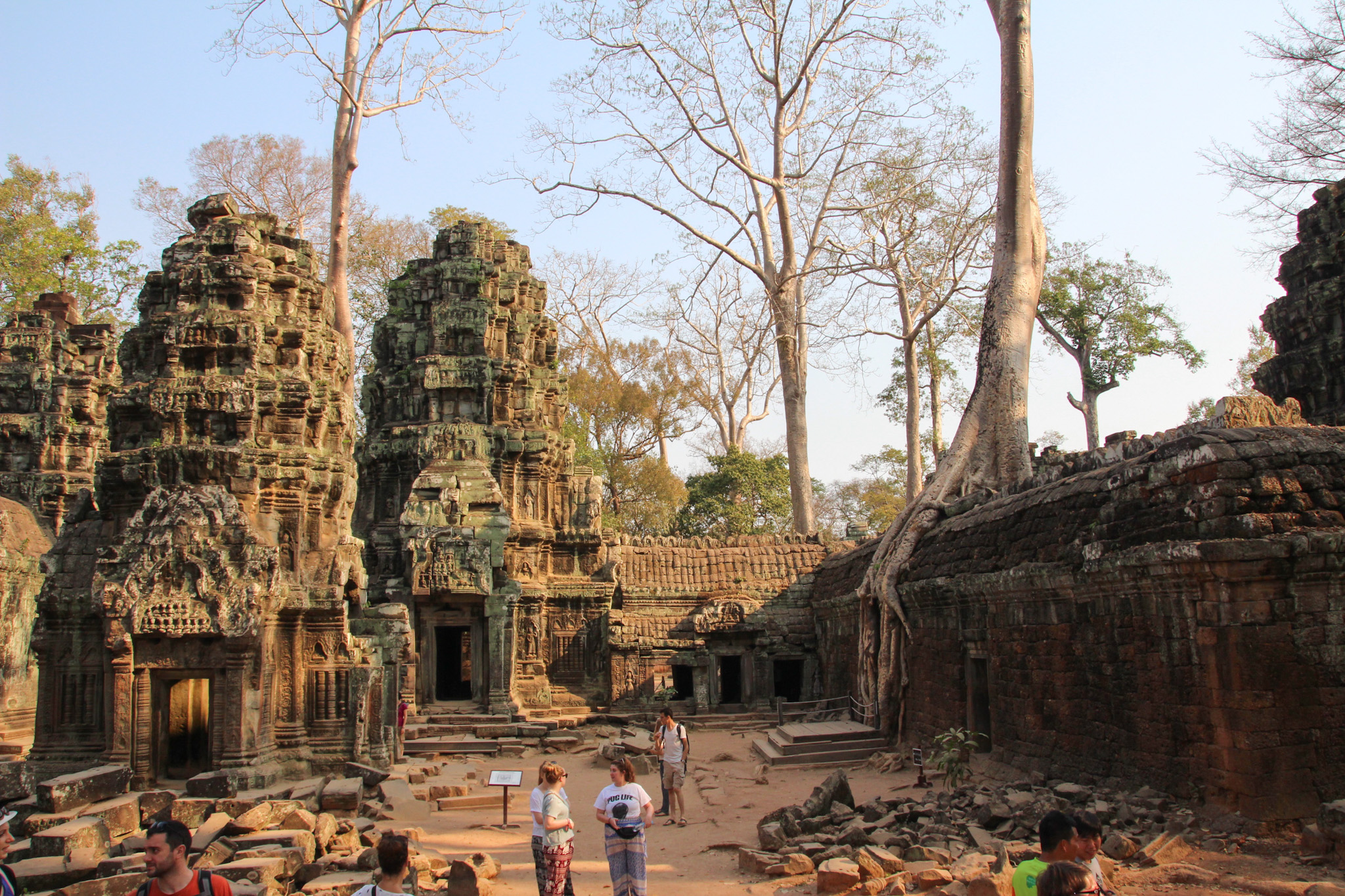
I recommend visiting first thing in the morning to avoid the crowds and enjoy the peacefulness the jungle has to offer.



 Postcards From Britt
Leave a comment