
Where to Eat
After we checked into our hotel, we enjoyed lunch at the ‘Friends the Restaurant.’ This restaurant is unique and a really great initiative which helps young adults get off the street. The restaurant is run by Friends International and its main purpose is to train at risk youth in hospitality. These students cannot afford schooling, so this institution provides the training and a job to get them off the street and better their future. All the staff from the waiters to the chefs are current students who are learning whilst on the job. The food was delicious and the atmosphere was a vibe! The decor was colourful and as we sat in the courtyard which was filled with plants made for a very relaxing atmosphere. After lunch, we went next door for a manicure from the students learning beautician work. Here, we ordered a cocktail and enjoyed a drink while being pampered. It wasn’t the best mani I have ever had but it was worth it a good cause.


For a bit of Relaxation
Next door to ‘Friends the Restaurant’ was a Beauty Salon which is run by the same organisation. Students are learning how to become nail technicians. Here, we ordered a cocktail while we enjoyed getting a manicure. It wasn’t the best mani I’ve ever had, but it was worth it for a good cause. These students cannot afford schooling so this place offers training and an immediate job which gets them off the street.
If you would like to support another great initiative that helps support those with disabilities then I suggest you visit Seeing Hands Massage. This company employs blind massage therapists. Now my massage was really not the best, but Emma really enjoyed hers. I think it is a great initiative allowing locals to earn an income regardless of what their limitations may be.
Exploring the City
Before heading back to the hotel we ventured around the busy streets of Phnom Penh. We passed the Royal Palace, but didn’t have time to go in as the afternoon was upon us. I did notice that there are a lot of expensive cars driving around the city, including many Range Rovers.


After we freshened up at the hotel we grabbed a remork and headed out for dinner. On the way, we drove past Wat Phnom, which is a temple in the centre of the city. We also stopped to admire a statue of the founder of Phnom Penh who surprisingly was a woman named, Yeay Penh. Our guide told us the story of how the city was founded, which according to legend, the wealthy widow, Yeay Penh (also known as Grandmother Penh), found four Buddha statues inside a tree trunk on the river. She built the temple Wat Phnom to house the statues which is what tourists can visit today. We unfortunately did not have time to visit. But I will definitely add this to the bucket list next time.


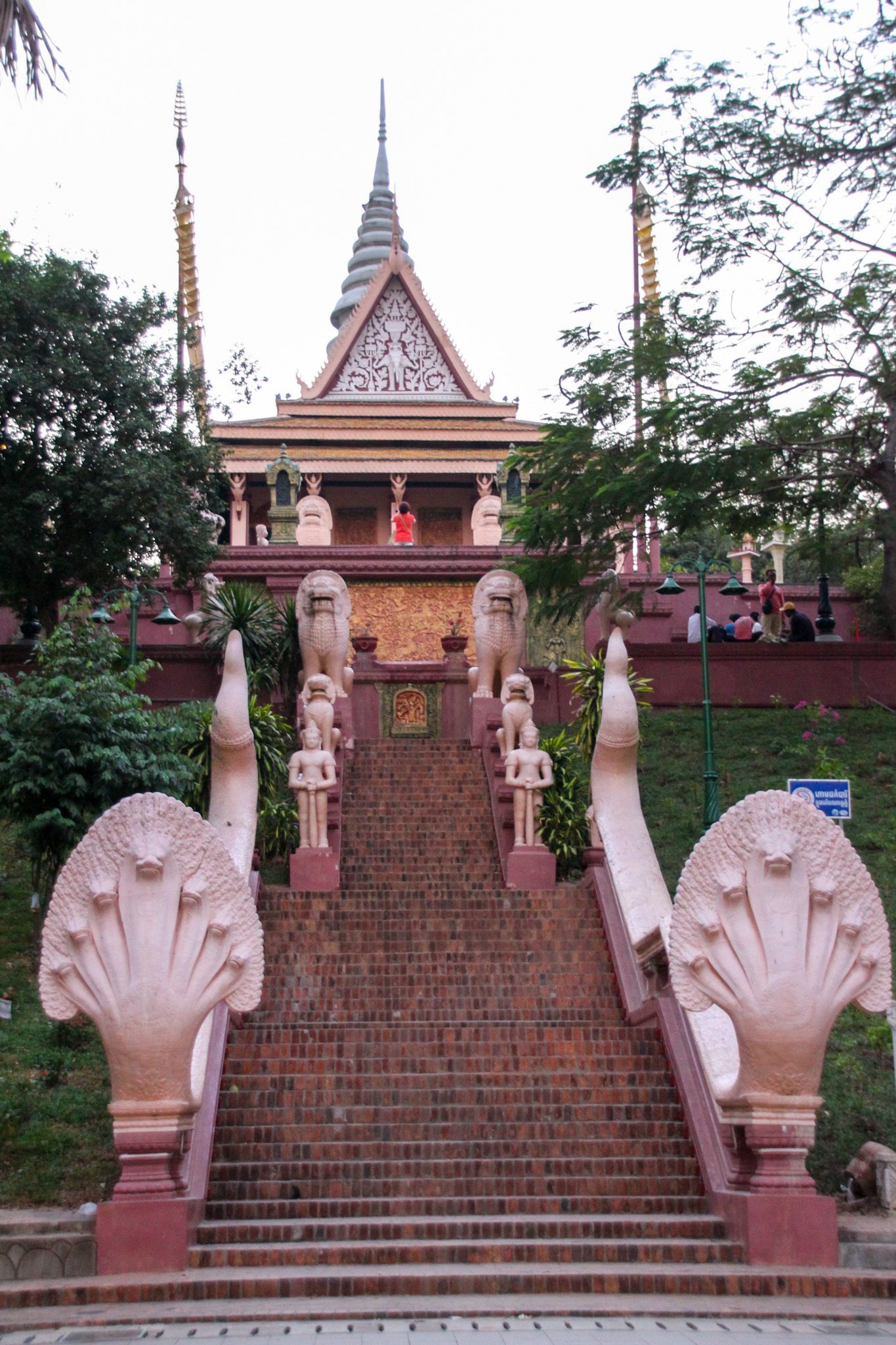


After enjoying a dinner at a restaurant opposite the river, we walked the dark streets back to the hotel. In one area the streets were bustling with locals lined up along the side of the street, sitting on mini seats and tables eating from food carts. Once we came to a busy 4 lane street, which we were sure how we were going to cross with all the cars. There were no obvious areas for pedestrians to cross, so we flagged down a remork and got a ride to the hotel. Which to our embarrassment, was just on the other side of the road!! Hey, when you don’t know the road rules and are not used to crossing these crazy, busy 4 lane roads, you will try anything!! We finished the night off with a nightcap at the hotels bar which overlooked the city.


The Killing Fields
*Trigger Warning: graphic description
In the morning we ventured to the Choeung Ek Killing Fields. It was an extremely emotional experience. This mass grave site is where more then 1.3 million people were killed during the Khmer Rouge regime.
You can still see bones littering the grounds as you walk through the killing fields where only some of the mass graves from the Khmer Rouge regime are. We learnt that the victims were driven there blind folded and were made to dig their own graves. They were killed in so many inhumane and ways. To save bullets they were battered to death rather then shot and many were buried alive.
Some of the bones that were dug up are now on display as a monument that was erected in memory of the victims.. It holds over 8,000 skulls which are only some of the bones that were dug up there and it describes how each person died. You can clearly see evidence of how the victims died as some skulls crushed and others had bullet holes. We were showed one large grave that had a single tree beside it. The tree was covered in colourful bracelets to commemorate the children that were killed here. This is where I broke down in tears, I felt so sick hearing what happened. We listened to the stories of how the Mothers were made to watch their children being killed by lifting them by their ankles and swinging them against the tree. The children were then thrown into the grave, after the mother was then killed and thrown into the grave on top of all the other decaying bodies. There were a lot clothes and teeth still lying in the dusty earth. Our guide told us that even to this day, when the rains set in more bones and clothing are washed to the surface. There is also evidence of where a speaker used to hang from another tree that would play loud music. This was to drown out the screams of the victims so the people living nearby could not hear what was happening.


Tuol Sleng Prison
After this emotional experience we visited the Tuol Sleng genocide museum. This is where victims were imprisoned and tortured before being sent to the killing fields. It was originally a school but had been transformed into a prison during the Khmer Rouge regime. The first few rooms we went into were where Vietnamese soldiers found 14 deceased Cambodians still chained to the beds. Above these beds were the photographs of the dead bodies. Those victims are buried right outside their cells. In the next building were the smaller cells where you can still see blood stains on the floors of the cells. There are rooms with photos of all the victims that came to the prison and the tools that tortured them. The guards would also take photos of the dead bodies if they died from the torture they were given. Originally, if they were killed at the prison they were buried there however due to the stench from decaying bodies, they decided to start killing them at the killing fields. Victims were forced to confess to crimes they did not commit and after they were taken to the killing fields. There were survivors who are still at the prison who tell you their story. We met Chung Mei who is now over 80 years old. I purchased his book “Survivor” which tells the story of his time at the prison. They were told that they had to give up names of people they knew, who were against the communist regime, in order to find them and kill them.


Tip:
We had been warned to hold onto your bags because there is an issue with pick pocketing, so I was a bit nervous walking around the streets. Sadly, there were a lot of people living on the side of the street and it just didn’t feel as safe as Siem Reap. When we caught a remork back to the hotel, my anxiety peaked even further. The traffic was so busy and the driver kept pulling out into oncoming traffic and was even driving against traffic coming in the opposite direction! It was a bit sketchy, but we survived! He even took us to the wrong hotel…lucky we had another traveler with us with the address of the hotel we were staying at so we eventually made it back
 Postcards From Britt
Leave a comment